
Bacon
Very salty, so it's a flavor, not a food: a little, finely chopped into soft dishes.
Checked against official guidance on October 18, 2026 · How we review
Quick answer
Children can have bacon from around 12 months. Prepare it as shown below.
How to serve bacon by age
12 months+
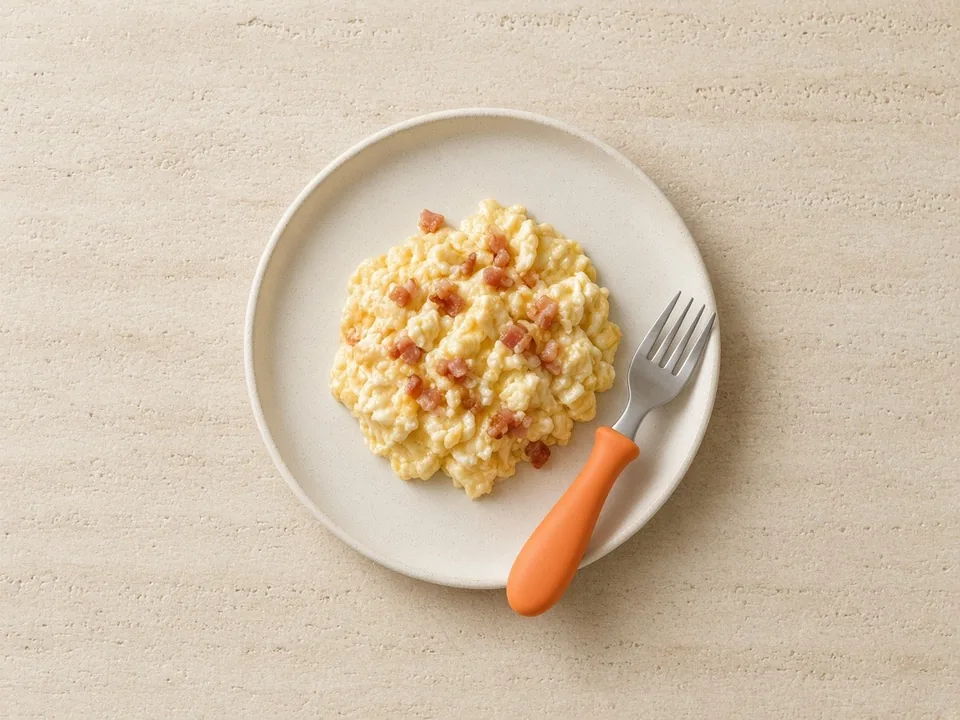
A little, finely chopped into soft food
If you serve bacon, use just a little for flavor. Cook it completely, chop it finely, and stir it into scrambled egg, pasta sauce or soup. Don't serve strips or crispy pieces on their own: they break into hard, sharp shards. Bacon is very salty, so keep it occasional.
- Size
- Very small pieces, no bigger than about 1 cm (just under ½ inch), stirred into a soft, moist dish.
- Check before serving
- Press a few pieces between your fingers. There should be no hard, sharp or brittle bits and no tough, chewy strips. If you find any, leave them out: chopping them smaller doesn't make them soft.
18 months+
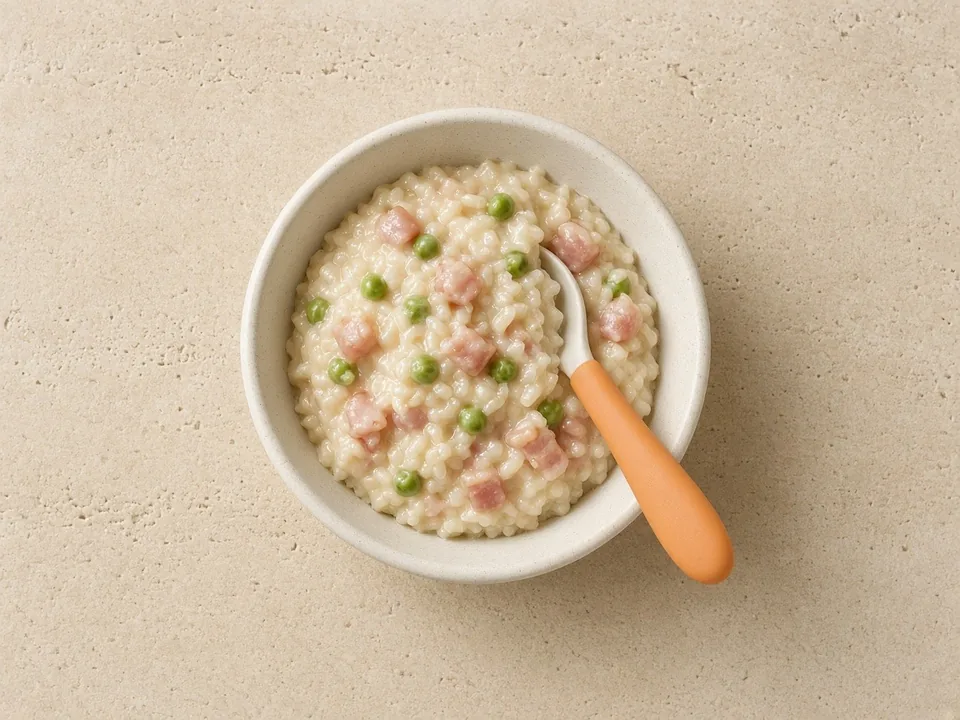
A little, finely chopped, in dishes
Keep bacon as a small amount mixed into soft food, such as an omelet, risotto, or a bean or vegetable soup. Back bacon is leaner than streaky bacon.
- Size
- Small pieces about 1 cm (just under ½ inch) or smaller, mixed into a moist dish.
- Check before serving
- No hard, crunchy shards or chewy strips. Every piece should be small and mixed into soft food.
2 years+
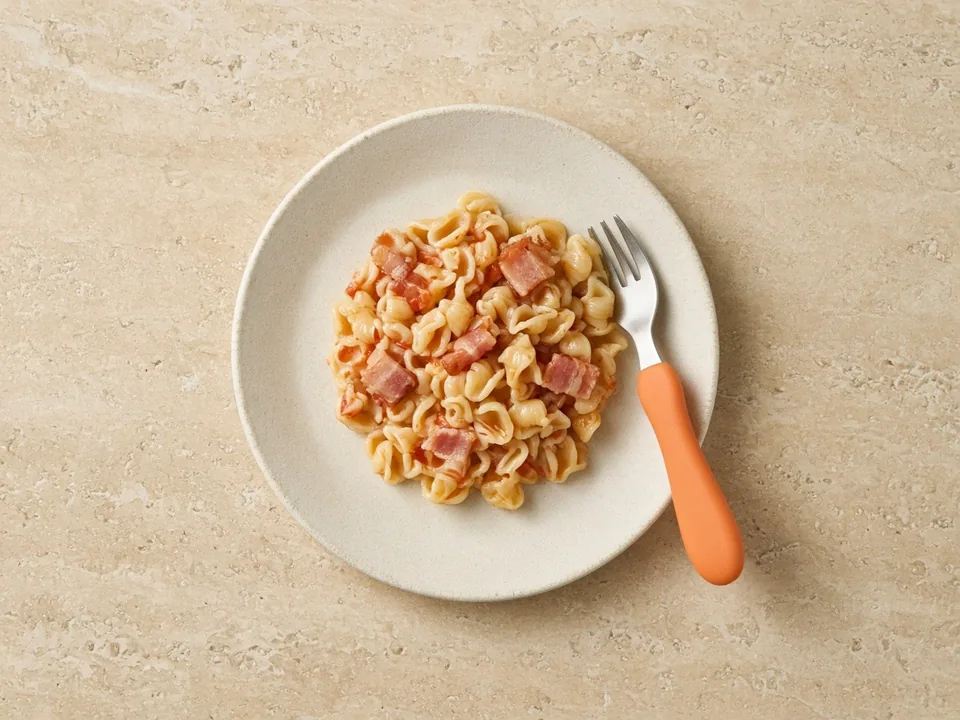
Small pieces in family meals
A little chopped bacon can go into family dishes like pasta or soup. Skip crunchy bacon strips and bacon bits on their own, and have your child sit down to eat.
- Size
- Pieces about 1 cm (just under ½ inch), mixed into food.
- Check before serving
- No hard, crunchy shards or chewy strips.
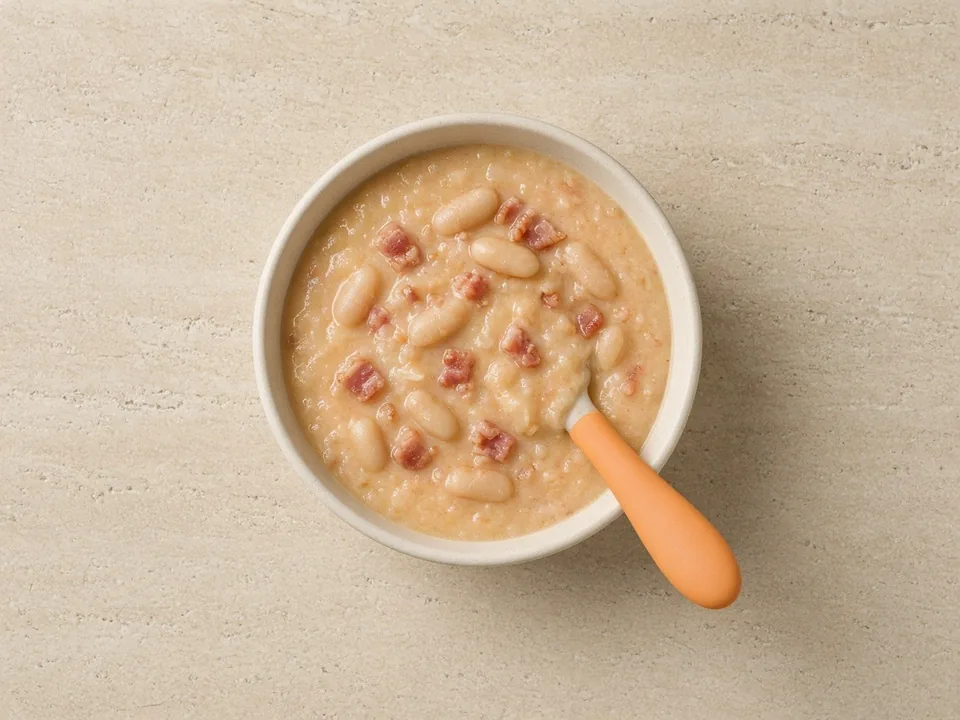
3 years+
Small pieces, still occasional
The AAP lists chunks of meat among foods to avoid or change for young children, and advises keeping high-risk foods from children until 4 years or older. Keep cutting bacon small, avoid hard, crunchy pieces, and keep it to an occasional food.
- Size
- Pieces about 1 cm (just under ½ inch), mixed into food.
- Check before serving
- No hard, crunchy shards or chewy strips.
Always have your child sit upright in a high chair or at the table, and stay with them the whole time they eat. Keep to the size and texture for their stage. Every baby develops on their own timeline.
How to prepare bacon
- 1
Choose plain bacon, not maple- or honey-cured, and a lower-salt one if you can. Back bacon is leaner than streaky bacon.
- 2
Cook it fully in a pan, in the oven or in the microwave: it's hard to check the temperature of thin bacon, and cooking it until crisp makes sure it's safe. Cured bacon can stay pink even when it's cooked. Don't partly cook bacon to finish later.
- 3
Drain it on paper towel and let it cool, then chop it finely and throw away any hard, sharp shards or very chewy bits. Stirring the rest into a moist food softens it.
- 4
Stir a small amount into a soft, moist food, such as scrambled egg, pasta sauce or soup.
How much to offer
Use bacon as a flavor, not a main food: a small spoonful of finely chopped bacon in your toddler's dish is plenty, and not every day. The NHS suggests no more than 2 g of salt a day for children aged 1 to 3, and bacon is very high in salt. Your child decides how much to eat from what you offer.
Common mistakes
Serving crispy strips
Crispy bacon snaps into hard, sharp shards, and chewy strips are hard to break down. Chop it finely and mix it into soft food.
Offering bacon to babies
The NHS lists bacon among salty foods babies shouldn't eat. Babies under 1 need less than 1 g of salt a day.
Partly cooking it
Never brown bacon and finish cooking it later: bacteria may not be destroyed. Cook it completely in one go.
Making it a regular breakfast
Bacon is a processed meat and very salty. The NHS advises limiting processed meat for children, though small amounts are OK.
Where US and UK guidance differ on bacon
United States(AAP and CDC)Your setting
The CDC lists processed meats (with lunch meats, sausages, hot dogs and ham as examples) among foods high in salt, and says to avoid foods high in salt for young children. Bacon is a processed meat. The AAP advises limiting processed foods made for adults, because they often contain more salt, and cooking babies' food with no added salt. It lists chunks of meat among foods to avoid or change until about 4 years. If you follow US advice, skip bacon or serve it only now and then.
United Kingdom(NHS)Your setting
The NHS says babies shouldn't eat salty foods like bacon, and suggests no more than 2 g of salt a day for children aged 1 to 3. Guidance for UK nurseries says not to give children under 5 foods high in salt, such as bacon and sausages.
We cover US and UK guidance in detail. Elsewhere, check your national health service's advice too.
Questions parents ask
Can bacon be a choking hazard for babies?
Bacon isn't on the CDC choking list by name, but crispy bacon snaps into hard, sharp shards and chewy strips are hard for young children to break down. The CDC lists tough or large chunks of meat as a choking hazard. Skip bacon in the first year. For toddlers, cook it completely, chop it finely and stir a little into soft, moist food. Stay with your child while they eat.
Can babies be allergic to bacon?
Bacon is not a common allergen. If you buy flavored bacon, check the ingredients list for anything your child reacts to.
Is bacon healthy for babies?
Very high in salt: 100 g of pan-fried bacon has about 1,680 mg of sodium (about 4.2 g of salt), nearly three times the NHS 'high salt' level of 600 mg of sodium per 100 g. It also provides protein and fat.
Can babies eat bacon?
Not before 12 months. The NHS lists bacon among salty foods babies shouldn't eat, because too much salt isn't good for their kidneys. Babies under 1 need less than 1 g of salt a day. Offer fresh meat, like shredded pork or chicken, instead.
Can toddlers eat crispy bacon?
Not as crispy strips. They snap into hard, sharp shards that are hard to chew. Cook bacon completely, chop it finely and stir a little into a soft, moist dish.
Is uncured bacon better for toddlers?
Not really. Uncured bacon has no nitrite added directly, but it's usually cured with ingredients such as celery juice powder that naturally contain nitrate, and US labels have to say so. It's still a processed meat and still salty: check the salt on the label, and keep it to the same small, occasional amounts.
How much salt can toddlers have?
The NHS suggests no more than 2 g of salt a day for children aged 1 to 3, and less than 1 g a day for babies under 1. That includes salt already in foods like bacon, bread and cheese.
If your baby refuses bacon
- There's no need to keep offering bacon. It's an occasional flavor, and fresh meat, fish, eggs and beans give the same protein with much less salt.
- If your toddler wants what the family is eating, stir a little finely chopped bacon into a food they already like.
- Many toddlers prefer softer foods. Shredded pork or chicken is an easy swap.
- Funny faces don't mean they dislike it. They're getting used to a new taste and texture.
Never force or pressure your baby to eat. Some days they'll eat more, some days less, and that's normal.
Buying and storing bacon
- Keep raw bacon in the fridge and use it within 7 days (or by its use-by date), or freeze it for up to 4 months.
- Cooked bacon keeps for 4 to 5 days in the fridge, or 1 month in the freezer. Rice dishes are the exception: cool them within 1 hour, keep them in the fridge for no more than 1 day, and reheat them only once.
- Reheat dishes made with bacon only once, to 165°F (74°C), until steaming hot, then let them cool before serving.
- Throw away any food left out at room temperature for more than 2 hours (1 hour if it's hotter than 90°F / 32°C).
When to talk to your doctor
Contact your pediatrician, GP or health visitor if:
- Your child had a choking episode, even if the food came out and they seem fine. The NHS advises getting medical help, because part of the food could be left behind.
- You notice mild signs of an allergic reaction after eating, such as a few hives or a little vomiting. See signs of a reaction.
- You're worried about how much your baby eats, their growth, or they refuse most solid food for weeks.
Call 911999your local emergency number (such as 112 in Europe or 000 in Australia) now if your baby has trouble breathing, wheezing, can't cough or cry, has lips, mouth, tongue or throat that suddenly swell, or becomes pale, bluish, floppy or unresponsive. Also call if hives come with repeated vomiting.
Add a note (likes, dislikes, any reaction)
Saved in this browser only. Think it was a reaction? See signs of an allergic reaction and when to get help.
Helpful guides
Sources
- NHS: Foods to avoid giving babies and young children
- NHS: Salt in your diet
- NHS: Meat in your diet
- NHS Best Start in Life: Preparing food safely
- NHS: Food labels
- USDA FSIS: Bacon and food safety
- USDA FoodData Central: Pork, cured, bacon, pre-sliced, cooked, pan-fried
- CDC: Choking hazards
- AAP: Choking prevention for babies and children
- AAP: When can babies start solid foods?
- Department for Education: Food safety (Help for early years providers)
- NHS: How to stop a child from choking
- USDA FSIS: Leftovers and food safety
- CDC: Foods and drinks to avoid or limit
- Food Standards Agency: Home food fact checker
- NHS Best Start in Life: Storing and reheating food
More first foods

Free printable: The First 100 Foods checklist
Tick off foods as your baby tries them. Print it or save it as a PDF, no sign-up needed.