
Brioche
Rich, buttery and usually sweet, so shop-bought brioche waits until after age 4. Toast strips do the job meanwhile.
Checked against official guidance on October 18, 2026 · How we review
Quick answer
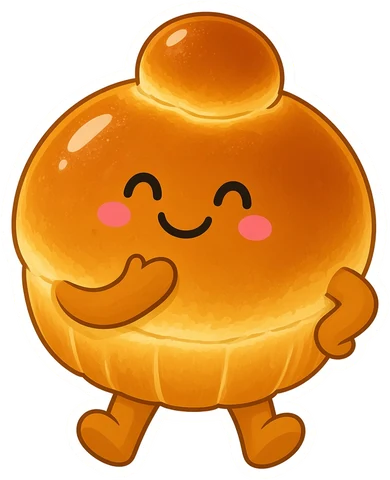
Wait until your child is at least 4 years old before offering brioche. Until then, offer the safer swaps below.
How to serve brioche by age
Cutting photo goes here
6 months+
Not yet: soft toast strips instead
Brioche isn't a baby food. It's usually made with sugar: shop-bought brioche labels in FoodData Central show about 8 to 12 g of sugars per 100 g, above the NHS 'low sugar' level of 5 g, and US and UK advice is to avoid added sugar up to age 4. Once wheat has been introduced on its own, offer lightly toasted plain bread strips instead.
- Size
- Strips about the size of an adult finger, roughly 6–8 cm long and 2 cm wide (2½–3 × ¾ in).
- Check before serving
- Press a toast strip between your thumb and finger. It should hold its shape but still feel soft inside, not snap like a cracker.
US and UK advice differ here. The AAP suggests mashed food or soft pieces no larger than ½ inch; the NHS suggests soft finger-sized pieces your baby can hold in their fist. Both agree the food must squash easily.
Cutting photo goes here
9 months+
Not yet: small pieces of soft bread instead
Still no brioche. For pincer-grasp practice, offer small pieces of lightly toasted plain bread, or challah that passes the label check (no honey, 5 g or less of sugars per 100 g). Some sweet breads are made or glazed with honey: never give honey, or foods made with it, before 12 months (CDC).
- Size
- Pieces no bigger than about 1 cm (just under ½ inch).
- Check before serving
- Each piece should be soft inside, not hard or crunchy.
Cutting photo goes here
12 months+
Not yet: toast, a soft roll or challah instead
Shop-bought brioche still waits. Our line follows the NHS label guide: baked goods with more than 5 g of sugars per 100 g wait until after age 4, because US and UK advice is to avoid added sugar up to then. If your toddler wants what others are eating, offer toast, a plain soft roll or label-checked challah in narrow strips. That includes brioche burger buns: swap in plain bread.
- Size
- Narrow strips, or bite-sized pieces about 1 cm (just under ½ inch).
- Check before serving
- Press a piece between your thumb and finger. It should be soft, not hard, crisp or doughy.
Cutting photo goes here
18 months+
Not yet: after age 4, a few soft pieces now and then
Brioche still waits until after age 4, including brioche buns, brioche French toast and chocolate brioche. After then, keep it occasional because of the fat and sugar: cut plain brioche into narrow strips or small pieces, and toast it lightly if it's very soft. Skip brioche topped or filled with whole or chopped nuts until at least age 5: the CDC lists whole or chopped nuts as a choking hazard, and the NHS says no whole nuts under 5. Only offer nuts in any form once tree nuts or peanuts have been introduced. Your child should sit down to eat.
- Size
- Bite-sized pieces about 1 cm (just under ½ inch), or narrow strips your child bites from.
- Check before serving
- Press a piece between your thumb and finger. It should be soft, not doughy. No nut pieces.
Always have your child sit upright in a high chair or at the table, and stay with them the whole time they eat. Keep to the size and texture for their stage. Every baby develops on their own timeline.
How to prepare brioche
- 1
Until after age 4, offer toast strips, a plain soft roll or label-checked challah instead of brioche.
- 2
After then, choose plain brioche, not chocolate, sugar-topped or nut-topped versions, and check the label for allergens.
- 3
Toast it lightly if it's very soft, so it doesn't clump into a doughy ball, then cut it into narrow strips or small pieces.
- 4
Baking at home? Don't let your child taste the raw dough: the CDC lists raw dough made with uncooked flour, and foods with raw egg, as riskier choices for children under 5.
How much to offer
None before age 4: offer toast or plain bread instead. After that, a few small pieces now and then is plenty, alongside fruit, vegetables or a protein food. Brioche is rich in fat and contains salt and sugar. Your child decides how much to eat from what you offer: stop when they turn away or close their mouth.
Common mistakes
Giving brioche before age 4
Shop-bought brioche labels in FoodData Central show about 8 to 12 g of sugars per 100 g, above the NHS 'low sugar' level of 5 g. The CDC says foods with added sugars aren't recommended for infants and young children, and US and UK advice is to avoid added sugar up to age 4. Offer toast or plain bread instead.
Forgetting about brioche buns
Burger buns, sliders and French toast are sometimes made with brioche. Check the menu or the label, and swap in plain bread or a plain roll for your child.
Making it an everyday bread
FoodData Central's general brioche record has about 14 g of saturated fat per 100 g, nearly three times the NHS 'high' level of 5 g, though shop-bought loaves vary. The NHS says not to give children too many foods high in saturated fat. Keep brioche occasional, and use plain bread on most days.
Serving soft brioche in big pieces
UK early years guidance says white bread can form a doughy ball in the throat, and to cut all types of bread into strips for very young children. Brioche is soft and rich, so toast it lightly and cut it into narrow strips or small pieces.
Where US and UK guidance differ on brioche
United States(AAP and CDC)Your setting
No US source we use names brioche. The CDC says foods with added sugars aren't recommended for infants and young children, and the 2025–2030 Dietary Guidelines say to avoid added sugar for children aged 4 and under and to avoid highly processed foods that are salty or sweet. Shop-bought brioche contains sugar, so we suggest waiting until after age 4.
United Kingdom(NHS)Your setting
The NHS says to avoid food with sugar for children aged 4 and under, and not to give children too many foods high in saturated fat. UK early years guidance for nurseries goes further: children under 5 shouldn't be given foods high in saturated fat, such as biscuits, crisps and cakes. After age 4, keep brioche occasional and in small amounts.
We cover US and UK guidance in detail. Elsewhere, check your national health service's advice too.
Questions parents ask
Can brioche be a choking hazard for babies?
Brioche is very soft and can clump into a doughy ball, and some versions are topped with chopped nuts, which the CDC lists as a choking hazard. The CDC also advises avoiding sticky foods that are difficult to chew and swallow. Toast brioche lightly, cut it into narrow strips or small pieces, skip nut toppings, and have your child sit down to eat. Stay with your child during meals.
Can babies be allergic to brioche?
Brioche is usually made with wheat (with gluten), egg and milk or butter, three foods that can trigger allergic reactions. Recipes vary: of two shop-bought brioches in FoodData Central, one lists egg and milk, and the other lists neither but contains soy. Toppings and fillings can add nuts or sesame, so check the label. Introduce each allergen on its own first, one at a time and in small amounts, so you can spot a reaction. Most reactions start within a few minutes to 2 hours, but cows' milk allergy can take up to 3 days to show.
Is brioche healthy for babies?
Brioche provides carbohydrate for energy and some protein (about 9 g per 100 g). FoodData Central's general brioche record has about 27 g of fat and 14 g of saturated fat per 100 g, above the NHS 'high' levels of 17.5 g and 5 g, and about 437 mg of sodium (about 1.1 g of salt), under the NHS 'high salt' level of 1.5 g. That record lists about 3.1 g of sugars, but two shop-bought brioche labels list about 8.1 g and 11.9 g, above the NHS 'low' level of 5 g. Those two labels list about 7.1 g and 9 g of added sugars.
Can babies eat brioche?
Not shop-bought brioche, until after age 4. Shop-bought brioche labels show about 8 to 12 g of sugars per 100 g, above the NHS 'low sugar' level of 5 g, and US and UK advice is to avoid added sugar up to age 4. Brioche is also rich in fat. Lightly toasted plain bread strips do the same job.
Can toddlers have a brioche bun?
It's best to wait until after age 4, the same as other brioche. Ask for a plain bun, or serve the burger or filling with plain bread or toast cut into strips.
Is brioche the same as challah?
Both are soft breads made with egg, but brioche is usually richer and sweeter: FoodData Central's brioche record has about 27 g of fat per 100 g. Challah with no honey and 5 g or less of sugars per 100 g on the label is fine from 6 months. See our challah page.
If your baby refuses brioche
- There's no need to keep offering brioche. It's an occasional food, and toast or plain bread does the same job.
- If your toddler wants what others are eating, offer toast, a plain soft roll or label-checked challah with fruit or yogurt.
- After age 4, offer a small piece alongside a food they already like.
- Eat the same food yourself at the same meal. Toddlers copy what they see.
Never force or pressure your baby to eat. Some days they'll eat more, some days less, and that's normal.
Buying and storing brioche
- Store brioche as the package or bakery says, and eat it by the date on the label.
- Wrap cut brioche well so it doesn't dry out.
- Throw away any food left out at room temperature for more than 2 hours (1 hour if it's hotter than 90°F / 32°C).
When to talk to your doctor
Contact your pediatrician, GP or health visitor if:
- Your child has had any reaction to wheat, egg or milk, even a mild one. Stop offering brioche until you've talked to your pediatrician.
- You notice mild signs of an allergic reaction after eating, such as a few hives or a little vomiting. See signs of a reaction.
- You're worried about how much your baby eats, their growth, or they refuse most solid food for weeks.
Call 911999your local emergency number (such as 112 in Europe or 000 in Australia) now if your baby has trouble breathing, wheezing, can't cough or cry, has lips, mouth, tongue or throat that suddenly swell, or becomes pale, bluish, floppy or unresponsive. Also call if hives come with repeated vomiting.
Offered brioche?
Add it to your first 100 foods.
Brioche is in your 100 foods
1 of 100 offered · See all
Last offered today. Once brioche is in your baby's diet, keep offering it regularly.
Add a note (likes, dislikes, any reaction)
Saved in this browser only. Think it was a reaction? See signs of an allergic reaction and when to get help.
Helpful guides
Sources
- NHS: Foods to avoid giving babies and young children
- NHS: Food labels
- Department for Education: Food safety (Help for early years providers)
- NHS: Food allergies in babies and young children
- CDC: Choking hazards
- CDC: Botulism prevention
- CDC: Safer food choices for children under 5
- HHS: Fact sheet on the Dietary Guidelines for Americans, 2025–2030
- USDA FoodData Central: Brioche
- USDA FoodData Central: Brioche (branded roll)
- USDA FoodData Central: Brioche loaf (branded)
- USDA FSIS: Leftovers and food safety
More first foods


Free printable: The First 100 Foods checklist
Tick off foods as your baby tries them. Print it or save it as a PDF, no sign-up needed.