
Crab
Sweet, soft crab meat. A shellfish allergen to introduce early, picked clean of shell.
Checked against official guidance on October 18, 2026 · How we review
Quick answer
Babies can eat crab from around 6 months, once they show signs of being ready for solids. Prepare it as shown below.
How to serve crab by age
6 months+
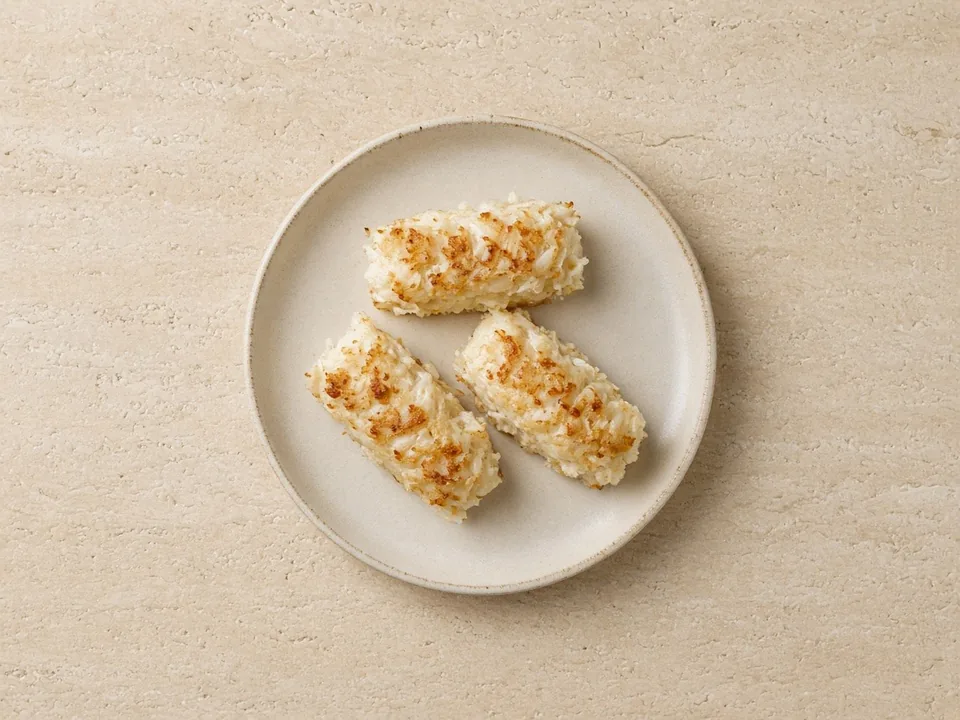
Shredded crab or crab cakes
Use fully cooked crab meat. Pick through it for shell, shred it finely and stir it into mashed potato or rice, or shape the mixture into finger-sized cakes.
- Size
- Finely shredded into soft food, or crab cakes shaped like a finger, about 6–8 cm long and 2 cm wide (2½–3 × ¾ in).
- Check before serving
- Rub the crab meat between your fingers before mixing it in: you shouldn't feel any hard or sharp bits of shell. Crab cakes should flatten when you squash them gently.
US and UK advice differ here. The AAP suggests mashed food or soft pieces no larger than ½ inch; the NHS suggests soft finger-sized pieces your baby can hold in their fist. Both agree the food must squash easily.
9 months+
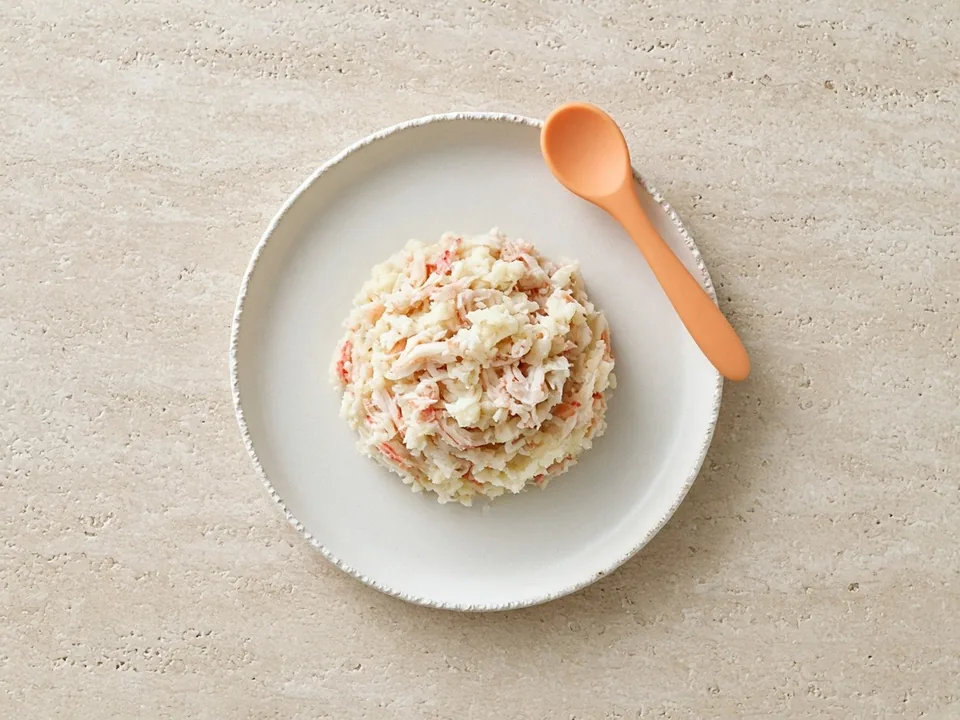
Finely shredded pieces
Shred cooked crab meat finely and mix into soft foods like rice, pasta, scrambled egg (once egg has been introduced) or mashed vegetables.
- Size
- Pieces no bigger than about 1 cm (just under ½ inch), finely shredded.
- Check before serving
- Feel the meat for shell, and check that no large chunks of leg or claw meat are left in the mix.
12 months+
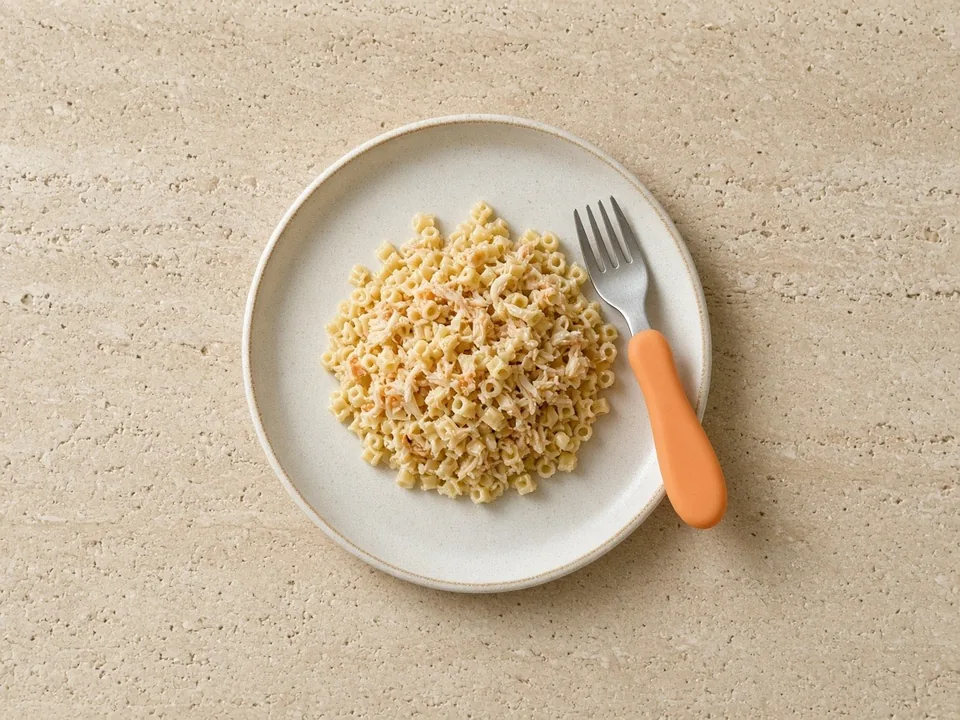
Shredded or in family meals
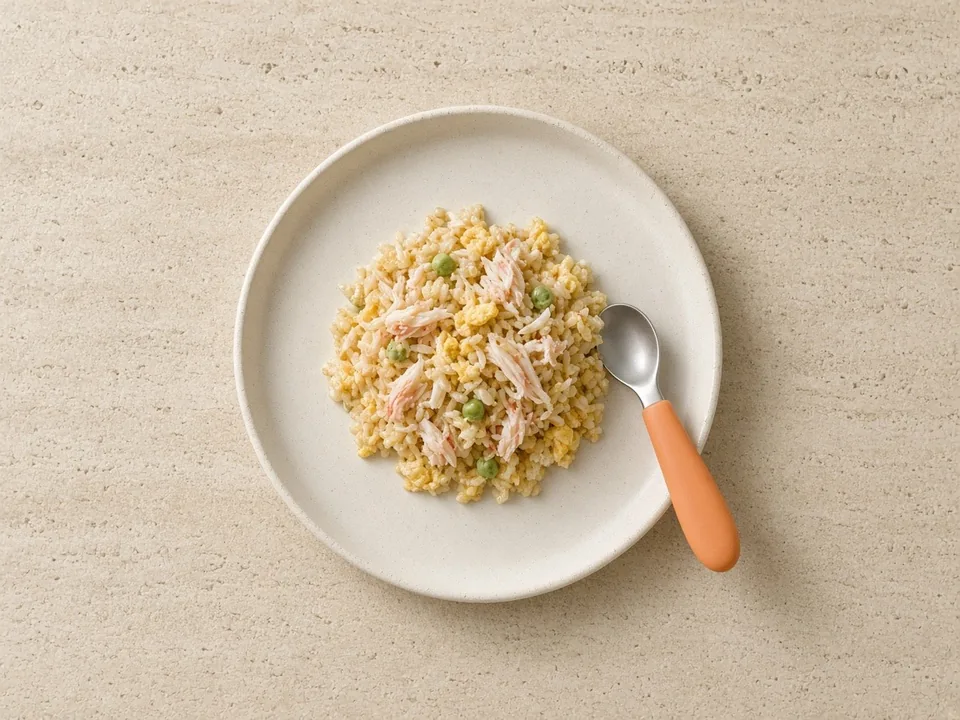
Serve shredded crab in crab cakes, pasta, fried rice or soft omelets. Break chunks of claw and leg meat into small shreds, and leave salt out of your toddler's portion.
- Size
- Bite-sized pieces about 1 cm (just under ½ inch).
- Check before serving
- Rub the crab meat between your fingers before cooking it into the dish: no hard or sharp bits of shell, and no big chunks of leg or claw meat.
18 months+
Shredded into family meals
Keep breaking crab into small shreds in family dishes, and keep checking for shell. Don't hand toddlers crab legs or claws in the shell to pick at: shell pieces are hard and sharp.
- Size
- Bite-sized pieces about 1 cm (just under ½ inch).
- Check before serving
- Check that all crab meat is picked clean of shell and broken into small shreds before serving.
Always have your child sit upright in a high chair or at the table, and stay with them the whole time they eat. Keep to the size and texture for their stage. Every baby develops on their own timeline.
How to prepare crab
- 1
Buy fully cooked crab meat (fresh, pasteurized or canned), or cook whole crab until the flesh is firm, pearly and opaque (145°F / 63°C). Never serve raw crab.
- 2
Spread the meat on a plate and pick through it carefully with your fingers, removing every bit of shell and cartilage.
- 3
Shred it finely (6 months) or into small pieces (9 months+), and mix into a soft food or shape into cakes with mashed potato. Don't add salt.
- 4
First time? Pick a day your baby is well, at home, when you can watch them for a couple of hours afterward.
How much to offer
For the very first taste, offer a small amount: a teaspoon of shredded crab mixed into a food your baby already eats. If there's no reaction, offer more next time. For ages 1 to 3, the FDA suggests a fish or shellfish serving of about 1 oz (28 g), twice a week. Crab is naturally higher in sodium than most fish, so keep portions small. Your baby decides how much to eat.
Common mistakes
Missing bits of shell
Even picked crab meat sold in tubs can contain small pieces of shell and cartilage. Pick through every portion with your fingers before serving.
Serving imitation crab
Imitation crab (surimi) is a processed fish product, not crab. The FDA describes it as minced fish blended with salt, starch or egg white, flavoring and sometimes real crab, and FoodData Central lists about 530 mg of sodium per 100 g. It can contain fish, wheat, egg and shellfish, so it isn't a good first taste of crab.
Choosing salty crab
FoodData Central lists about 1,070 mg of sodium per 100 g for cooked Alaska king crab, against about 400 mg for cooked blue crab. Choose crab with no added salt or seasoning where you can, and keep saltier kinds like king crab to a small amount in a meal.
Undercooking it
Cook crab until the flesh is firm, pearly and opaque. Never offer raw or lightly cooked shellfish.
Where US and UK guidance differ on crab
United States(AAP and CDC)Your setting
Crab is on the FDA's 'Best choices' list, and among the seafood it names as even lower in mercury. For ages 1–3, a serving is about 1 oz, twice a week.
United Kingdom(NHS)Your setting
The NHS notes that brown crab meat (the darker meat from the body) contains cadmium, which can affect the bones and kidneys in large amounts. It sets no maximum for white crab meat, so white meat is the simpler choice for babies.
We cover US and UK guidance in detail. Elsewhere, check your national health service's advice too.
Questions parents ask
Can crab be a choking hazard for babies?
Bits of shell and firm chunks of leg or claw meat are the things to watch for. Official choking advice doesn't name crab shell, but the CDC advises removing all bones from fish and meat for babies, and shell is hard and sharp in the same way. Pick crab meat clean of shell, shred it finely for babies and into small pieces for toddlers, and never hand young children crab in the shell. Never offer raw or undercooked shellfish. Stay with your child during meals.
Can babies be allergic to crab?
Shellfish is a common allergen, and crab is a crustacean, the shellfish group behind most shellfish reactions. Shellfish can be introduced from around 6 months, like other foods: start with a small amount on its own and watch for signs of a reaction. A shellfish allergy is different from a fish allergy: one doesn't mean the other. People allergic to one shellfish often react to others, and shellfish allergies often last for life, so talk to your pediatrician if your baby reacts. Crab, such as Dungeness crab, can also carry toxins from algae blooms that cooking doesn't destroy (NHS, CDC). If you hear that local waters have had an algae bloom or 'red tide' warning, don't serve shellfish from there. If your child has breathing trouble, swelling of the face, lips or tongue, seems confused, or becomes floppy after eating crab, call your emergency number. For vomiting, diarrhea, numbness or tingling, or if they seem unwell within a few hours of eating crab, get medical care right away.
Is crab healthy for babies?
A lean source of protein, with zinc, vitamin B12, selenium and copper: FoodData Central lists about 3.8 mg of zinc per 100 g of cooked blue crab. The NHS notes crab is one of the main shellfish sources of omega-3 fats, though it has less than oily fish. Crab is not a major source of iron.
When can babies eat crab?
From around 6 months, fully cooked, picked clean of shell and shredded finely. The CDC lists shellfish among the allergenic foods to introduce when you introduce other foods.
Can babies eat imitation crab?
It's best to skip it. Imitation crab is processed fish (surimi), often with added salt, starch, egg white and flavoring, and sometimes real crab. FoodData Central lists about 530 mg of sodium per 100 g. Use real cooked crab meat instead.
Is crab high in mercury?
No. Crab is on the FDA's 'Best choices' list and among the seafood it names as even lower in mercury.
If your baby refuses crab
- Many babies need 10 or more tries before they accept a new food. Keep offering it alongside foods they already like.
- Mix shredded crab into foods your baby already likes, such as rice, pasta or mashed potato.
- Try crab cakes: they're easier to hold than loose shreds.
- If your baby keeps refusing crab and you're relying on it as an early allergen, mention it to your pediatrician.
Never force or pressure your baby to eat. Some days they'll eat more, some days less, and that's normal.
Buying and storing crab
- Keep crab meat in the fridge and use it by the date on the pack. Once opened, use it within 2 days, or freeze it.
- Cooked crab dishes keep for 3 to 4 days in a covered container in the fridge. Rice dishes are the exception: cool them within 1 hour, keep them in the fridge for no more than 1 day, and reheat them only once.
- Crab cakes can be frozen for 3 to 4 months. Reheat only once, to 165°F (74°C), until steaming hot, then let them cool before serving.
- Throw away any food left out at room temperature for more than 2 hours (1 hour if it's hotter than 90°F / 32°C).
When to talk to your doctor
Contact your pediatrician, GP or health visitor if:
- Your baby has had any reaction to crab, even a mild one. Stop offering it, and talk to your pediatrician before trying other shellfish such as shrimp or lobster.
- You notice mild signs of an allergic reaction after eating, such as a few hives or a little vomiting. See signs of a reaction.
- You're worried about how much your baby eats, their growth, or they refuse most solid food for weeks.
Call 911999your local emergency number (such as 112 in Europe or 000 in Australia) now if your baby has trouble breathing, wheezing, can't cough or cry, has lips, mouth, tongue or throat that suddenly swell, or becomes pale, bluish, floppy or unresponsive. Also call if hives come with repeated vomiting.
Last offered today. Once crab is in your baby's diet, keep offering it regularly.
Add a note (likes, dislikes, any reaction)
Saved in this browser only. Think it was a reaction? See signs of an allergic reaction and when to get help.
Helpful guides
Sources
- FDA: Advice about eating fish
- FDA: Selecting and serving fresh and frozen seafood safely
- FDA: CPG Sec. 540.700 Labeling of processed and blended seafood products
- NHS: Fish and shellfish
- CDC: When, what, and how to introduce solid foods
- ACAAI: Shellfish allergy
- USDA FoodData Central: Crab, blue, cooked, moist heat
- USDA FoodData Central: Crab, Alaska king, cooked, moist heat
- USDA FoodData Central: Crab, Alaska king, imitation, made from surimi
- CDC: Food poisoning from seafood
- Food Standards Agency: Home food fact checker
- NHS Best Start in Life: Storing and reheating food
- NHS: Help your baby enjoy new foods
More first foods

Free printable: The First 100 Foods checklist
Tick off foods as your baby tries them. Print it or save it as a PDF, no sign-up needed.