
Dragon fruit
Bright pink outside, speckled inside, and soft enough to squish.
Checked against official guidance on October 18, 2026 · How we review

Quick answer
Babies can eat dragon fruit from around 6 months, once they show signs of being ready for solids. Prepare it as shown below.
How to serve dragon fruit by age
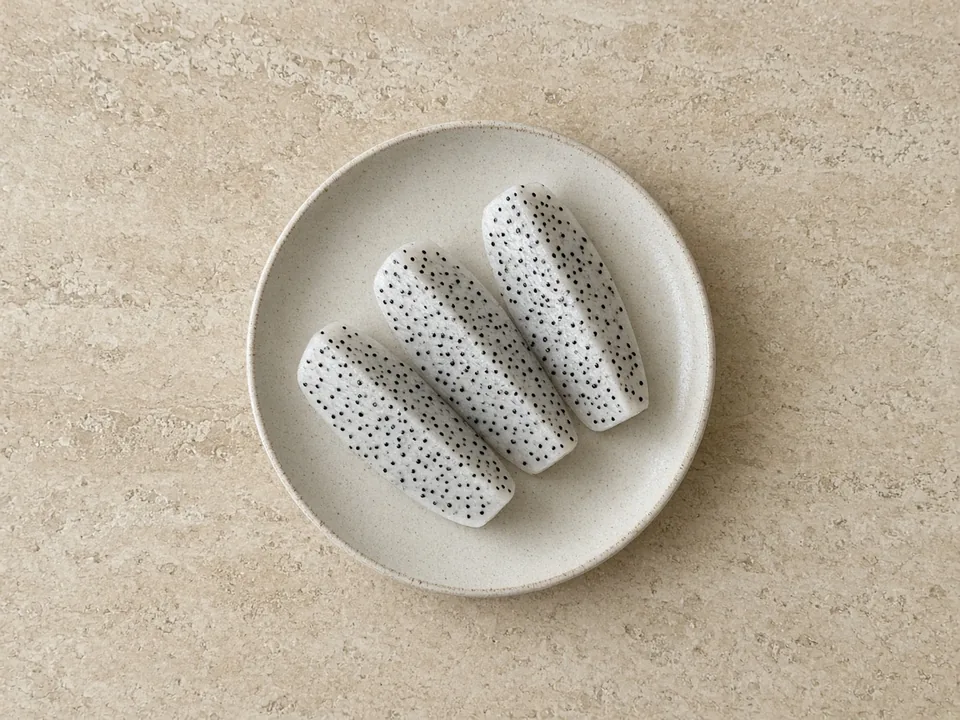
6 months+
Peeled spears or mashed
Cut a ripe dragon fruit in half, scoop out the flesh or peel off the thick skin, and slice the flesh into spears. It can be slippery, so you can also mash it and serve it on a pre-loaded spoon.
- Size
- Spears about the size of an adult finger, roughly 6–8 cm long and 2 cm wide (2½–3 × ¾ in), or mashed.
- Check before serving
- Squash a spear between your thumb and finger. Ripe dragon fruit should crush easily. If it's firm, wait until it softens.
US and UK advice differ here. The AAP suggests mashed food or soft pieces no larger than ½ inch; the NHS suggests soft finger-sized pieces your baby can hold in their fist. Both agree the food must squash easily.
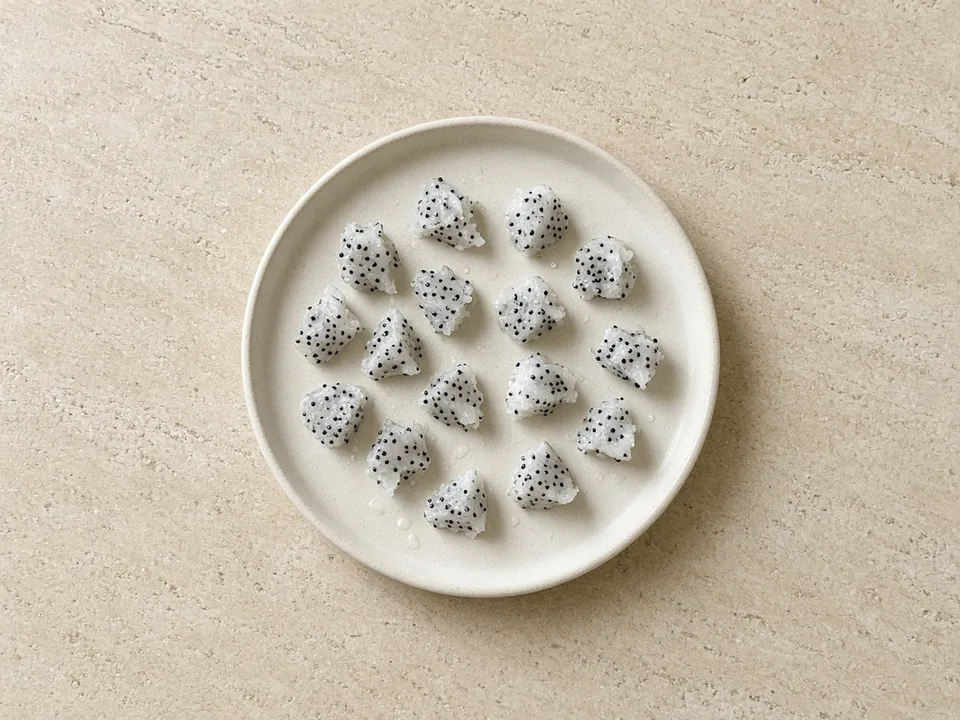
9 months+
Small soft pieces
Cut ripe dragon fruit flesh into small pieces for pincer-grasp practice. Too slippery? Once oats have been introduced on their own, roll the pieces in finely ground oats.
- Size
- Pieces no bigger than about 1 cm (just under ½ inch).
- Check before serving
- Each piece should squash flat between your thumb and finger.
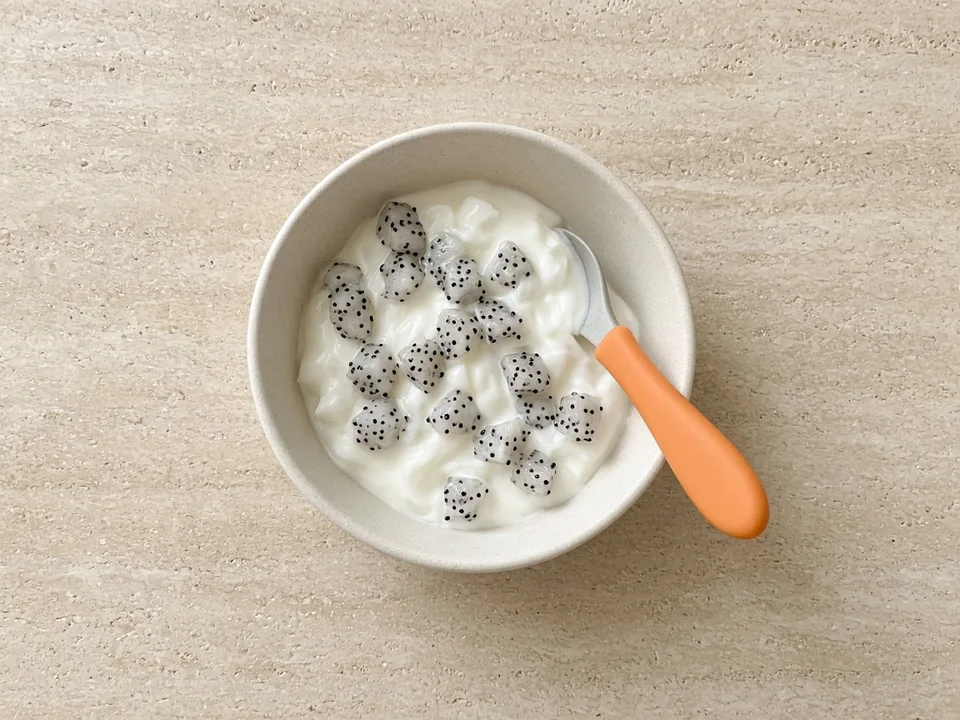
12 months+
Small pieces or in dishes
Offer small pieces of ripe dragon fruit on their own, stirred into plain yogurt, or in fruit salad with other soft fruit.
- Size
- Pieces about 1 cm (just under ½ inch).
- Check before serving
- Still do the squash test: firm dragon fruit isn't ripe yet.
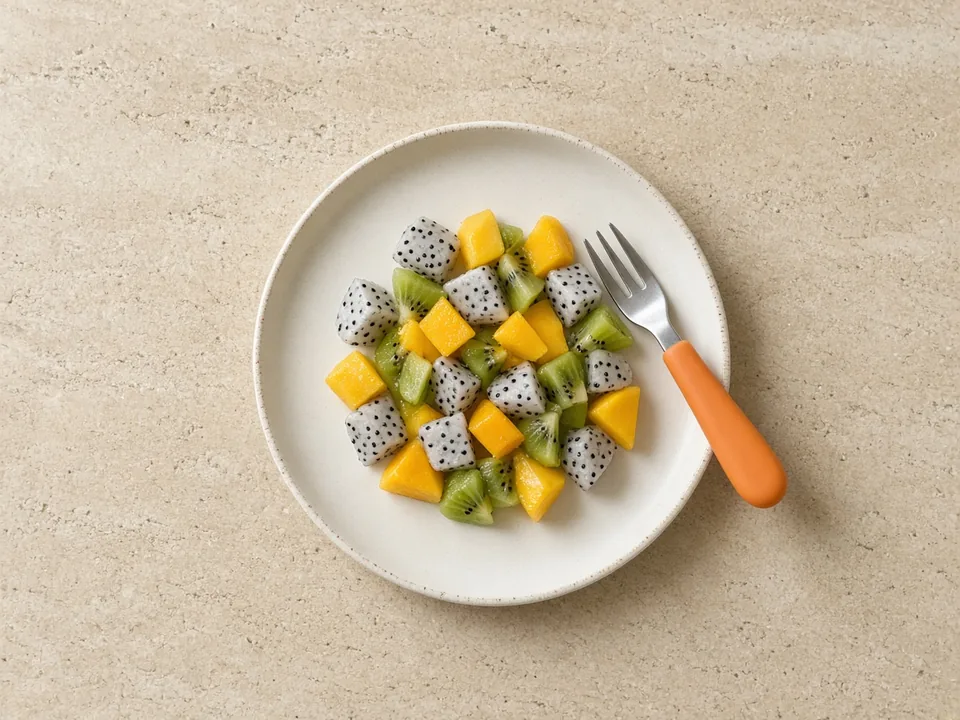
18 months+
Pieces, thin slices or in dishes
Offer ripe dragon fruit as a snack or in fruit salad. Make sure your toddler sits down to eat, and stay with them.
- Size
- Bite-sized pieces about 1 cm (just under ½ inch), or thin slices.
- Check before serving
- Still do the squash test with raw dragon fruit, and never serve frozen pieces: they're hard.
Always have your child sit upright in a high chair or at the table, and stay with them the whole time they eat. Keep to the size and texture for their stage. Every baby develops on their own timeline.
How to prepare dragon fruit
- 1
Choose a dragon fruit with bright, even skin that gives a little when you press it gently.
- 2
Rinse it under running water before cutting, so germs on the skin aren't carried onto the fruit.
- 3
Cut it in half lengthwise. Scoop out the flesh with a spoon, or peel the thick skin away. Don't serve the skin.
- 4
Cut the flesh into spears (6 months) or small pieces (9 months+), and do the squash test. The tiny black seeds are spread through the flesh and can't be picked out. For a smoother texture, mash it.
How much to offer
Start with one or two spears, or a teaspoon or two of mash. Your baby decides how much to eat: stop when they turn away or close their mouth. Lots of squashing and dropping is normal at first.
Common mistakes
Serving the skin
The thick, leathery skin isn't eaten. Scoop out the flesh or peel the skin away before serving.
Using firm, unripe fruit
Firm dragon fruit can break off in chunks. Wait until it gives a little when you press it gently.
Giving frozen pieces
Frozen dragon fruit cubes are hard. Thaw them in the fridge first, or blend them into a soft food.
Giving up because it's slippery
Mash it onto a pre-loaded spoon, or roll pieces in finely ground oats once oats have been introduced on their own.
Where US and UK guidance differ on dragon fruit
United States(AAP and CDC)Your setting
The AAP advises cooking most fruit until soft before 12 months, except mashed banana, and lists fruit chunks among foods to avoid under 1. If you follow US advice, mash ripe dragon fruit.
United Kingdom(NHS)Your setting
The NHS suggests slices of soft fruit as finger foods from around 6 months. Use only ripe dragon fruit that passes the squash test, with the skin removed.
We cover US and UK guidance in detail. Elsewhere, check your national health service's advice too.
Questions parents ask
Can dragon fruit be a choking hazard for babies?
Ripe dragon fruit is soft and a low choking risk. Avoid firm, unripe fruit, which can break into hard chunks, and frozen pieces, which are hard. Stay with your child during meals.
Can babies be allergic to dragon fruit?
Dragon fruit is not a common allergen.
Is dragon fruit healthy for babies?
Gives some vitamin C, potassium and fiber: about 20 mg of vitamin C, 206 mg of potassium and 1.8 g of fiber per 100 g. It is not a major source of iron.
Can babies eat dragon fruit seeds?
The tiny black seeds are spread all through the soft flesh, so they can't be picked out, and they're eaten with the fruit. If you'd like a smoother texture for a young baby, mash the flesh well and serve it on a pre-loaded spoon.
Is red or white dragon fruit better for babies?
Either is fine. Prepare both the same way: ripe, soft and with the skin removed. Red-fleshed dragon fruit can stain clothes and bibs.
If your baby refuses dragon fruit
- Many babies need 10 or more tries before they accept a new food. Keep offering it alongside foods they already like.
- Dragon fruit has a mild taste. Try it mashed with a fruit your baby already likes, such as banana.
- Eat some yourself at the same meal. Babies copy what they see.
- Funny faces don't mean they dislike it. They're getting used to a new taste and texture.
Never force or pressure your baby to eat. Some days they'll eat more, some days less, and that's normal.
Buying and storing dragon fruit
- Keep ripe dragon fruit in the fridge, at or below 40°F (4°C).
- Cut dragon fruit keeps for 3 to 4 days in a covered container in the fridge.
- Dragon fruit pieces can be frozen for 3 to 4 months. Thaw them in the fridge before serving, and don't give frozen pieces to a baby: they're hard.
- Throw away any food left out at room temperature for more than 2 hours (1 hour if it's hotter than 90°F / 32°C).
When to talk to your doctor
Contact your pediatrician, GP or health visitor if:
- You notice mild signs of an allergic reaction after eating, such as a few hives or a little vomiting. See signs of a reaction.
- You're worried about how much your baby eats, their growth, or they refuse most solid food for weeks.
Call 911999your local emergency number (such as 112 in Europe or 000 in Australia) now if your baby has trouble breathing, wheezing, can't cough or cry, has lips, mouth, tongue or throat that suddenly swell, or becomes pale, bluish, floppy or unresponsive. Also call if hives come with repeated vomiting.
Offered dragon fruit?
Add it to your first 100 foods.
Dragon fruit is in your 100 foods
1 of 100 offered · See all
Add a note (likes, dislikes, any reaction)
Saved in this browser only. Think it was a reaction? See signs of an allergic reaction and when to get help.
Helpful guides
Sources
More first foods





Free printable: The First 100 Foods checklist
Tick off foods as your baby tries them. Print it or save it as a PDF, no sign-up needed.