
Empanadas
Baked at home, cooled and broken open, an empanada filling is easy to share.
Checked against official guidance on October 18, 2026 · How we review
Quick answer
Babies can eat empanadas from around 6 months, once they show signs of being ready for solids. Prepare it as shown below.
How to serve empanadas by age
6 months+
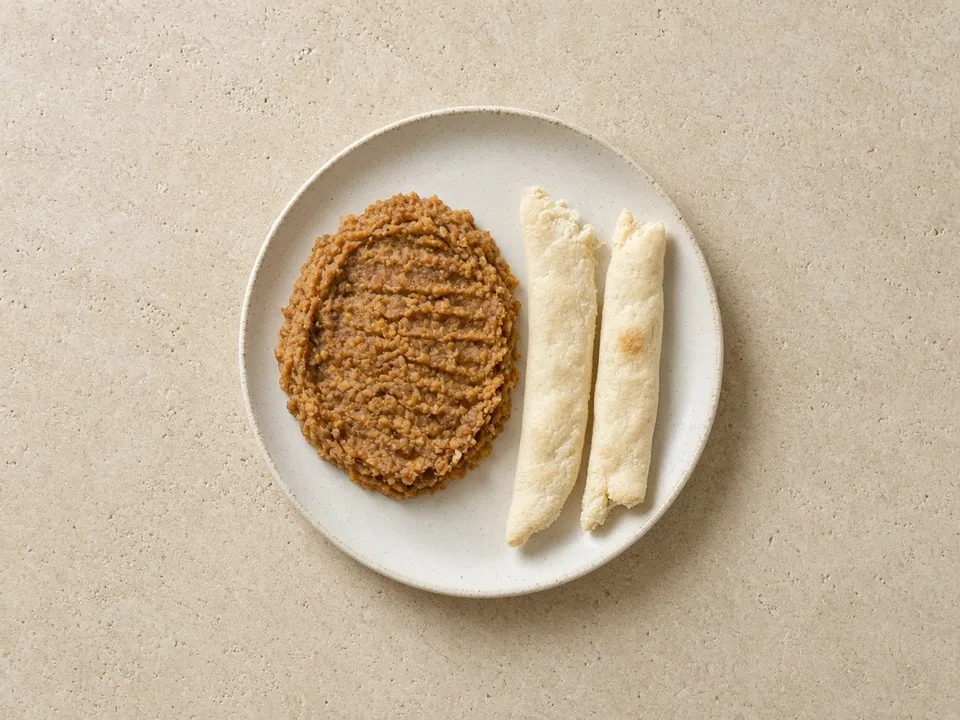
Mashed filling with soft pastry strips
Bake a homemade empanada with a soft filling, such as minced beef or chicken with mashed potato and soft vegetables, and no added salt. Let it cool, break it open, and mash the filling. Offer it on a pre-loaded spoon or spread flat, with a strip or two of the softer pastry. Trim off crisp, flaky edges and the thick crimped rim. Offer it once your baby has had wheat on its own.
- Size
- Filling mashed or spread flat, with narrow strips of soft pastry about the size of an adult finger, roughly 6–8 cm long and 2 cm wide (2½–3 × ¾ in).
- Check before serving
- Stir the filling and check the middle is only just warm. Squash the pastry between your thumb and finger: it should be soft, not crisp or flaky.
US and UK advice differ here. The AAP suggests mashed food or soft pieces no larger than ½ inch; the NHS suggests soft finger-sized pieces your baby can hold in their fist. Both agree the food must squash easily.
9 months+
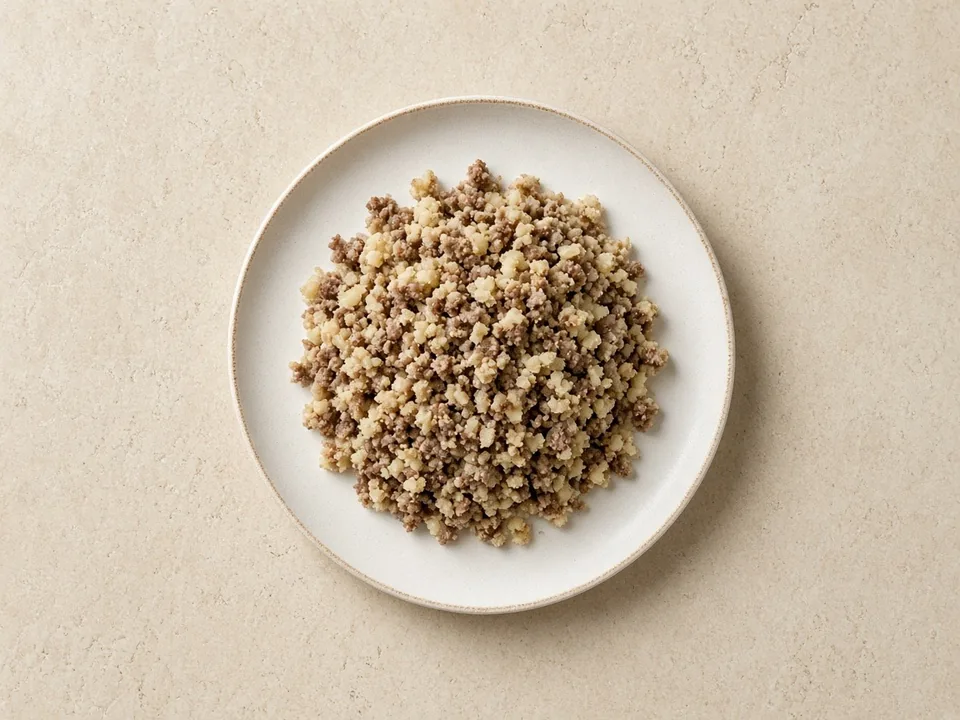
Small soft pieces
Break the empanada into small pieces of filling and soft pastry for pincer-grasp practice. Mash any beans, corn or peas in the filling, and chop olives, raisins or hard-boiled egg very finely, or leave them out.
- Size
- Pieces no bigger than about 1 cm (just under ½ inch).
- Check before serving
- Each piece should squash flat. No crisp pastry, and no whole olives, raisins or corn kernels.
12 months+
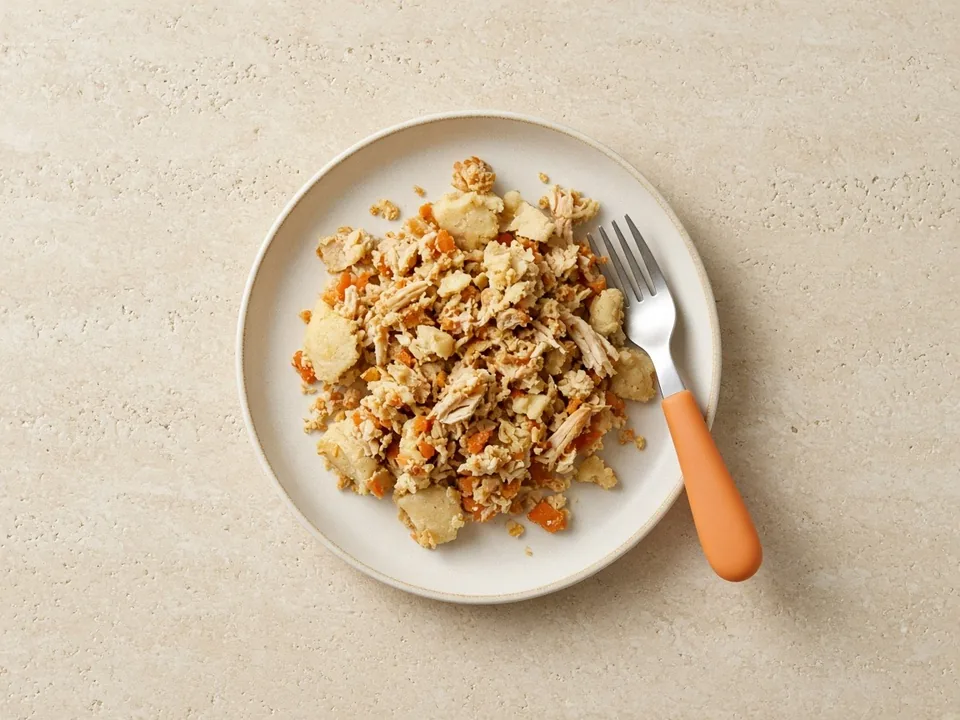
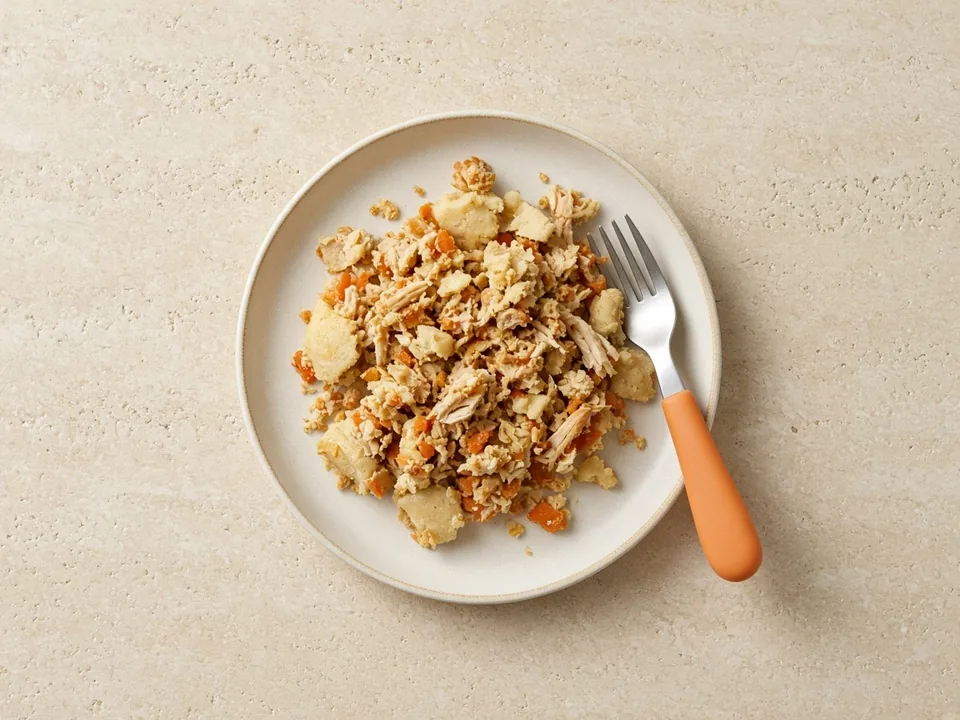
Empanada pieces from the family meal
Serve a cooled, baked empanada cut into small pieces, with the crimped edge trimmed. Shop-bought and restaurant empanadas are salty and often fried, so keep them occasional and cut them up the same way.
- Size
- Bite-sized pieces about 1 cm (just under ½ inch).
- Check before serving
- Check the filling's temperature in the middle, and that there's no hard, crisp pastry.
18 months+
Empanadas, cut up
Offer empanadas the way your family eats them, cooled and cut into strips or small pieces rather than whole. Baked ones are softer than fried ones. Quarter olives lengthwise, cut raisins small, and mash beans and corn in the filling.
- Size
- Bite-sized pieces about 1 cm (just under ½ inch), or narrow strips.
- Check before serving
- Filling only just warm, pastry soft, and no whole olives, raisins or kernels.
Always have your child sit upright in a high chair or at the table, and stay with them the whole time they eat. Keep to the size and texture for their stage. Every baby develops on their own timeline.
How to prepare empanadas
- 1
Wash your hands before and after handling raw minced meat, and keep it and its juices away from foods that won't be cooked. Don't taste raw dough: raw flour can carry germs.
- 2
Cook the filling first, until minced beef or pork reaches 160°F (71°C) and chicken 165°F (74°C). Mix in soft vegetables or mashed potato, and leave out salt and stock cubes. Take your baby's share of filling out before you season the rest.
- 3
Fill and seal the pastry. Brush it with beaten egg only once your baby has had egg on its own, or use a little oil instead. Bake rather than fry, until the pastry is cooked through and golden.
- 4
Let it cool, then break it open and let the filling cool too: it stays hot inside the pastry. Mash, cut or trim it for your baby's stage.
- 5
Offer empanadas only once your baby has had wheat, and egg or dairy if you used them, each on its own. First time? Pick a day your baby is well, at home, when you can watch them for a couple of hours afterward.
How much to offer
Start with a spoonful of filling and a strip or two of soft pastry. Your baby decides how much to eat: stop when they turn away or close their mouth. Pastry is high in fat and shop-bought empanadas are salty, so keep them an occasional meal, with soft vegetables on the side.
Common mistakes
Serving it hot from the oven
The filling stays hot inside the pastry after the outside has cooled. The AAP says burns of the mouth should get immediate medical attention. Break the empanada open, spread the filling out, stir it and check it's only just warm.
Leaving crisp, flaky pastry on
Crisp, flaky pastry and the thick crimped edge are hard for babies to chew, and the CDC advises avoiding hard foods that are difficult to chew and swallow. Trim them off, and offer softer pastry in narrow strips.
Sharing shop-bought or restaurant empanadas with a baby
A beef empanada has about 459 mg of sodium per 100 g (about 1.1 g of salt), so a large one (about 130 g) has about 1.5 g of salt. The NHS says babies under 1 should have less than 1 g of salt a day, and suggests limiting meat products in pastry because they're often high in fat and salt. Make your baby's at home without salt.
Undercooking the filling
Bacteria can be found all the way through minced meat products (NHS). Cook the filling before it goes into the pastry, to 160°F (71°C) for minced beef or pork and 165°F (74°C) for chicken, and reheat leftovers until steaming hot all the way through.
Where US and UK guidance differ on empanadas
United States(AAP and CDC)Your setting
USDA FSIS says to cook ground beef and pork to 160°F (71°C), and all poultry to 165°F (74°C), measured with a food thermometer. The CDC lists raw dough as a riskier choice for children under 5.
United Kingdom(NHS)Your setting
The NHS doesn't give temperatures. It says bacteria can be found all the way through poultry and meat products such as burgers, so cook them all the way through, until the juices run clear and there's no pink or red meat left inside.
We cover US and UK guidance in detail. Elsewhere, check your national health service's advice too.
Questions parents ask
Can empanadas be a choking hazard for babies?
Empanadas are a medium choking risk. Crisp, flaky pastry and the crimped edge are hard to chew, and fillings can hold olives, raisins, beans or corn kernels. The CDC advises avoiding small, sticky or hard foods, and lists whole beans, whole corn kernels and uncooked dried fruit such as raisins among choking hazards. Break empanadas open, mash or cut the filling, trim crisp pastry, quarter olives lengthwise and cut raisins small. Stay with your child during meals.
Can babies be allergic to empanadas?
Empanada pastry is made from wheat (with gluten), and many recipes brush it with egg or make it with butter (milk). Fillings can add more, such as cheese (milk), hard-boiled egg, or tuna or shrimp (fish and shellfish). Introduce each allergen on its own first, one at a time and in small amounts, so you can spot any reaction. Check labels on shop-bought empanadas and pastry discs, and ask what's in the filling when you eat out.
Are empanadas healthy for babies?
A beef empanada has about 12 g of protein, 2 mg of iron and 459 mg of sodium (about 1.1 g of salt) per 100 g. It also has about 6.9 g of saturated fat per 100 g. Making empanadas at home lets you leave out salt, bake rather than fry, and add more vegetables.
Can babies eat empanadas?
Yes, homemade baked ones from around 6 months, once your baby has had wheat on its own. Cook the filling through without salt, let it cool fully, and offer the filling mashed with strips of soft pastry.
Baked or fried empanadas for children?
Baked. Fried pastry is crisper and harder to chew, and the NHS suggests limiting meat products in pastry because they're often high in fat and salt. Bake your family's empanadas, and trim crisp edges for your child.
Are shop-bought empanadas OK for toddlers?
Now and then, cut up. A large beef empanada has about 1.5 g of salt, and the NHS says children aged 1 to 3 should have no more than 2 g a day. Reheat it until steaming hot all the way through, 165°F (74°C), then break it open and let the filling cool before serving.
If your baby refuses empanadas
- Many babies need 10 or more tries before they accept a new food. Keep offering it alongside foods they already like.
- Offer the parts separately: a spoonful of filling and a strip of soft pastry.
- Eat some yourself at the same meal. Babies copy what they see.
- Funny faces don't mean they dislike it. They're getting used to a new taste and texture.
Never force or pressure your baby to eat. Some days they'll eat more, some days less, and that's normal.
Buying and storing empanadas
- Keep raw minced meat in a sealed container on the bottom shelf of the fridge, and cook or freeze it within 1 to 2 days.
- Cooked empanadas keep for 3 to 4 days in a covered container in the fridge.
- Cooked empanadas can be frozen for 2 to 3 months, but not ones with hard-boiled egg in the filling. Reheat them only once, to 165°F (74°C), until steaming hot all the way through, then let them cool before serving.
- Throw away any food left out at room temperature for more than 2 hours (1 hour if it's hotter than 90°F / 32°C).
When to talk to your doctor
Contact your pediatrician, GP or health visitor if:
- Your child burns their mouth or skin on hot filling. Cool a skin burn under cool running water straight away, and don't use ice. The AAP says burns of the mouth or hands should get immediate medical attention. If they have any trouble breathing, call your emergency number.
- Your baby has had any reaction to wheat, egg or milk, even a mild one. Stop offering empanadas until you've talked to your pediatrician.
- Your baby vomits a few hours after eating an empanada with chicken, cheese or fish. This can be FPIES, a delayed type of food allergy that chicken, milk and fish can trigger. If they vomited once or twice and seem alert and like themselves, call your pediatrician or GP. If they vomit again and again, or are pale, floppy, very sleepy or hard to wake, call your emergency number.
- Your child has diarrhea, vomiting or tummy cramps after eating an empanada with a beef or pork filling that may have been undercooked. Call your pediatrician for bloody poop, a fever higher than 102°F (39°C), diarrhea or vomiting lasting more than 2 days, or signs of dehydration such as very dark pee, a dry mouth or crying without tears. Call your emergency number for blood in the pee, very little or no pee, losing the pink color in the cheeks or inside the lower eyelids, unexplained bruising or a rash of tiny red spots, or being very tired, cranky or less alert: these can be signs of hemolytic uremic syndrome (HUS), a serious complication that can damage the kidneys.
- You notice mild signs of an allergic reaction after eating, such as a few hives or a little vomiting. See signs of a reaction.
- You're worried about how much your baby eats, their growth, or they refuse most solid food for weeks.
Call 911999your local emergency number (such as 112 in Europe or 000 in Australia) now if your baby has trouble breathing, wheezing, can't cough or cry, has lips, mouth, tongue or throat that suddenly swell, or becomes pale, bluish, floppy or unresponsive. Also call if hives come with repeated vomiting.
Offered empanadas?
Add it to your first 100 foods.
Empanadas is in your 100 foods
1 of 100 offered · See all
Last offered today. Once empanadas is in your baby's diet, keep offering it regularly.
Add a note (likes, dislikes, any reaction)
Saved in this browser only. Think it was a reaction? See signs of an allergic reaction and when to get help.
Helpful guides
Sources
- CDC: Choking hazards
- CDC: Safer food choices for children under 5
- USDA FSIS: Safe minimum internal temperature chart
- FDA: Handling flour safely: what you need to know
- NHS: Meat in your diet
- NHS: Foods to avoid giving babies and young children
- NHS: Salt in your diet
- NHS: Food allergies in babies and young children
- AAP: Burn treatment and prevention tips for families
- USDA FoodData Central: Empanada, beef
- FoodSafety.gov: Cold food storage chart
- USDA FSIS: Freezing and food safety
- USDA FSIS: Leftovers and food safety
- ACAAI: Food protein-induced enterocolitis syndrome (FPIES)
- CDC: Symptoms of E. coli infection
- NHS Best Start in Life: Storing and reheating food
- NHS: Help your baby enjoy new foods
More first foods

Free printable: The First 100 Foods checklist
Tick off foods as your baby tries them. Print it or save it as a PDF, no sign-up needed.