
Fava beans
Also called broad beans. Pop them out of their skins for a soft, bright green mash.
Checked against official guidance on October 18, 2026 · How we review
Quick answer
Babies can eat fava beans from around 6 months, once they show signs of being ready for solids. Prepare it as shown below.
How to serve fava beans by age
6 months+
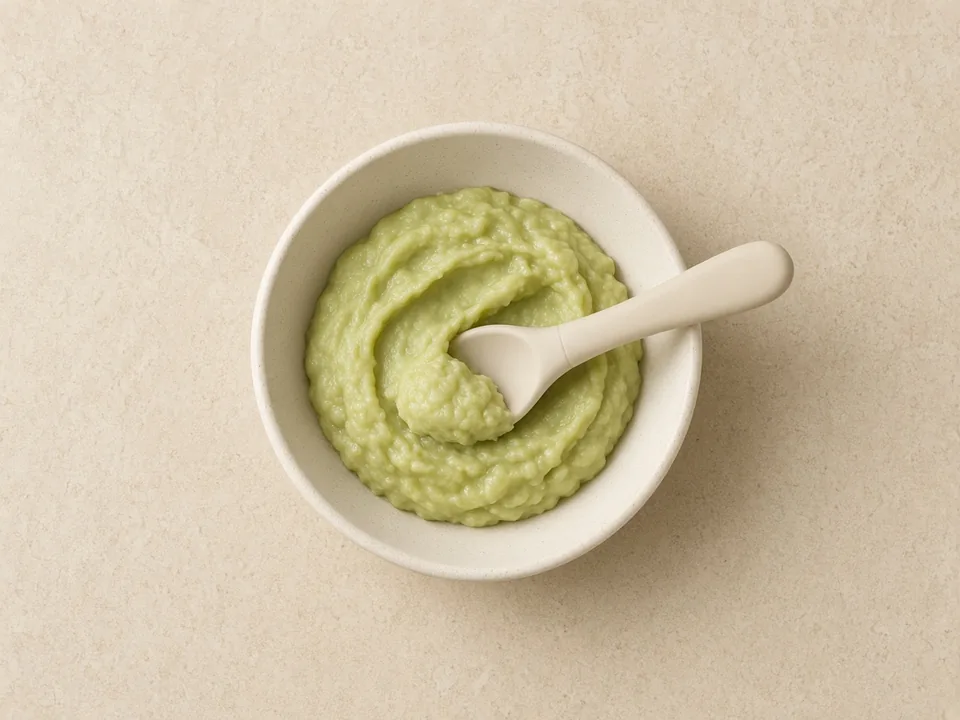
Smooth mash
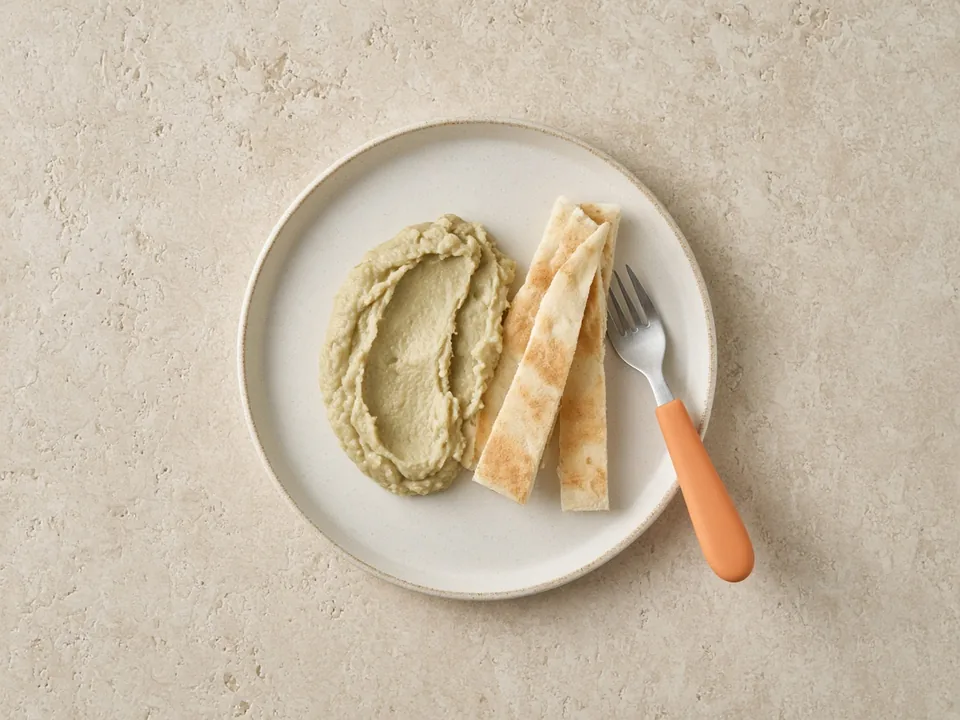
Cook fava beans until very soft, slip off the tough outer skins, then mash the soft insides with a fork, adding a little water, breast milk or formula until smooth. Offer on a pre-loaded spoon, or spread thinly on soft cooked vegetable sticks.
- Size
- Mashed smooth on a pre-loaded spoon, or spread thinly on a soft finger food about the size of an adult finger, roughly 6–8 cm long and 2 cm wide (2½–3 × ¾ in).
- Check before serving
- Press the mash between your thumb and finger. It should be smooth, with no whole beans or pieces of skin left.
US and UK advice differ here. The AAP suggests mashed food or soft pieces no larger than ½ inch; the NHS suggests soft finger-sized pieces your baby can hold in their fist. Both agree the food must squash easily.
9 months+
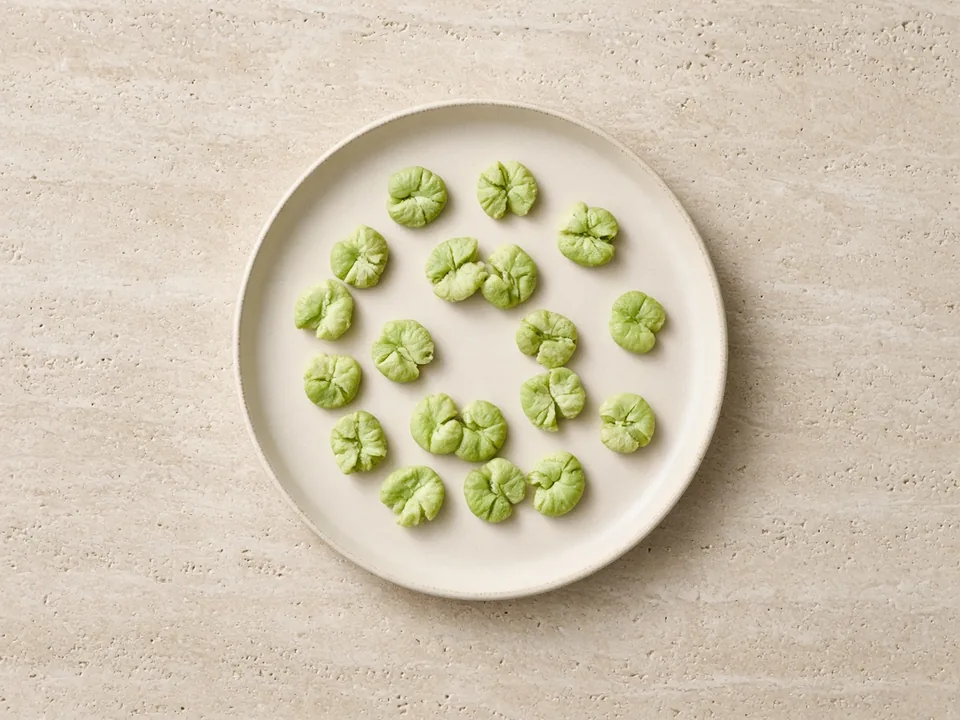
Skinned beans, squashed flat
As the pincer grasp develops, press each soft, skinned bean flat with your thumb or a fork, tearing large ones in half, and offer the flattened pieces. Keep offering the mash too.
- Size
- Pieces no bigger than about 1 cm (just under ½ inch). Squash every skinned bean flat, and break larger ones into pieces; never serve them whole.
- Check before serving
- Each piece should squash completely flat with gentle pressure. If it stays firm, cook it longer.
12 months+
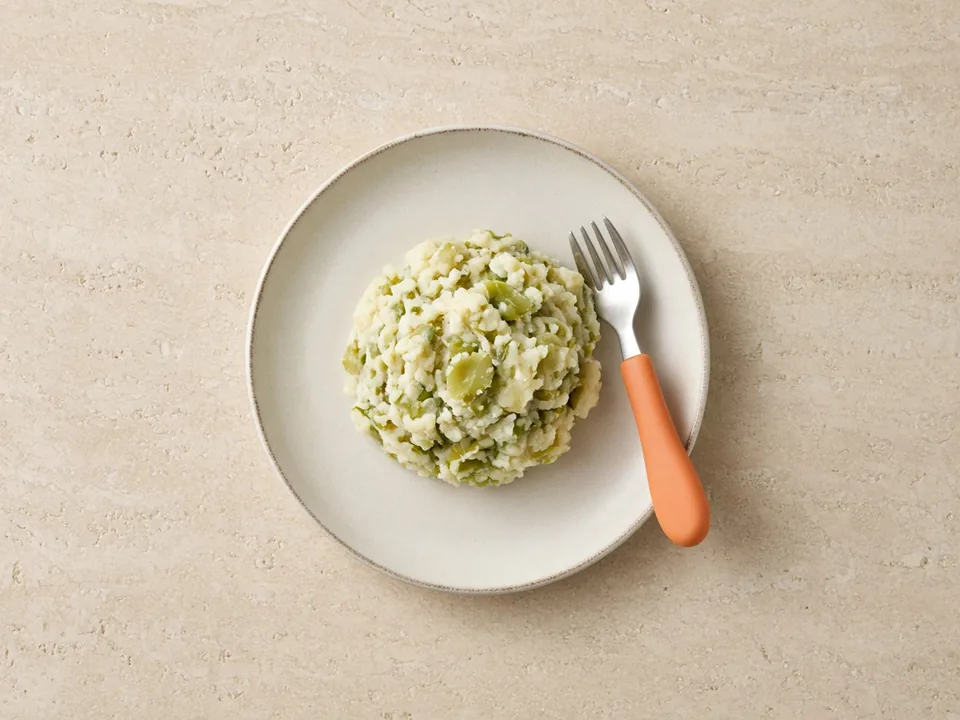
Flattened pieces or in dishes
Serve skinned, flattened fava beans stirred into risotto, pasta (once wheat has been introduced) or mashed potato, or as a smooth fava bean dip with soft vegetables. Take your child's portion out before adding salt.
- Size
- Flattened pieces about 1 cm (just under ½ inch), or mashed into dishes.
- Check before serving
- Still squash each piece flat and check that no tough skins are left.
18 months+
Flattened in family meals
Offer fava beans the way your family eats them: in stews, soups, grain salads, or mashed as ful medames, with the beans still skinned and pressed flat or partly mashed.
- Size
- Bite-sized pieces about 1 cm (just under ½ inch), each bean skinned and flattened, or mashed.
- Check before serving
- Check that each bean is soft, skinned and flattened, especially in mixed dishes.
Always have your child sit upright in a high chair or at the table, and stay with them the whole time they eat. Keep to the size and texture for their stage. Every baby develops on their own timeline.
How to prepare fava beans
- 1
Check first: if your child has G6PD deficiency, or it runs in your family, don't offer fava beans. It's more common in boys and in families from Africa, Asia, the Mediterranean or the Middle East, and many people don't know they have it, so if that fits your family and your child hasn't been tested, ask your doctor first. See 'When to talk to your doctor' below.
- 2
Fresh fava beans: rinse the pods under running water, then shell them and throw the pods away. Boil fresh shelled beans in plenty of water, at a full boil, for at least 30 minutes and until very soft. The 30 minutes is our suggestion, following the FDA advice for kidney beans. Frozen fava beans can go straight into the pan. Dried fava beans: soak them for at least 5 hours, pour away the water, then boil them in fresh water for at least 30 minutes. The FDA gives these soak and boil times for kidney beans and says the natural toxin is found in many kinds of beans, so our suggestion is to use them for dried fava beans too. Don't use a slow cooker for dried beans.
- 3
Boil until very soft, without salt. Let them cool a little, then squeeze each bean out of its tough outer skin.
- 4
Mash or flatten the skinned beans, depending on your baby's age, and let them cool before serving.
- 5
First time? Pick a day your baby is well, at home, when you can watch them for a couple of hours afterward.
How much to offer
Start with a teaspoon or two of mash. Your baby decides how much to eat: stop when they turn away or close their mouth. Lots of squashing and smearing is normal at first.
Common mistakes
Offering fava beans to a child with G6PD deficiency
In people with G6PD deficiency, eating fava beans can make red blood cells break down (favism), which can be serious. NHS hospital and NIH guidance says to avoid them strictly. MedlinePlus says breathing in pollen from fava plants can cause the same reaction, so also keep your child away from flowering fava plants. If your child has it, or it runs in the family, skip fava beans and ask your doctor first.
Leaving the outer skins on
The pale outer skin on each bean is tough and chewy, even when cooked. Squeeze the soft green bean out of it before mashing or flattening.
Serving whole beans
Whole beans are firm, and the CDC lists them as a choking hazard. Mash them, or flatten each skinned bean and break large ones into pieces.
Serving raw or undercooked fava beans
Dried fava beans contain a natural toxin (phytohaemagglutinin), at lower levels than red kidney beans, that proper cooking destroys. Always cook fava beans until very soft.
Questions parents ask
Can fava beans be a choking hazard for babies?
Whole beans are on the CDC's list of choking hazards for young children, and fava beans are large, with a tough outer skin. Cook them until very soft, remove the skins, then mash them or squash each one flat and break it into pieces. Stay with your child during meals.
Can babies be allergic to fava beans?
Fava beans are not one of the top 9 US allergens, but the NHS lists beans, lentils and peas among foods that can trigger an allergic reaction. Offer a small amount on its own first, and watch for signs of a reaction. Talk to your pediatrician, GP or health visitor first if your baby already has a food allergy or eczema, or if there is a family history of food allergy, eczema, asthma or hay fever. Once fava beans are eaten without a reaction, keep offering them as part of usual meals. Separately from allergy, children with G6PD deficiency should not eat fava beans at all.
Are fava beans healthy for babies?
Cooked fava beans have about 7.6 g of protein and 5.4 g of fiber per 100 g, plus folate. They also have about 1.5 mg of iron per 100 g, a small part of the 11 mg a day babies 7–12 months need, and it's the plant (nonheme) kind, which the body absorbs less well than iron from meat.
Are fava beans safe for babies with G6PD deficiency?
No. G6PD deficiency is an inherited condition, and eating fava beans can trigger red blood cells to break down. NHS hospital guidance says fava (broad) beans should be strictly avoided, and MedlinePlus says pollen from flowering fava plants can trigger it too. It's more common in boys and in families with roots in Africa, Asia, the Mediterranean or the Middle East, and many people who have it never have symptoms, so they don't know. If anyone in your family has it, or your family comes from one of these regions and your child hasn't been tested, talk to your pediatrician, GP or health visitor about testing before offering fava beans.
Are fava beans and broad beans the same?
Yes. Fava beans and broad beans are the same bean, and broad beans is the usual name in the UK. Prepare them the same way: cooked very soft, skinned, then mashed or flattened.
Do I need to peel fava beans for my baby?
Yes. Each bean has a pale, tough outer skin, even after cooking. Squeeze the soft green bean out of it, then mash or flatten it.
If your baby refuses fava beans
- Many babies need 10 or more tries before they accept a new food. Keep offering it alongside foods they already like.
- Try another form: mash on a spoon, a smooth dip, or flattened beans stirred into rice or potato.
- Eat some yourself at the same meal. Babies copy what they see.
- Funny faces don't mean they dislike it. They're getting used to a new taste and texture.
Never force or pressure your baby to eat. Some days they'll eat more, some days less, and that's normal.
Buying and storing fava beans
- Keep fresh fava beans in their pods in the fridge, frozen ones in the freezer, and dried ones in a sealed container in a cool, dry cupboard.
- Cooked fava beans keep for 3 to 4 days in a covered container in the fridge. Rice dishes such as risotto are the exception: cool them within 1 hour, keep them in the fridge for no more than 1 day, and reheat them only once.
- Cooked, skinned fava beans and mash can be frozen and used within 3 months. Thaw them in the fridge, use them within 24 hours of thawing, and reheat them only once, to 165°F (74°C), until steaming hot, then let them cool before serving.
- Throw away any food left out at room temperature for more than 2 hours (1 hour if it's hotter than 90°F / 32°C).
When to talk to your doctor
Contact your pediatrician, GP or health visitor if:
- Your child has G6PD deficiency, or someone in your family has it, or your family comes from a region where it is more common and your child hasn't been tested. Don't offer fava beans, and ask whether your child should be tested.
- After eating fava beans or being near flowering fava plants, your child looks pale, has yellow skin or yellow whites of the eyes, passes dark urine, has a fever or belly or back pain, or is unusually tired. These can be signs of red blood cells breaking down: get urgent medical help today from your doctor or the emergency department. If they are breathing fast or with difficulty, have a racing heart, or are floppy or very sleepy, call your emergency number.
- Your baby already has a food allergy or eczema, or there is a family history of food allergy, eczema, asthma or hay fever. Ask before introducing beans and other legumes.
- You notice mild signs of an allergic reaction after eating, such as a few hives or a little vomiting. See signs of a reaction.
- You're worried about how much your baby eats, their growth, or they refuse most solid food for weeks.
Call 911999your local emergency number (such as 112 in Europe or 000 in Australia) now if your baby has trouble breathing, wheezing, can't cough or cry, has lips, mouth, tongue or throat that suddenly swell, or becomes pale, bluish, floppy or unresponsive. Also call if hives come with repeated vomiting.
Offered fava beans?
Add it to your first 100 foods.
Fava beans is in your 100 foods
1 of 100 offered · See all
Add a note (likes, dislikes, any reaction)
Saved in this browser only. Think it was a reaction? See signs of an allergic reaction and when to get help.
Helpful guides
Sources
- MedlinePlus (NIH): Glucose-6-phosphate dehydrogenase deficiency
- MedlinePlus Genetics (NIH): Glucose-6-phosphate dehydrogenase deficiency
- Sheffield Children's NHS Foundation Trust: G6PD deficiency
- CDC: Choking hazards
- FDA: Bad Bug Book (2nd edition), phytohaemagglutinin
- USDA FoodData Central: Broadbeans (fava beans), mature seeds, cooked, boiled, without salt
- NIH Office of Dietary Supplements: Iron
- NHS: Food allergies in babies and young children
- Food Standards Agency: Home food fact checker
- FDA: 7 tips for cleaning fruits and vegetables
- USDA FSIS: Leftovers and food safety
- AAP: Is it OK to make my own baby food?
- NHS Best Start in Life: Storing and reheating food
- NHS: Help your baby enjoy new foods
More first foods

Free printable: The First 100 Foods checklist
Tick off foods as your baby tries them. Print it or save it as a PDF, no sign-up needed.