
Goats' milk
Pasteurized, full-fat goats' milk in a cup, from the first birthday.
Checked against official guidance on October 18, 2026 · How we review
Quick answer
Children can have goats' milk from around 12 months. Prepare it as shown below.
How to serve goats' milk by age
12 months+
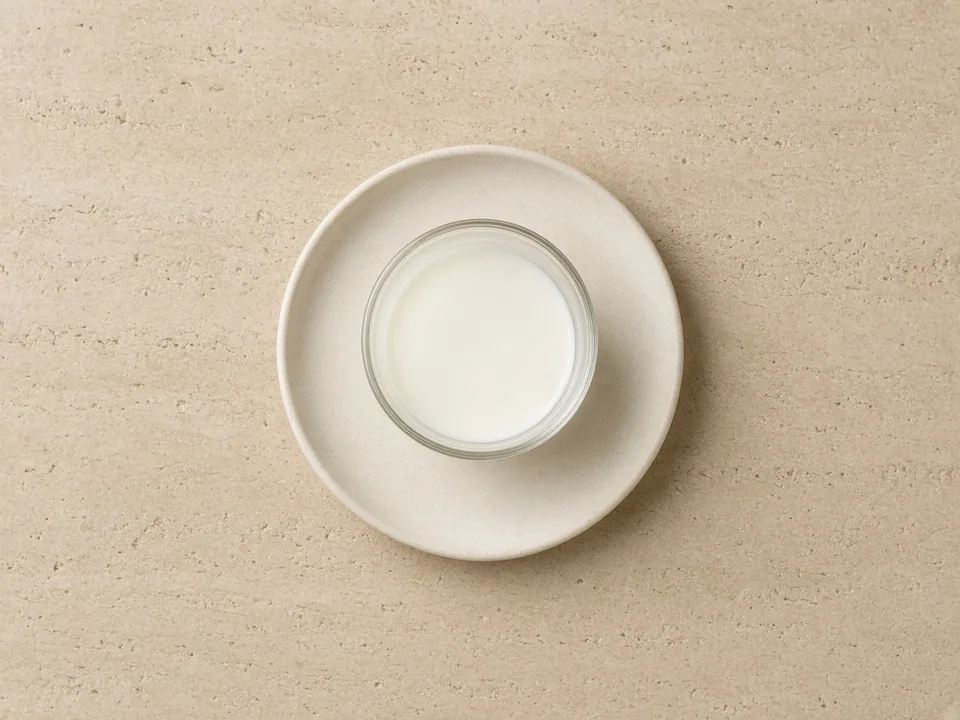
Plain, pasteurized milk in an open cup
Offer pasteurized, plain, full-fat goats' milk in an open cup or a straw cup, not a bottle. Breast milk can continue alongside it. Food is now the main source of nutrition, so milk shouldn't replace meals.
- Size
- Small cups with meals and snacks.
- Check before serving
- Check the label: pasteurized, plain and unsweetened, full-fat (whole) goats' milk. Never raw.
18 months+
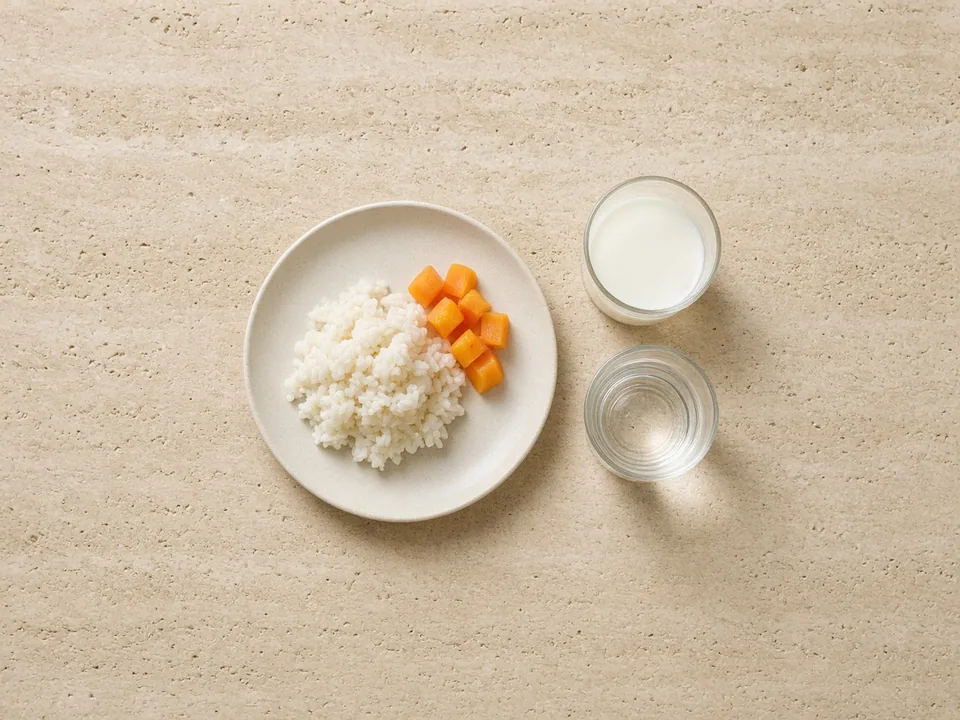
Milk with meals, water in between
Serve milk in an open cup with meals and water between meals. If your toddler fills up on milk and eats little food, offer milk after they've eaten some of their meal.
- Size
- Small cups with meals, water between meals.
2 years+
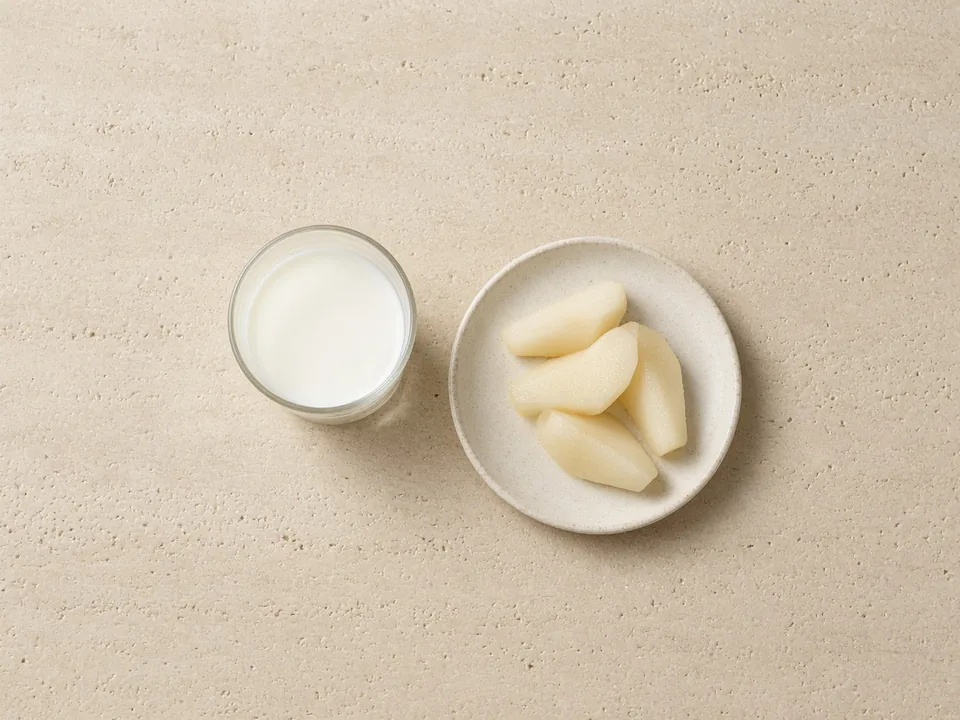
Plain milk in a cup
Keep offering plain, unflavored, pasteurized goats' milk in a cup, with water as the main drink between meals. Whole or lower-fat milk from age 2 depends on which advice you follow: see the guidance note below. Flavored milks are best kept off the menu because of their added sugar.
- Size
- Small cups with meals and snacks.
3 years+
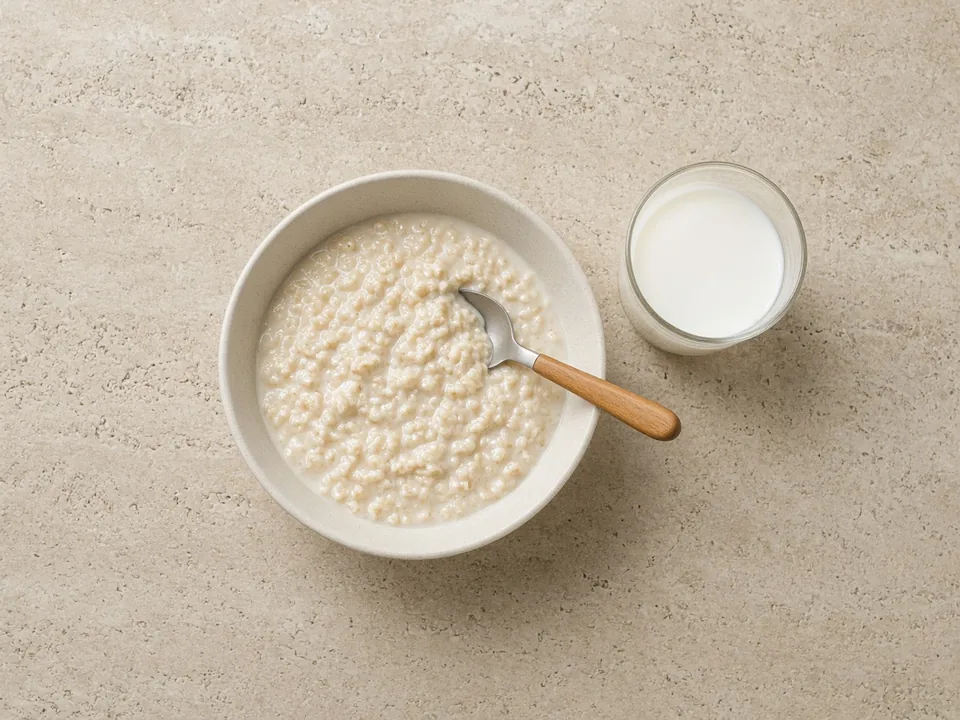
Family milk in a cup or in cooking
Serve plain goats' milk with meals, or use it in family cooking such as oatmeal and sauces. Water stays the main drink between meals.
- Size
- Small cups with meals, or as part of a dish.
Always have your child sit upright in a high chair or at the table, and stay with them the whole time they eat. Keep to the size and texture for their stage. Every baby develops on their own timeline.
How to prepare goats' milk
- 1
Buy pasteurized, plain, full-fat goats' milk. Never raw milk, including from farms and markets.
- 2
Pour a small amount into an open cup or a straw cup. Serve it cold or at room temperature.
- 3
Offer it with meals and snacks, alongside food. Offer water between meals.
- 4
First time? Pick a day your baby is well, at home, when you can watch them for a couple of hours afterward.
How much to offer
Start with a few sips in a cup. Goats' milk can take the place of cow's milk as your child's main milk from 12 months. For cow's milk, the AAP suggests about 16 oz (480 ml) a day from 12 to 24 months, and about 16–24 oz (480–710 ml) from 2 to 5 years; we suggest the same for goats' milk. Too much milk can fill children up and leave little room for iron-rich foods, because milk is low in iron. Your child decides how much to drink within that.
Common mistakes
Giving it as a drink before 12 months
The NHS says goats' milk isn't suitable as a main drink for babies under 1 because, like cows' milk, it doesn't have enough iron and other nutrients babies need. Keep breast milk or formula as the main drink until 12 months.
Making homemade formula with goats' milk
Babies fed plain goats' milk instead of formula have become seriously ill, with salt and mineral imbalances, anemia and infections (Pediatrics review). Goat milk-based infant formula is a different, specially made product: if you want to use it, talk to your pediatrician or health visitor.
Using it as a swap for cow's milk allergy
Goats' milk proteins are very similar to cow's milk proteins, and children allergic to cow's milk often react to goats' milk too. It isn't a safe swap. Ask your doctor about suitable alternatives.
Choosing raw goats' milk
The CDC says raw (unpasteurized) milk from cows, goats and sheep can carry harmful germs that can make a child very sick, and can be life-threatening. Always buy pasteurized.
Where US and UK guidance differ on goats' milk
United States(AAP and CDC)Your setting
The CDC and AAP give their milk advice for cow's milk, not goats' milk. The CDC says not to give cow's milk before 12 months, so if you follow US advice, use breast milk or formula in your baby's food instead until 12 months. The AAP suggests whole milk from 12 to 24 months, and low-fat (1%) or nonfat milk from age 2. The CDC also says not to give raw milk from cows, goats or sheep.
United Kingdom(NHS)Your setting
The NHS says goats' and sheep's milk aren't suitable as a main drink for babies under 1, but it's fine to use them in cooking for your baby as long as they're pasteurised. From 1 year, pasteurised goats' milk can be the main drink. The NHS says whole or semi-skimmed milk can be a main drink from 1, but not skimmed or 1% milk until 5. Unpasteurised milk shouldn't be given to young children.
We cover US and UK guidance in detail. Elsewhere, check your national health service's advice too.
Questions parents ask
Can goats' milk be a choking hazard for babies?
Goats' milk is a low choking risk. Have your child sit upright to drink, and use an open cup or a straw cup rather than a bottle.
Can babies be allergic to goats' milk?
Goats' milk is a milk, and milk is one of the most common food allergens in young children. People with an allergy to cow's milk may also be allergic to milk from goats and sheep (ACAAI), and the AAP says the cross-reactivity rates are high, so goats' milk isn't a safe alternative for a child with cow's milk allergy. If goats' milk is new to your child, start with a small amount. Most reactions start within minutes to 2 hours, but with cow's milk allergy, symptoms can take up to 3 days to appear. If your baby has eczema or another food allergy, or there's a family history of food allergies, eczema, asthma or hay fever, the NHS says to talk to your GP or health visitor first.
Is goats' milk healthy for babies?
A source of protein and calcium: 100 g of goats' milk has about 3.6 g of protein and 134 mg of calcium, similar to cow's milk. Goats' milk with added vitamin D has about 1.3 mcg per 100 g, but not all goats' milk is fortified, so check the label. It has almost no iron (about 0.05 mg per 100 g), and much less folate (about 1 mcg against 5 mcg) and vitamin B12 (about 0.07 mcg against 0.45 mcg) per 100 g than whole cow's milk.
Can babies have goats' milk in food before 12 months?
It depends on which advice you follow. The NHS says it's fine to use goats' milk when cooking for a baby under 1, as long as it's pasteurised, but not as a drink. The CDC says not to give cow's milk before 12 months and doesn't give goats' milk a separate rule. If you follow US advice, use breast milk or formula in your baby's food instead.
Is goats' milk better than cow's milk for toddlers?
There's no need to switch. Per 100 g, goats' and cow's milk have similar amounts of protein and calcium, and both are low in iron. But goats' milk has much less folate and vitamin B12 than cow's milk (FoodData Central), so if it will be your child's main milk, talk to your pediatrician or a dietitian, and offer a varied diet with foods such as eggs, fish, meat, dairy foods or fortified foods. Choose pasteurized, plain milk.
Is goats' milk OK if my baby has cow's milk allergy?
No, not unless your allergist says so. The AAP says children allergic to cow's milk shouldn't use goats' milk products because of high rates of cross-reactivity. The NHS also says goat milk-based formula isn't suitable for babies with cows' milk protein allergy.
What about goat milk formula?
Goat milk-based infant formula is made to the same nutritional standards as cow's milk formula (NHS), and the AAP says it's now sold in the US. It's a different product from plain goats' milk, which is never a formula substitute. Ask your pediatrician or health visitor before switching formula.
If your baby refuses goats' milk
- Goats' milk tastes different from cow's milk. Keep offering small sips in a cup with meals.
- Try it in other forms: in oatmeal or a sauce.
- Drink some yourself at the same meal. Toddlers copy what they see.
- If your child won't drink milk at all, ask your pediatrician about other ways to get enough calcium and vitamin D.
Never force or pressure your baby to eat. Some days they'll eat more, some days less, and that's normal.
Buying and storing goats' milk
- Keep milk in the fridge, at 40°F (4°C) or below, and put it back straight after pouring.
- Once opened, milk keeps for about 7 days in the fridge, or as the label says. It can be frozen for about 3 months.
- Throw away milk left in your child's cup after the meal.
- Throw away any food left out at room temperature for more than 2 hours (1 hour if it's hotter than 90°F / 32°C).
When to talk to your doctor
Contact your pediatrician, GP or health visitor if:
- Your child has a diagnosed cow's milk allergy. Ask before offering goats' milk, cheese or yogurt.
- Your child has had any reaction to dairy, even a mild one. Stop offering it until you've talked to your pediatrician.
- Your child vomits a few hours after drinking milk. This can be FPIES, a delayed type of food allergy that milk can trigger. If they vomited once or twice and seem alert and like themselves, call your pediatrician or GP. If they vomit again and again, or are pale, floppy, very sleepy or hard to wake, call your emergency number.
- Your toddler drinks a lot of milk and eats very little solid food. Too much milk can leave less room for other foods, and some experts say it can make it harder to absorb iron (CDC).
- You notice mild signs of an allergic reaction after eating, such as a few hives or a little vomiting. See signs of a reaction.
- You're worried about how much your baby eats, their growth, or they refuse most solid food for weeks.
Call 911999your local emergency number (such as 112 in Europe or 000 in Australia) now if your baby has trouble breathing, wheezing, can't cough or cry, has lips, mouth, tongue or throat that suddenly swell, or becomes pale, bluish, floppy or unresponsive. Also call if hives come with repeated vomiting.
Offered goats' milk?
Add it to your first 100 foods.
Goats' milk is in your 100 foods
1 of 100 offered · See all
Last offered today. Once goats' milk is in your baby's diet, keep offering it regularly.
Add a note (likes, dislikes, any reaction)
Saved in this browser only. Think it was a reaction? See signs of an allergic reaction and when to get help.
Helpful guides
Sources
- NHS: Drinks and cups for babies and young children
- NHS: Your baby's first solid foods
- NHS: Types of formula
- CDC: Cow's milk and milk alternatives
- AAP: Recommended drinks for children age 5 and younger
- AAP: Choosing a baby formula
- Pediatrics: Fresh goat's milk for infants: myths and realities (2010)
- ACAAI: Milk and dairy allergy
- ACAAI: Food protein-induced enterocolitis syndrome (FPIES)
- NHS: Food allergies in babies and young children
- USDA FoodData Central: Milk, whole, 3.25% milkfat, with added vitamin D
- USDA FoodData Central: Milk, goat, fluid, with added vitamin D
- USDA FSIS: How long can you keep dairy products like yogurt, milk, and cheese in the refrigerator?
- USDA FSIS: Leftovers and food safety
More first foods




Free printable: The First 100 Foods checklist
Tick off foods as your baby tries them. Print it or save it as a PDF, no sign-up needed.