
Honey
Not for babies under 12 months. After that, a rare sweet extra until age 4.
Checked against official guidance on October 18, 2026 · How we review
Quick answer
Children can have honey from around 12 months. Prepare it as shown below.
How to serve honey by age
12 months+
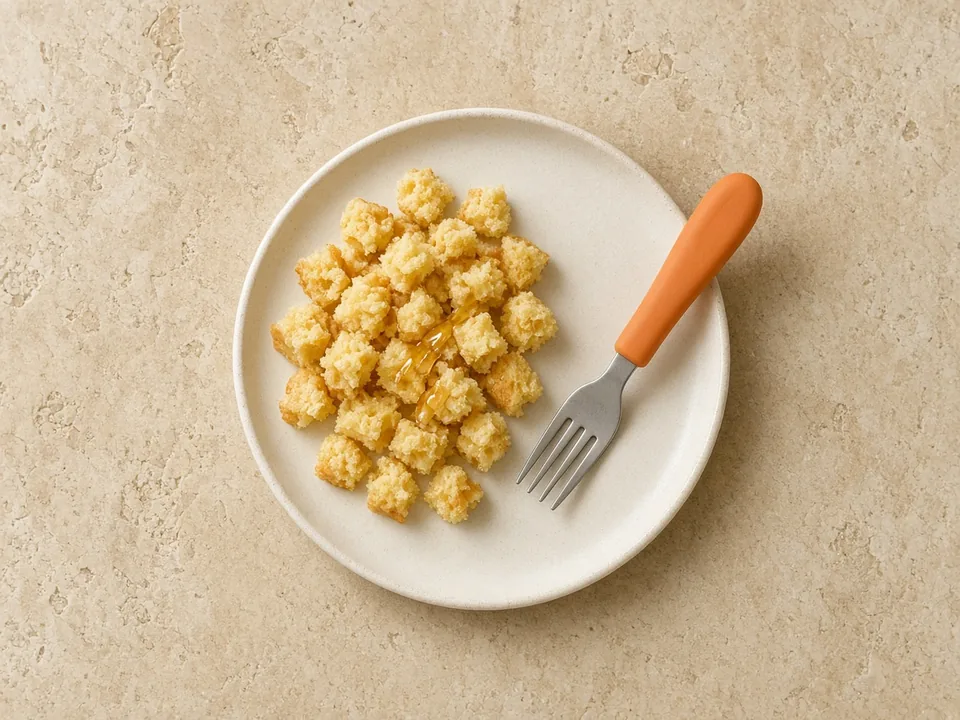
A thin smear on soft toast
Honey is no longer a botulism risk from 12 months, but it is an added sugar, and US and UK guidance advise avoiding added sugar, including honey, for children aged 4 and under. Your child doesn't need it. If you do offer it, keep it rare: a very thin smear on soft toast, not a regular sweetener for yogurt or oatmeal.
- Size
- Toast pieces about 1 cm (just under ½ inch), with a thin smear of honey.
- Check before serving
- The layer should be thin enough that it doesn't drip or form a sticky blob.
18 months+
A rare, thin drizzle
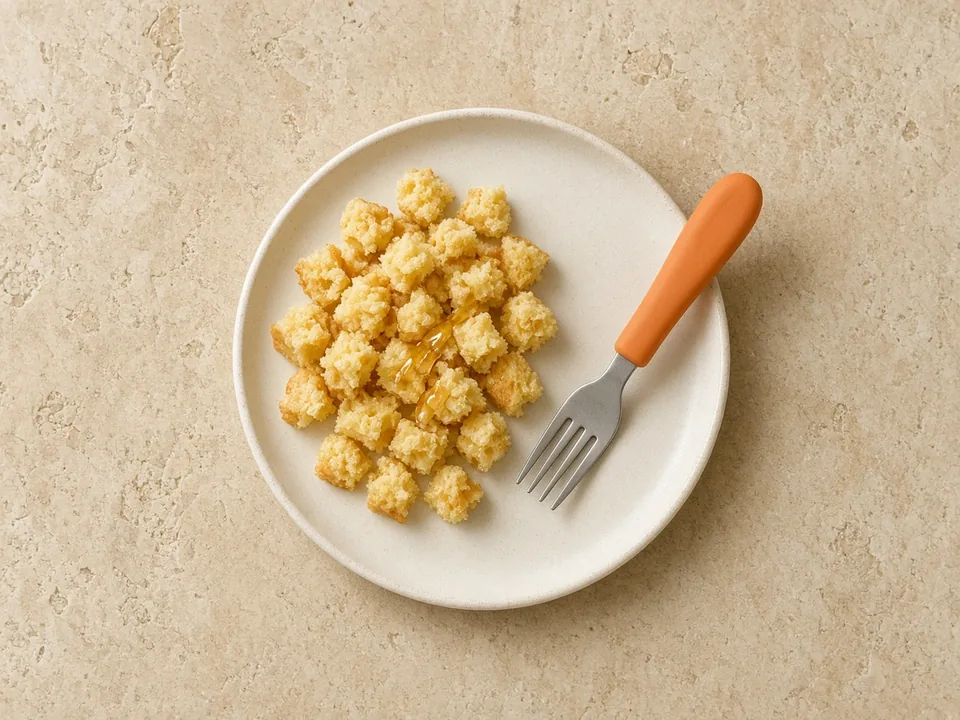
Treat honey like any other added sugar: a rare extra in a tiny amount, not a regular sweetener for yogurt, fruit or muffins. Offer fruit for sweetness instead. Avoid thick spoonfuls: sticky foods are harder for young children to swallow.
- Size
- Bite-sized pieces about 1 cm (just under ½ inch), with a thin drizzle.
- Check before serving
- The honey should coat the food thinly, not sit on top in a thick layer.
2 years+
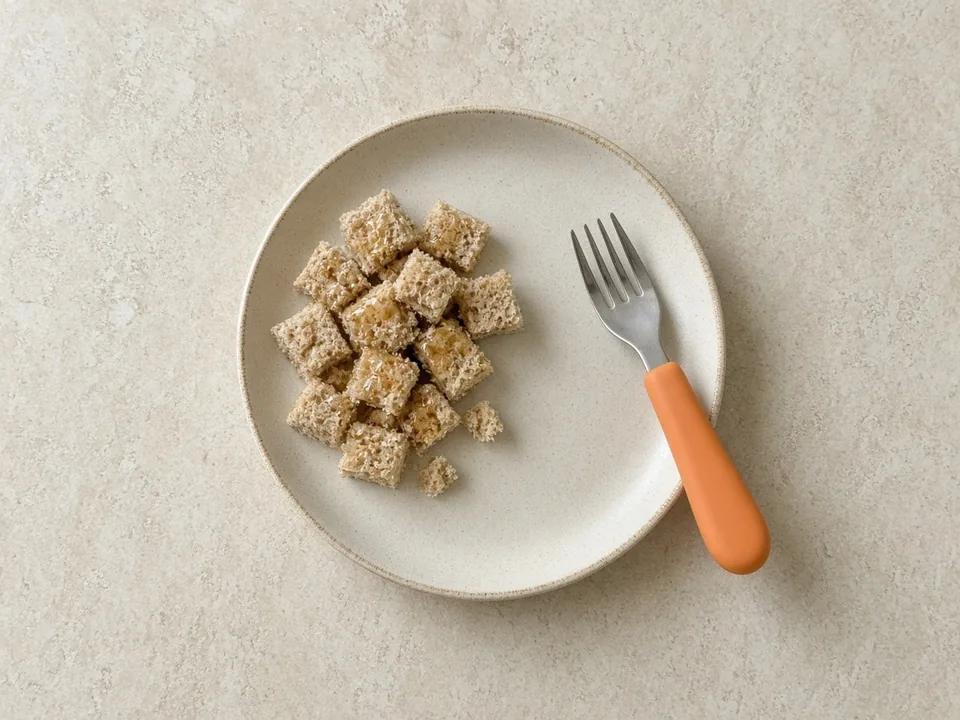
Occasional thin drizzle
Treat honey like any other added sugar: a rare extra, not an everyday sweetener, until after age 4. Offer fruit when your child wants something sweet.
- Size
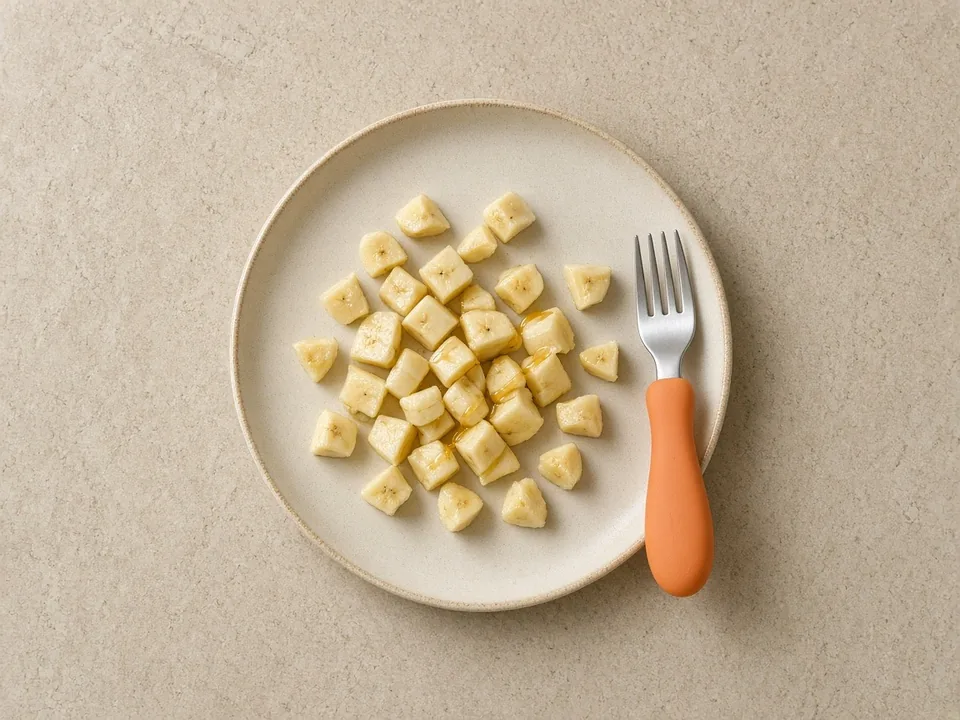
- A thin drizzle or smear on bite-sized pieces about 1 cm (just under ½ inch).
3 years+
Occasional, in family foods
Honey can be part of family foods now and then. US and UK guidance still advise avoiding added sugars, including honey, for children aged 4 and under, so keep amounts small. If honey is given at bedtime, brush your child's teeth afterward.
- Size
- A thin drizzle or smear on bite-sized pieces about 1 cm (just under ½ inch), or as part of a dish.
Always have your child sit upright in a high chair or at the table, and stay with them the whole time they eat. Keep to the size and texture for their stage. Every baby develops on their own timeline.
How to prepare honey
- 1
Check your child is 12 months or older. Before 12 months, don't give honey in any form, including baked into foods or in products made with it.
- 2
Use a clean spoon and spread or drizzle a thin layer only.
- 3
Don't offer honey on its own by the spoonful. Keep it small and rare.
- 4
If honey is given at bedtime (for example, for a cough), brush your child's teeth afterward.
How much to offer
Honey isn't needed in a young child's diet, and US and UK guidance advise avoiding added sugar, including honey, until age 4. If you use it, a rare thin smear is plenty. For a cough in children aged 1 to 5, the AAP suggests half a teaspoon of honey. Your child decides how much of their meal to eat.
Common mistakes
Giving honey before 12 months
Honey can contain spores of the bacteria that cause infant botulism, a serious illness. No honey before 12 months: not in food, water or formula, and not on a pacifier.
Thinking cooked or baked honey is safe for babies
The spores survive normal cooking and boiling. Before 12 months, skip baked goods and products made with honey, such as honey cereals or honey graham crackers.
Using honey as an everyday sweetener
Honey is an added sugar. US and UK guidance advise avoiding added sugar, including honey, for children aged 4 and under, and it can cause tooth decay.
Offering thick spoonfuls
Sticky foods are harder for young children to swallow. Use a thin smear or drizzle.
Questions parents ask
Can honey be a choking hazard for babies?
Honey is a low choking risk, but it's sticky. A thick spoonful can be hard for a young child to manage, so use a thin smear or drizzle. Stay with your child during meals.
Can babies be allergic to honey?
Honey is not a common allergen. The reason to wait until 12 months is infant botulism, not allergy.
Is honey healthy for babies?
Mostly sugar: USDA data show about 82 g of sugars per 100 g, with only traces of vitamins and minerals.
When can babies have honey?
From 12 months. Before then, honey can cause infant botulism, so don't give it in any form. After 12 months, the AAP says honey is safe from botulism, but it's still an added sugar, and US and UK guidance advise avoiding added sugar, including honey, for children aged 4 and under.
Are baked goods with honey safe for babies under 12 months?
No. The spores that cause infant botulism are tough and survive normal cooking and boiling, and the CDC advises against honey and products made with it for infants. Check labels on cereals, crackers, yogurts and baked goods.
Can I give my toddler honey for a cough?
From 12 months, yes. The AAP says there's some evidence honey may help ease coughs, and suggests half a teaspoon for children aged 1 to 5. Brush teeth afterward if it's given at bedtime. Never give honey to a baby under 12 months.
My baby under 12 months had honey. What should I do?
Don't give any more, and watch your baby over the next few weeks. Infant botulism is rare, and symptoms can appear 3 to 30 days after exposure. Constipation is often the first sign: if it appears, call your pediatrician the same day and tell them about the honey. If constipation comes with any other sign, or you notice poor feeding, a weak or different cry, drooping eyelids, less facial movement, poor head control, or floppiness, call your emergency number or go to the emergency room now: infant botulism is a medical emergency.
If your baby refuses honey
- Your child doesn't need honey, so there's no need to keep offering it if they don't like it.
- If they ask for honey on everything, offer fruit for sweetness instead.
- Save repeated tries for everyday foods: many children need 10 or more tries before they accept a new food.
- Eat the same foods yourself at the same meal. Children copy what they see.
Never force or pressure your baby to eat. Some days they'll eat more, some days less, and that's normal.
Buying and storing honey
- Store honey in a sealed jar at room temperature, out of reach of babies and young children.
- If you have a baby under 12 months at home, keep honey, and foods made with it, well away from your baby's food.
- Throw away any food left out at room temperature for more than 2 hours (1 hour if it's hotter than 90°F / 32°C).
When to talk to your doctor
Contact your pediatrician, GP or health visitor if:
- Your baby is under 12 months, has had honey, and then becomes constipated. Constipation is often the first sign of infant botulism, so call your pediatrician the same day and tell them about the honey.
- Your baby is under 12 months, has had honey, and then has poor feeding, a weak or different cry, drooping eyelids, less facial movement, poor head control, or seems weak or floppy, with or without constipation. Call your emergency number or go to the emergency room now: these can be signs of infant botulism, which is a medical emergency.
- You notice mild signs of an allergic reaction after eating, such as a few hives or a little vomiting. See signs of a reaction.
- You're worried about how much your baby eats, their growth, or they refuse most solid food for weeks.
Call 911999your local emergency number (such as 112 in Europe or 000 in Australia) now if your baby has trouble breathing, wheezing, can't cough or cry, has lips, mouth, tongue or throat that suddenly swell, or becomes pale, bluish, floppy or unresponsive. Also call if hives come with repeated vomiting.
Add a note (likes, dislikes, any reaction)
Saved in this browser only. Think it was a reaction? See signs of an allergic reaction and when to get help.
Helpful guides
Sources
- CDC: Foods and drinks to avoid or limit
- CDC: Botulism prevention
- AAP: Botulism: causes, signs, symptoms and treatment
- AAP: How to care for your child's cold
- NHS: Foods to avoid giving babies and young children
- USDA FSIS: Clostridium botulinum and botulism
- HHS: Fact sheet on the Dietary Guidelines for Americans, 2025–2030
- CDC: Choking hazards
- USDA FoodData Central: Honey
- NHS: Help your baby enjoy new foods
More first foods


Free printable: The First 100 Foods checklist
Tick off foods as your baby tries them. Print it or save it as a PDF, no sign-up needed.