
Kimchi
Sour, salty and often spicy. From 12 months, a rinsed, finely chopped taste of a mild one.
Checked against official guidance on October 18, 2026 · How we review
Quick answer
Children can have kimchi from around 12 months. Prepare it as shown below.
How to serve kimchi by age
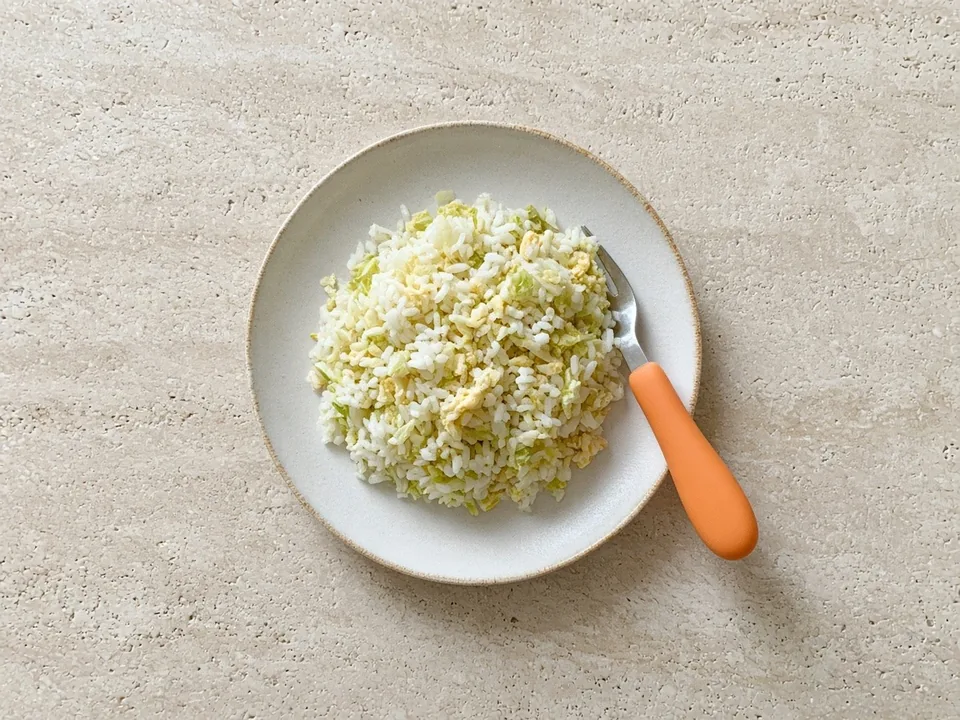
12 months+
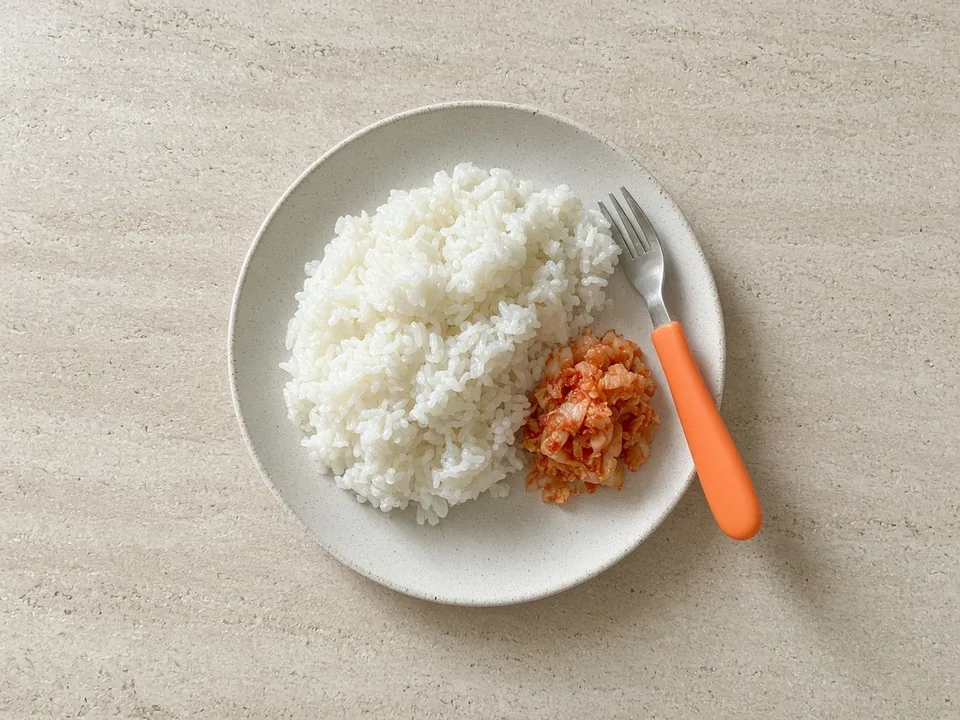
A teaspoon of mild kimchi, rinsed and finely chopped into food
Before 12 months, skip kimchi: it's salty, and babies under 1 should have less than 1 g of salt a day (NHS). From 12 months, our suggestion, based on the NHS salt limits, is a teaspoon or so now and then. Pick a mild kimchi, or white kimchi made without chili, rinse off the brine and red paste, squeeze it out and chop it finely. Many kimchis contain fish or shellfish: check the label first.
- Size
- A teaspoon or so, finely chopped into pieces no bigger than about 1 cm (just under ½ inch), and stirred into soft rice, egg or noodles.
- Check before serving
- Check the label: if it lists fish or shellfish, your child should already have eaten each on its own without a reaction. Taste a piece: if it's spicy to you, it's too hot for your toddler.
18 months+
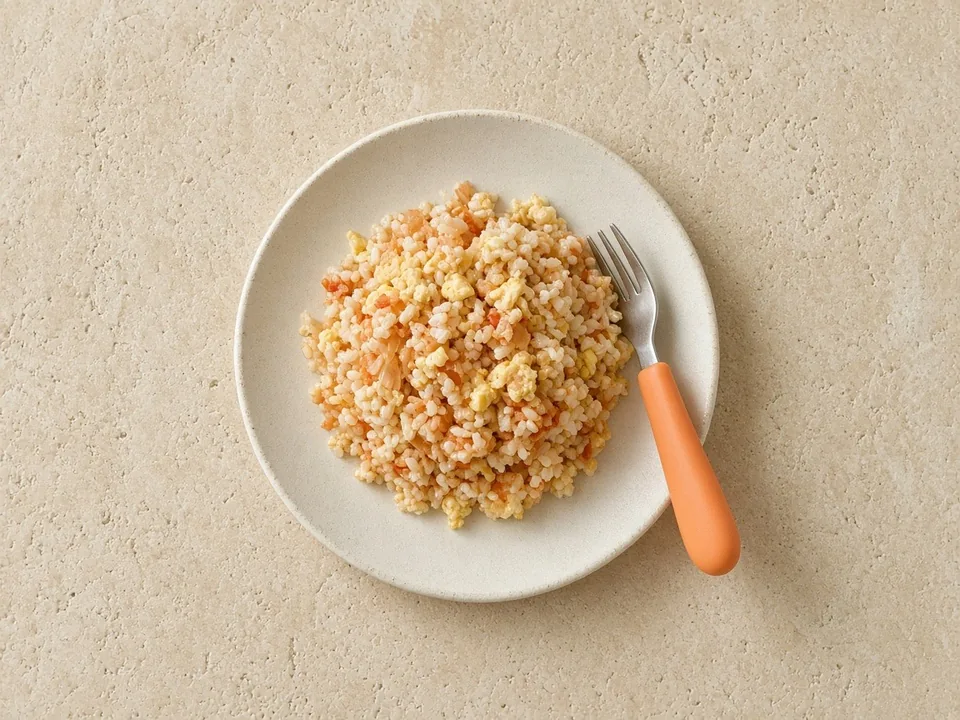
A spoonful chopped into family dishes
Keep kimchi to a teaspoon or two, rinsed and chopped, stirred into rice, scrambled egg or soft noodles. Radish kimchi (in cubes) is firm, so chop it finely too. Take your toddler's portion out before you add soy sauce or extra chili.
- Size
- Finely chopped pieces about 1 cm (just under ½ inch) or smaller, mixed into food.
- Check before serving
- Check for firm pieces of radish or cabbage stem, and long strands, before serving.
2 years+
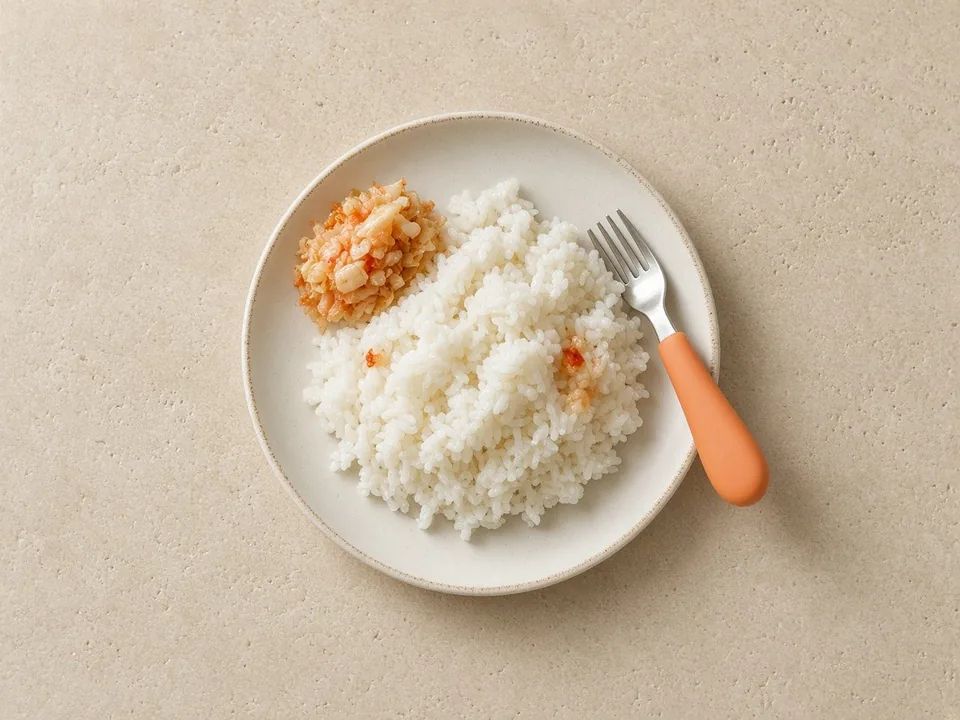
A small spoonful, chopped, or cooked into a dish
Children aged 1 to 3 should have no more than 2 g of salt a day (NHS). A 10 g portion of kimchi has about 0.12 g of salt, and some brands are saltier, so a small spoonful in a meal is plenty. Cooking a little chopped kimchi into fried rice or a pancake spreads the flavor further, once your child has had the other ingredients, such as egg and wheat, on their own.
- Size
- Bite-sized pieces about 1 cm (just under ½ inch), or chopped into dishes.
- Check before serving
- Check for firm pieces and long strands before serving.
3 years+
A small spoonful in family meals
Keep kimchi a small extra rather than a side dish. The NHS says children aged 1 to 3 should have no more than 2 g of salt a day, and children aged 4 to 6 no more than 3 g. If your child enjoys spicier kimchi, let them try a little more heat slowly, with plenty of plain rice alongside.
- Size
- Bite-sized pieces about 1 cm (just under ½ inch), or chopped into dishes.
- Check before serving
- Check for firm pieces of radish or cabbage stem, and long strands, before serving.
Always have your child sit upright in a high chair or at the table, and stay with them the whole time they eat. Keep to the size and texture for their stage. Every baby develops on their own timeline.
How to prepare kimchi
- 1
Read the label. Look for fish (such as anchovy or fish sauce) and shellfish (such as shrimp), and choose a mild or white kimchi with the lowest salt you can find.
- 2
Our suggestion is to put a spoonful in a sieve and rinse it under running water to wash off some of the salty brine and red chili paste, then squeeze out the liquid.
- 3
Chop it finely, including any radish cubes and thick cabbage stems.
- 4
Stir it into a soft food your child already eats. Don't add salt or soy sauce to their portion.
- 5
First time with a kimchi that lists fish or shellfish? Offer it only after your child has eaten that fish and shellfish on its own without a reaction. Pick a day your child is well, at home, when you can watch them for a couple of hours afterward.
How much to offer
None before 12 months. After that, a teaspoon or so of mild kimchi, rinsed and finely chopped into a meal, now and then. FoodData Central lists about 498 mg of sodium (about 1.2 g of salt) per 100 g, so a 10 g portion has about 50 mg of sodium (about 0.12 g of salt), against the 2 g of salt a day the NHS gives as the most for children aged 1 to 3. Your child decides how much to eat: stop when they turn away or close their mouth.
Common mistakes
Offering it before 12 months
Babies under 1 should have less than 1 g of salt a day, because their kidneys can't cope with much (NHS). Cook plain napa cabbage for your baby instead: see our napa cabbage page.
Not checking for fish and shellfish
Many kimchi recipes use salted seafood, such as anchovy or shrimp. Read the label every time, and ask when you buy it loose or eat out.
Serving it hot and straight from the jar
Most kimchi is made with chili and sits in salty brine. Choose a mild or white kimchi, rinse a spoonful and squeeze it out, then chop it into your child's food.
Giving homemade kimchi you're not sure about
The CDC says homemade foods that are improperly canned, preserved or fermented are common sources of foodborne botulism. If in doubt, throw it out, and never taste it to check.
Questions parents ask
Can kimchi be a choking hazard for babies?
Kimchi is made from raw cabbage and often radish, so pieces can be firm and stringy: the CDC lists pieces of hard raw vegetables as a choking hazard for young children. Chop kimchi finely, including radish cubes and thick stems, and mix it into soft food. Stay with your child during meals.
Can babies be allergic to kimchi?
Many kimchis contain fish, shellfish or both: a 2026 study describes salted seafood, such as anchovy and shrimp, as widely used in kimchi. Fish and crustacean shellfish are major food allergens, and US labels must name them when they're in the food (FDA). In the UK, fish and crustaceans are among the 14 allergens that must be emphasized on the label, and food businesses must tell you about them for loose food (GOV.UK). Some kimchi is made without seafood, so read the whole ingredient list every time, not only for seafood. Offer kimchi with fish or shellfish only after your child has eaten fish and shellfish, each on its own, without a reaction.
Is kimchi healthy for babies?
Salty: FoodData Central lists about 498 mg of sodium per 100 g of kimchi (about 1.2 g of salt), and brands vary, so check the label. It lists about 2.5 mg of iron per 100 g, but a toddler's 10 g taste gives only about 0.25 mg.
When can babies have kimchi?
Not in the first year: it's salty, and the NHS says babies under 1 should have less than 1 g of salt a day and shouldn't eat salty foods. From 12 months, our suggestion is a teaspoon or so of a mild kimchi, rinsed and finely chopped into food, now and then.
Does kimchi contain fish or shellfish?
Often. Many recipes use salted seafood, such as anchovy or shrimp, and others are made without. Check the label every time, and if your child has a fish or shellfish allergy, ask your pediatrician or allergist before offering any kimchi.
Is kimchi too spicy for toddlers?
Most kimchi is made with chili, and it can be hot. Start with a mild or white kimchi (made without chili), rinse off the red paste, and mix a little into plain rice. If your child seems uncomfortable, stop and try again another time.
Is homemade kimchi safe for toddlers?
Only if it's made and stored carefully. The CDC says homemade foods that are improperly canned, preserved or fermented are common sources of foodborne botulism. Throw it out if it's moldy, discolored or smells bad, or if a jar is leaking, bulging or spurts liquid or foam when opened. If in doubt, throw it out, and never taste it to check (CDC).
If your baby refuses kimchi
- Your child doesn't need kimchi, so there's no need to keep offering it.
- If the heat puts them off, try a white kimchi, or plain cooked napa cabbage, with the family's kimchi on the side.
- Eat some yourself at the same meal. Children copy what they see.
- Save repeated tries for everyday foods: many children need 10 or more tries before they accept a new food.
Never force or pressure your baby to eat. Some days they'll eat more, some days less, and that's normal.
Buying and storing kimchi
- Keep kimchi covered in the fridge (the CDC says to refrigerate canned or pickled foods after opening), and follow the label for how long it keeps.
- Throw out kimchi that is moldy, discolored or smells bad, or a jar that is leaking, bulging or spurts liquid or foam when opened (CDC). Never taste it to check.
- Cooked dishes with kimchi keep for 3 to 4 days in a covered container in the fridge. Rice dishes, such as kimchi fried rice, are the exception: cool them within 1 hour, keep them in the fridge for no more than 1 day, and reheat them only once. Reheat other dishes only once, to 165°F (74°C), until steaming hot, then let them cool before serving.
- Throw away any food left out at room temperature for more than 2 hours (1 hour if it's hotter than 90°F / 32°C).
When to talk to your doctor
Contact your pediatrician, GP or health visitor if:
- Your child has a fish or shellfish allergy. Ask whether kimchi made without seafood is safe for them, and check every label.
- Your child has had any reaction to fish or shellfish, even a mild one. Stop offering kimchi that contains them until you've talked to your pediatrician.
- Your child has eaten home-canned or home-fermented food and then has trouble swallowing or breathing, drooping eyelids, blurred or double vision, slurred speech or muscle weakness: call your emergency number. The CDC says botulism is a medical emergency. Tell the doctors what your child ate.
- You notice mild signs of an allergic reaction after eating, such as a few hives or a little vomiting. See signs of a reaction.
- You're worried about how much your baby eats, their growth, or they refuse most solid food for weeks.
Call 911999your local emergency number (such as 112 in Europe or 000 in Australia) now if your baby has trouble breathing, wheezing, can't cough or cry, has lips, mouth, tongue or throat that suddenly swell, or becomes pale, bluish, floppy or unresponsive. Also call if hives come with repeated vomiting.
Last offered today. Once kimchi is in your baby's diet, keep offering it regularly.
Add a note (likes, dislikes, any reaction)
Saved in this browser only. Think it was a reaction? See signs of an allergic reaction and when to get help.
Helpful guides
Sources
- NHS: Salt in your diet
- NHS: Foods to avoid giving babies and young children
- CDC: Foods and drinks to avoid or limit
- CDC: Choking hazards
- USDA FoodData Central: Cabbage, kimchi
- Lim et al., Food Chemistry: X (2026): Effects of adding various salted seafood (jeotgal) types on kimchi fermentation
- FDA: Food allergies: what you need to know
- GOV.UK: Understanding food labelling: allergen labelling
- CDC: Home-canned foods (botulism prevention)
- CDC: Symptoms of botulism
- USDA FSIS: Leftovers and food safety
- NHS Best Start in Life: Storing and reheating food
- NHS: Help your baby enjoy new foods
More first foods

Free printable: The First 100 Foods checklist
Tick off foods as your baby tries them. Print it or save it as a PDF, no sign-up needed.