
Mulberries
Long, soft and juicy. Pull out the stalk, squash them flat, and grab a bib: they stain.
Checked against official guidance on October 18, 2026 · How we review

Quick answer
Babies can eat mulberries from around 6 months, once they show signs of being ready for solids. Prepare it as shown below.
How to serve mulberries by age
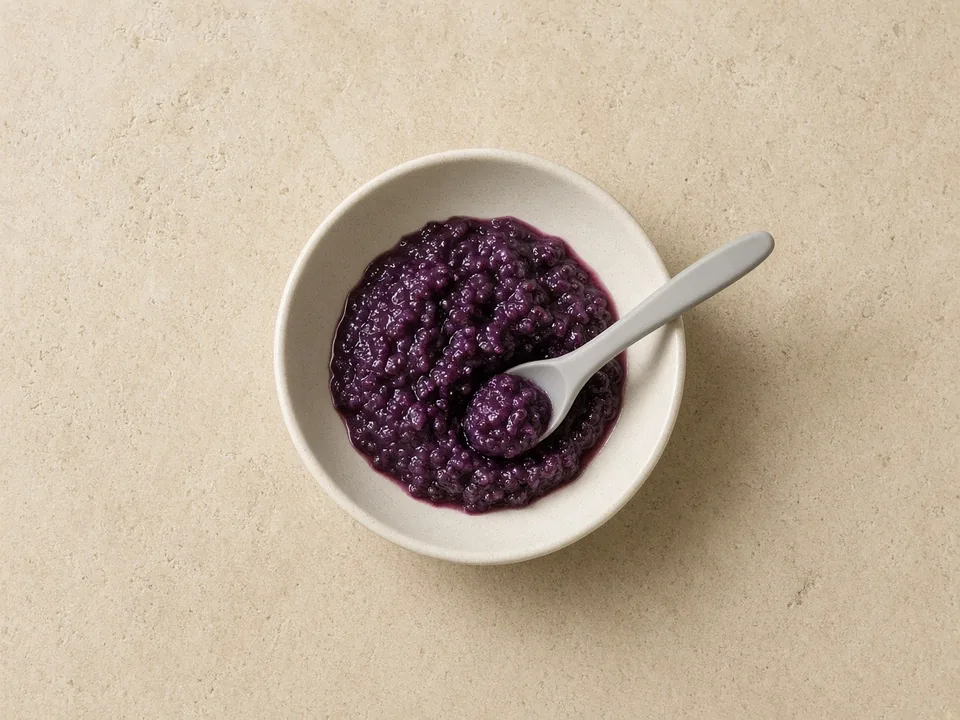
6 months+
Squashed flat or mashed
Choose ripe, soft mulberries. Pull or snip off the green stalk, which often runs a little way into the berry. Press each berry flat between your thumb and finger, or mash a handful with a fork and stir into foods your baby already eats, like iron-fortified cereal or plain full-fat yogurt (once dairy has been introduced on its own).
- Size
- Each mulberry, stalk removed, pressed flat, or mashed and served on a pre-loaded spoon.
- Check before serving
- Squash a berry between your thumb and finger. It should flatten easily, with no stalk left inside. If the center stays firm, mash it.
US and UK advice differ here. The AAP suggests mashed food or soft pieces no larger than ½ inch; the NHS suggests soft finger-sized pieces your baby can hold in their fist. Both agree the food must squash easily.
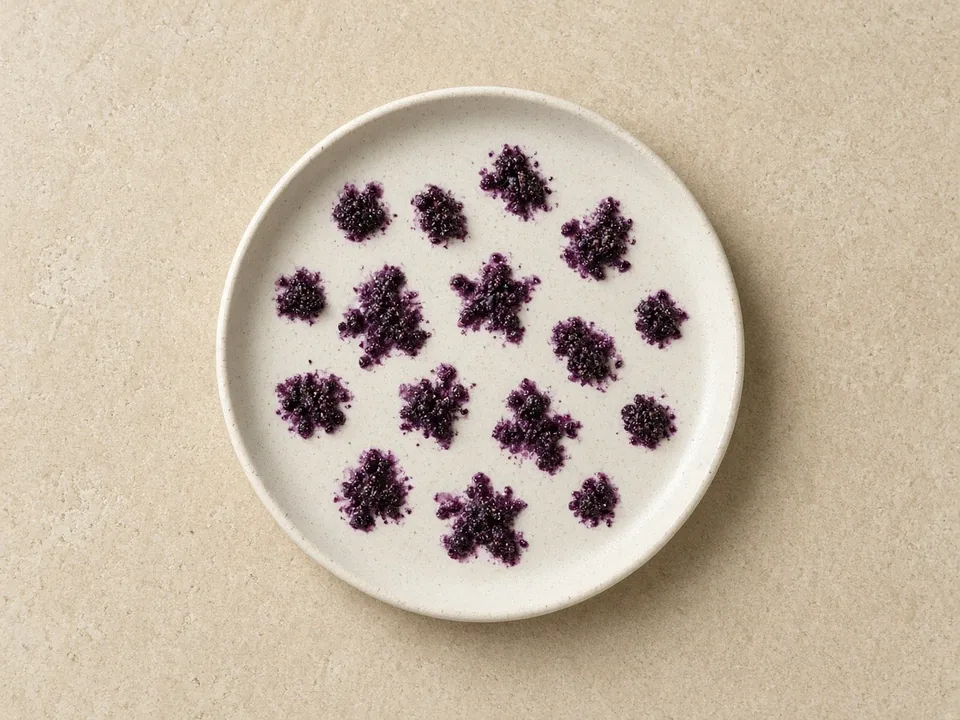
9 months+
Quartered or flattened
Cut each mulberry lengthwise into quarters for pincer-grasp practice, and cut long ones in half across as well, or keep flattening them.
- Size
- Each berry cut lengthwise into quarters, each about 1 cm (just under ½ inch) wide or less, or flattened. Cut large berries smaller.
- Check before serving
- Each piece should squash flat between your thumb and finger, with no stalks.
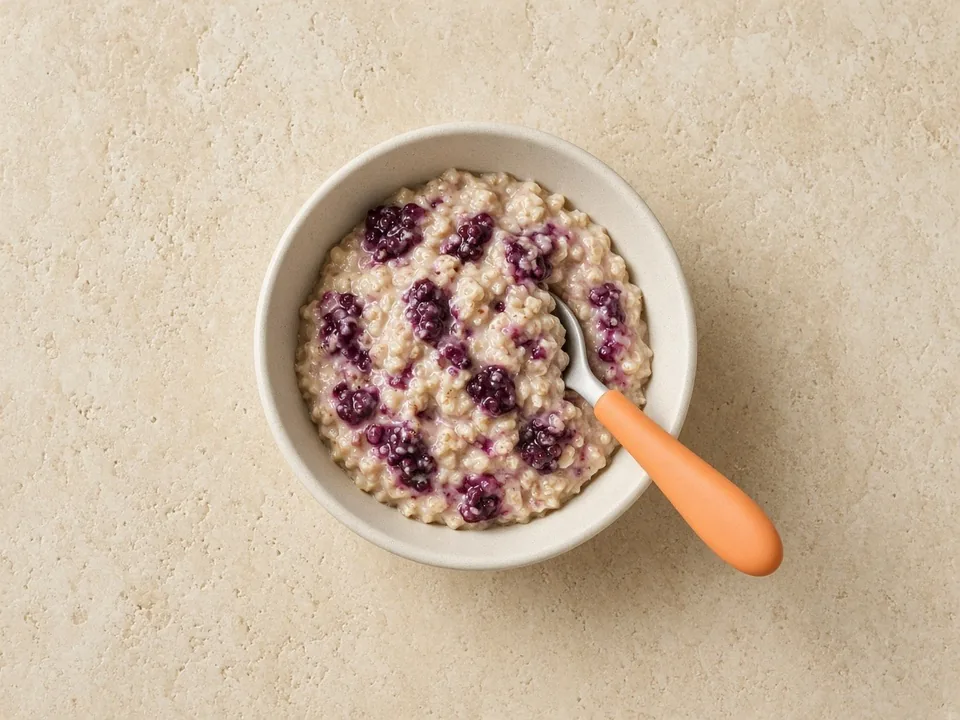
12 months+
Quartered or in dishes
Keep cutting mulberries lengthwise into quarters. Stir them into oatmeal or yogurt, or bake them into pancakes and muffins. Stay with your toddler while they eat.
- Size
- Lengthwise quarters, each about 1 cm (just under ½ inch) wide or less, or pieces about 1 cm (just under ½ inch).
- Check before serving
- Still do the squash test with firm or under-ripe berries, and check for stalks.
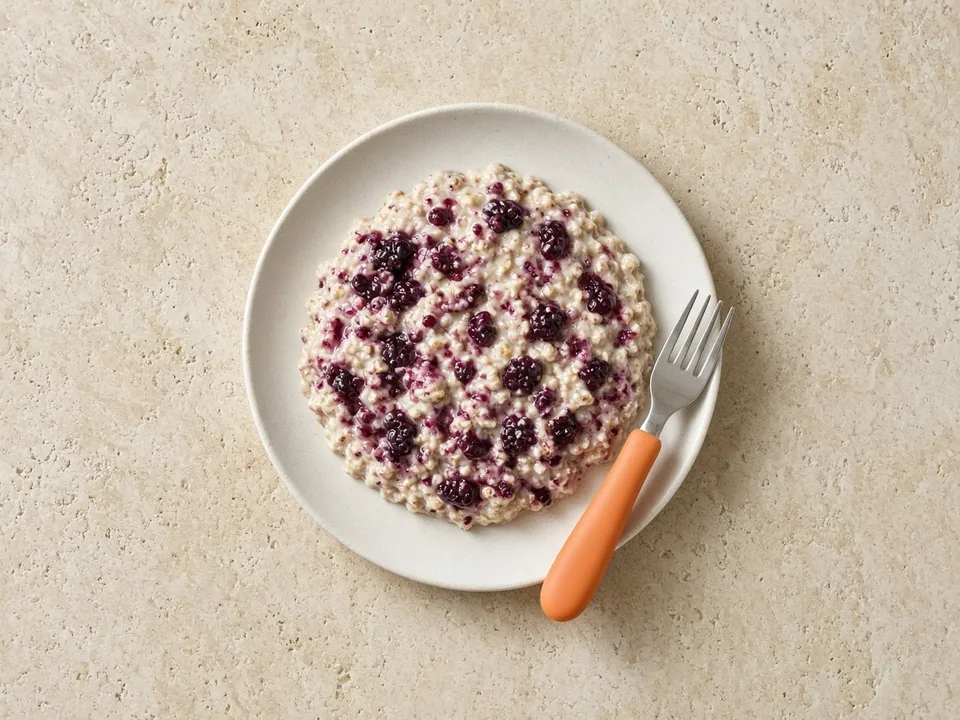
18 months+
Quartered or baked in
Serve quartered mulberries as a snack, or in oatmeal, yogurt and baked goods. Keep cutting them up: round, firm fruit can still block a toddler's airway. Make sure your toddler sits down to eat, and stay with them.
- Size
- Bite-sized pieces about 1 cm (just under ½ inch): quartered or flattened berries.
- Check before serving
- Check that each berry is quartered or flattened, with the stalk removed, and squash a piece to make sure it's soft.
Always have your child sit upright in a high chair or at the table, and stay with them the whole time they eat. Keep to the size and texture for their stage. Every baby develops on their own timeline.
How to prepare mulberries
- 1
Rinse the mulberries gently under running water, then pat them dry with a clean cloth or paper towel.
- 2
Pick out any moldy, mushy or hard unripe berries, and pull or snip off every green stalk.
- 3
Squash each berry flat or mash them with a fork (6 months), or cut each one lengthwise into quarters once your baby can pick up small pieces.
- 4
Using frozen mulberries? Frozen berries are safest cooked until steaming hot for babies, then cooled, so cook them into a sauce (see the frozen berries question below). Fresh mulberries, washed well, are fine. Don't give them frozen: frozen berries are hard.
How much to offer
Start with a few squashed berries or a teaspoon or two of mash. Your baby decides how much to eat: stop when they turn away or close their mouth. Purple-stained hands, faces and bibs are part of learning.
Common mistakes
Serving them uncut
The CDC lists uncut berries as a choking hazard for young children. Squash every mulberry flat, mash it, or cut it lengthwise into quarters.
Leaving the stalks in
The green stalk is tough and can run into the berry. Pull or snip it off every one before serving.
Giving dried mulberries as they come
Dried mulberries are small, chewy and hard. The CDC lists uncooked dried fruit as a choking hazard, and the NHS says not to give whole dried fruit to babies under 1 and to always cut it into small pieces.
Mistaking purple juice for a rash
Mulberry juice stains skin and clothes. Redness only where the juice touched, which fades after you wipe it off, is usually skin irritation. Spreading hives are different: talk to your pediatrician. Swelling of the face, lips or tongue, breathing trouble, repeated vomiting or floppiness is an emergency: call your emergency number right away.
Where US and UK guidance differ on mulberries
United States(AAP and CDC)Your setting
The AAP advises cooking most fruit until soft before 12 months, except mashed banana, and lists fruit chunks among foods to avoid under 1. If you follow US advice, mash ripe mulberries, or cook them until soft and mash them.
United Kingdom(NHS)Your setting
The NHS suggests soft fruit as a finger food from around 6 months, and says to cut small round fruits like berries into quarters. Use only ripe berries that pass the squash test.
We cover US and UK guidance in detail. Elsewhere, check your national health service's advice too.
Questions parents ask
Can mulberries be a choking hazard for babies?
Uncut mulberries are a choking hazard for babies and toddlers: the CDC lists uncut berries as foods to avoid for young children. Ripe mulberries are soft, but they can be long, with a tough stalk. Remove the stalk, squash each berry flat, mash it, or cut it lengthwise into quarters, and stay with your child while they eat.
Can babies be allergic to mulberries?
Mulberries are not a common allergen. Berries can cause a red rash around the mouth, chin or hands where the juice touches the skin. This is usually a skin reaction, not an allergy: it stays where the food touched and fades once you wipe the skin. Hives that spread, swelling of the lips, face or tongue, vomiting or breathing trouble are signs of an allergic reaction. If your baby has hives, stop offering mulberries and talk to your pediatrician. For swelling of the lips, face or tongue, breathing trouble, repeated vomiting or floppiness, call your emergency number.
Are mulberries healthy for babies?
Raw mulberries have about 36 mg of vitamin C, 1.7 g of fiber and 1.9 mg of iron per 100 g, though a baby's handful of about 30 g gives only about 0.6 mg of iron.
Can babies eat mulberries?
Yes, from around 6 months, with the stalks removed and each berry squashed flat or mashed. As your baby learns to pick up small pieces, cut each one lengthwise into quarters. They work well mashed into plain yogurt, as in the Yogurt berry bowl recipe.
Do mulberries stain?
Yes. The juice stains skin, clothes and high chairs a deep purple. Use a bib, and wipe your baby's hands and face after the meal. A purple or red mouth is usually just juice; see the allergy note for how to tell a skin reaction from an allergic one.
Can babies eat frozen mulberries?
Yes, cooked. Frozen berries are safest cooked until steaming hot for babies, then cooled: simmer them from frozen with a splash of water and let them bubble for at least a minute, then mash and cool. Fresh mulberries, washed well, are fine. The CDC says freezing doesn't kill the hepatitis A virus, which has caused outbreaks linked to frozen berries, and that heating to over 85°C (185°F) for 1 minute inactivates it.
Can babies eat dried mulberries?
Not as they come. Dried fruit is small, sticky and chewy: the CDC lists uncooked dried fruit as a choking hazard, and the NHS says not to give whole dried fruit to babies under 1 and to always cut it into small pieces. Fresh mulberries, squashed or quartered, are the better choice.
If your baby refuses mulberries
- Many babies need 10 or more tries before they accept a new food. Keep offering it alongside foods they already like.
- Try another form: mashed into oatmeal or yogurt, or baked into pancakes.
- Eat some yourself at the same meal. Babies copy what they see.
- Funny faces don't mean they dislike it. They're getting used to a new taste and texture.
Never force or pressure your baby to eat. Some days they'll eat more, some days less, and that's normal.
Buying and storing mulberries
- Keep fresh mulberries in the fridge, at or below 40°F (4°C). They're delicate, so use them soon.
- Cut or mashed mulberries keep for 3 to 4 days in a covered container in the fridge.
- Cooked, mashed mulberries can be frozen in small portions and used within 3 months. Thaw them in the fridge and use them within 24 hours of thawing.
- Throw away any food left out at room temperature for more than 2 hours (1 hour if it's hotter than 90°F / 32°C).
When to talk to your doctor
Contact your pediatrician, GP or health visitor if:
- A rash after mulberries spreads beyond the skin the food touched or turns into raised hives. That is not a simple skin reaction, so talk to your pediatrician or GP before offering mulberries again. If it comes with swelling of the face, lips or tongue, breathing trouble, repeated vomiting, or your baby is floppy, call your emergency number instead (see below).
- You notice mild signs of an allergic reaction after eating, such as a few hives or a little vomiting. See signs of a reaction.
- You're worried about how much your baby eats, their growth, or they refuse most solid food for weeks.
Call 911999your local emergency number (such as 112 in Europe or 000 in Australia) now if your baby has trouble breathing, wheezing, can't cough or cry, has lips, mouth, tongue or throat that suddenly swell, or becomes pale, bluish, floppy or unresponsive. Also call if hives come with repeated vomiting.
Offered mulberries?
Add it to your first 100 foods.
Mulberries is in your 100 foods
1 of 100 offered · See all
Add a note (likes, dislikes, any reaction)
Saved in this browser only. Think it was a reaction? See signs of an allergic reaction and when to get help.
Helpful guides
Sources
- CDC: Choking hazards
- AAP: When can babies start solid foods?
- NHS: Preparing food safely for babies
- NHS: Your baby's first solid foods
- NHS South West London Healthier Together: Contact reactions to foods in babies and toddlers
- CDC Yellow Book: Hepatitis A
- USDA FoodData Central: Mulberries, raw
- FDA: 7 tips for cleaning fruits and vegetables
- USDA FSIS: Leftovers and food safety
- AAP: Is it OK to make my own baby food?
- NHS Best Start in Life: Storing and reheating food
More first foods




Free printable: The First 100 Foods checklist
Tick off foods as your baby tries them. Print it or save it as a PDF, no sign-up needed.