
Natto
Sticky, savory fermented soybeans. Chop them and stir them into soft rice.
Checked against official guidance on October 18, 2026 · How we review
Quick answer
Babies can eat natto from around 6 months, once they show signs of being ready for solids. Prepare it as shown below.
How to serve natto by age
6 months+
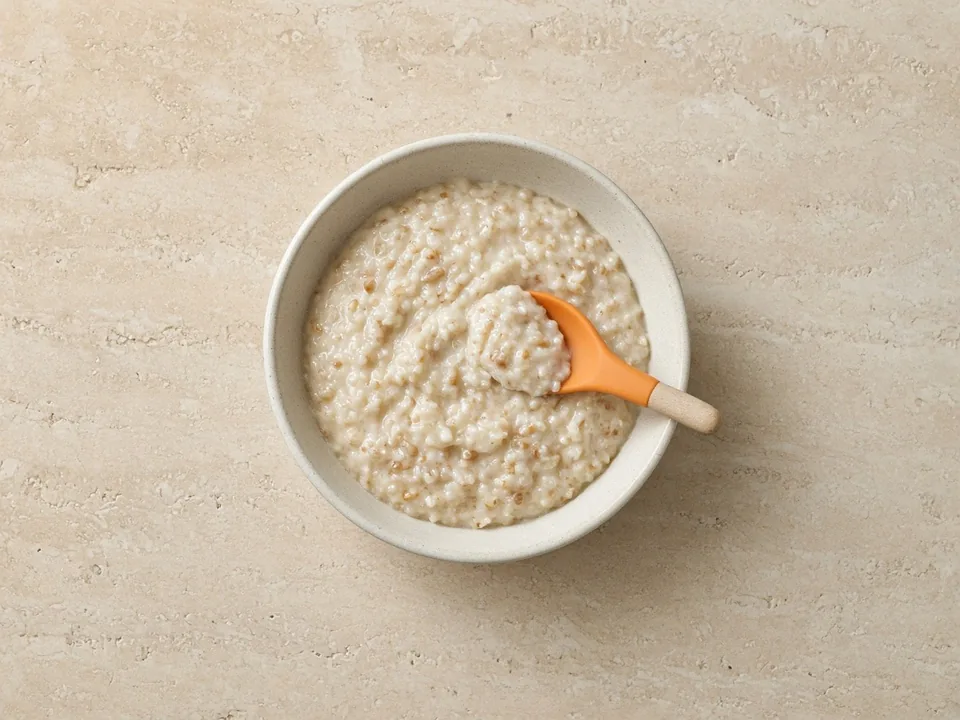
Chopped natto stirred into soft food
Chop natto finely with a knife or mash it with a fork, then stir a small amount into soft rice porridge, mashed sweet potato or another food your baby already eats. Mixing it in makes it less sticky and stringy. Offer it on a pre-loaded spoon.
- Size
- Mashed or finely chopped and stirred into soft rice porridge or mashed vegetables, on a pre-loaded spoon.
- Check before serving
- Look for whole beans and squash any you find. Stirred into rice or mash, it shouldn't pull into long sticky strings or form a clump.
US and UK advice differ here. The AAP suggests mashed food or soft pieces no larger than ½ inch; the NHS suggests soft finger-sized pieces your baby can hold in their fist. Both agree the food must squash easily.
9 months+
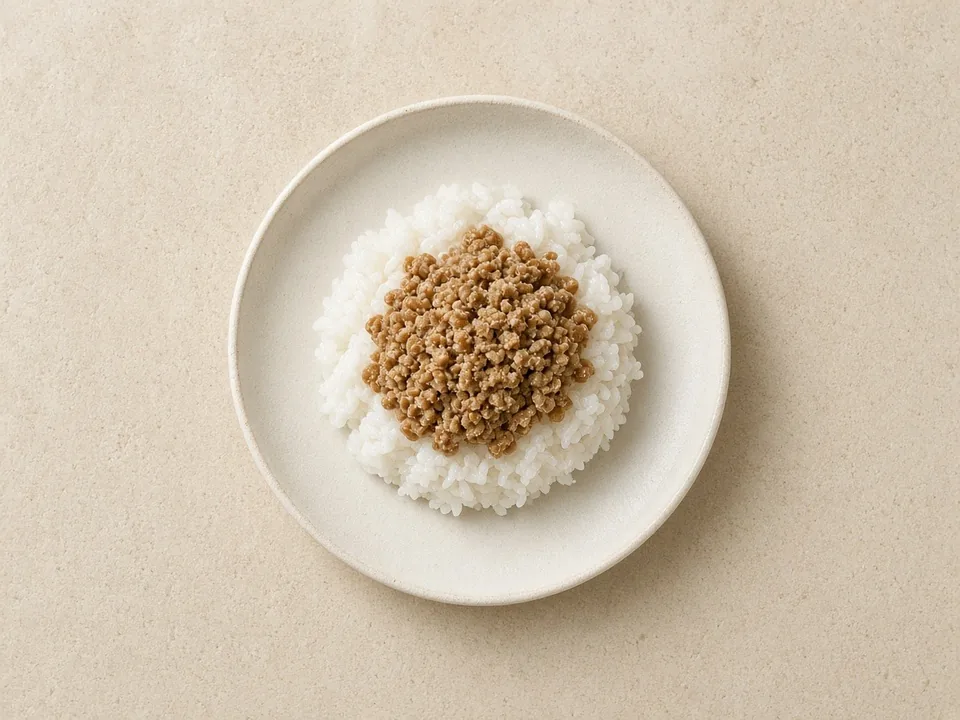
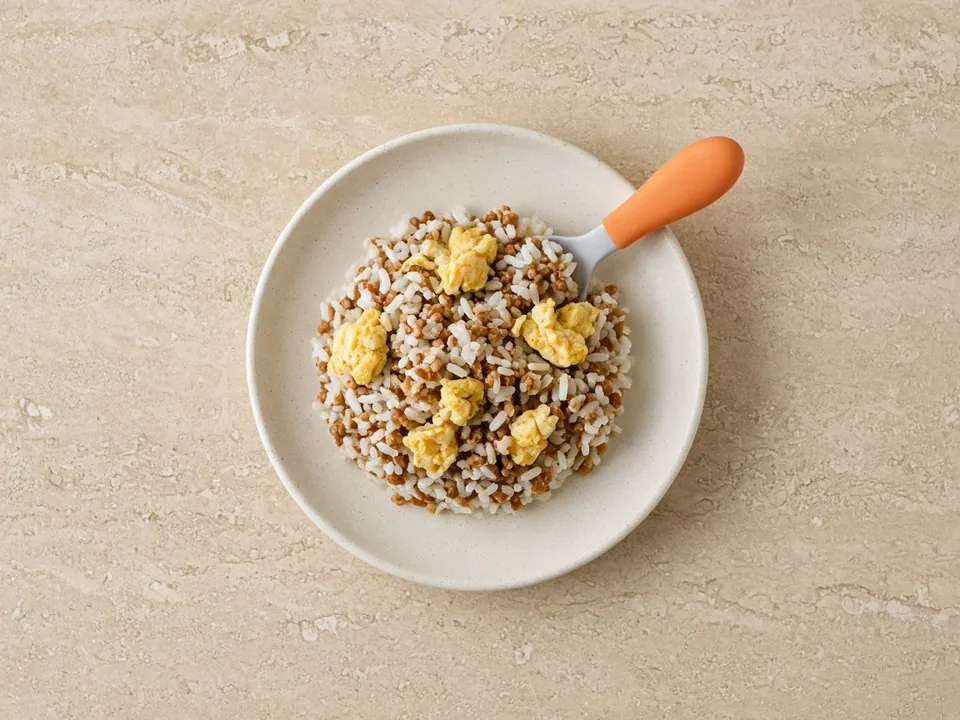
Chopped natto mixed with rice
As the pincer grasp develops, mix chopped natto into soft rice so your baby can pick up small pieces. You can also stir it into scrambled egg once egg has been introduced.
- Size
- Pieces no bigger than about 1 cm (just under ½ inch). Chop or flatten every bean; never serve them whole.
- Check before serving
- Squash a bean between your thumb and finger. It should flatten easily, with no whole beans left in the mix.
12 months+
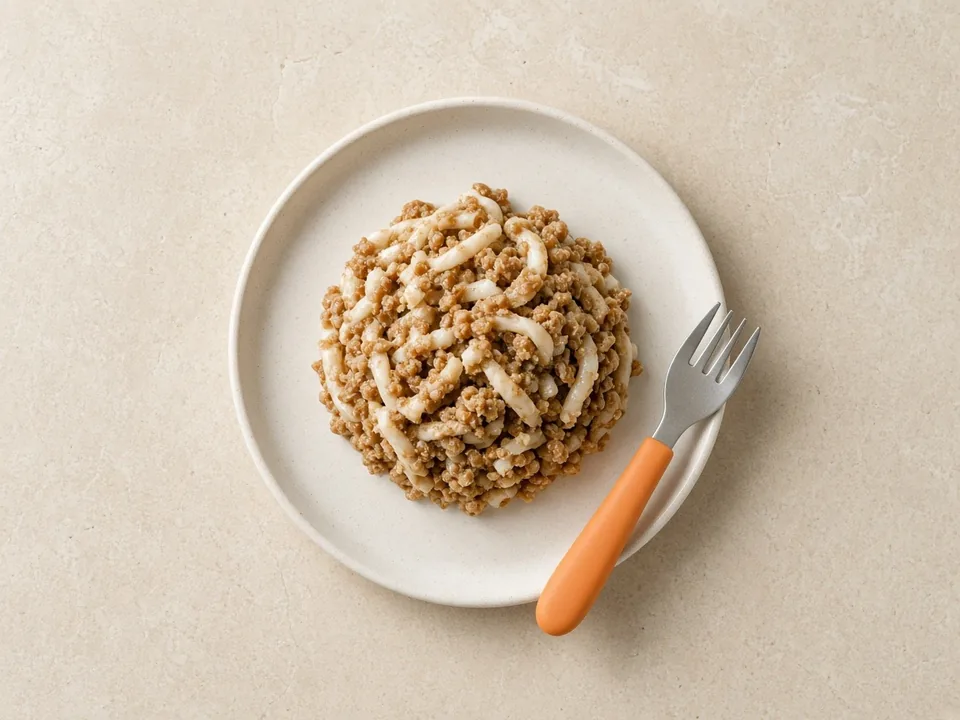
Natto rice and family dishes
Serve chopped natto on soft rice, stirred into noodles, or folded into an omelet. Leave out the mustard, and use only a drop of the sauce, if any.
- Size
- Chopped or flattened beans in pieces about 1 cm (just under ½ inch), mixed into food.
- Check before serving
- Still check for whole beans and big sticky clumps.
18 months+
Natto with family meals
Offer natto the way your family eats it: over rice, with noodles or in rice bowls. Keep chopping or flattening the beans and mixing natto into other food, and keep salty sauces to a small amount.
- Size
- Bite-sized portions about 1 cm (just under ½ inch), with the beans chopped or flattened.
- Check before serving
- Still check mixed dishes for whole beans and big sticky clumps.
Always have your child sit upright in a high chair or at the table, and stay with them the whole time they eat. Keep to the size and texture for their stage. Every baby develops on their own timeline.
How to prepare natto
- 1
Keep natto in the fridge and check the date on the pack.
- 2
Set aside the sauce and mustard packets that often come with it.
- 3
Stir the natto, then chop it finely with a knife or mash it with a fork.
- 4
Mix a small amount into warm (not hot) soft rice, rice porridge or mashed vegetables, and check for whole beans before serving.
- 5
First time? Offer it in the morning or at lunch, at home, on a day your baby is well, so you can watch them for the rest of the day. A rare natto allergy is late-onset, so a quiet first couple of hours is not an all-clear.
How much to offer
For the very first taste, offer a small amount in the morning or at lunch: a teaspoon of chopped natto mixed into rice or mash. If there's no reaction, offer more next time. Your baby decides how much to eat: stop when they turn away or close their mouth. Once soy is in their diet, keep offering it regularly.
Common mistakes
Adding the sauce packet
The sauce that comes with natto is usually soy sauce based, and the NHS lists soy sauce as high in salt. Babies under 1 should have less than 1 g of salt a day. Serve natto plain for babies.
Adding the mustard
The mustard packet is hot, and the NHS lists mustard among foods that can trigger an allergic reaction. Leave it out for babies and toddlers.
Serving whole sticky beans
Natto is whole soybeans in a sticky coating. The CDC lists whole beans as a choking hazard and advises avoiding small, sticky foods. Chop or mash the beans for babies, and keep chopping or flattening them for toddlers.
A big spoonful of plain natto
On its own, natto clumps together and is hard to move around the mouth. Stir a small amount into rice or mash so it's less sticky.
Questions parents ask
Can natto be a choking hazard for babies?
Natto is made of whole soybeans in a sticky coating. The CDC lists whole beans among choking hazards and advises avoiding small, sticky foods. Chop or mash the beans, stir natto into rice or mash so it's less sticky, and offer small amounts. Stay with your child during meals.
Can babies be allergic to natto?
Natto is made from soybeans, and soy is one of the most common food allergens in young children. Introduce soy from around 6 months, on its own and in a small amount, and watch for signs of a reaction. If your baby already eats tofu or other soy foods without a reaction, soy isn't new for them, but start natto small too: a rare natto allergy is caused by a substance in natto called PGA, and it can cause late-onset anaphylaxis. A 2023 study in northern Japan found it in adults who worked in scallop aquaculture, and the paper says marine sports are a risk factor, because of stings from jellyfish and similar sea animals. It is not a common baby allergy, but because it is late-onset, a quiet first couple of hours is not an all-clear. Soy allergy usually shows up in babies and children under 3, and many children outgrow it. Once tolerated, keep soy in your baby's usual diet.
Is natto healthy for babies?
A source of protein, iron and calcium: FoodData Central lists about 19 g of protein, 8.6 mg of iron and 217 mg of calcium per 100 g of natto, so even 15 g gives about 1.3 mg of iron. Babies need 11 mg of iron a day from 7 to 12 months. Natto is also very high in vitamin K2: the NIH lists about 850 mcg in 3 ounces.
Is natto safe for babies?
Yes, from around 6 months, chopped or mashed and stirred into soft food. Natto is a soy food, a common allergen, so introduce it on its own first and start with a small amount.
Can babies have the sauce and mustard that come with natto?
Not in the first year. The sauce is usually soy sauce based and salty, and babies under 1 should have less than 1 g of salt a day. The mustard is hot, and mustard is one of the foods the NHS says can trigger an allergic reaction. After 12 months, use only a drop of the sauce, if any, and keep leaving out the mustard.
My baby eats tofu. Can they still react to natto?
Rarely. Natto contains soy, and it also contains PGA, which can cause a rare allergy with late-onset anaphylaxis. A 2023 study in northern Japan found it in adults who worked in scallop aquaculture, and the paper says marine sports are also a risk factor. Offer a small amount in the morning or at lunch, at home, and watch your baby for the rest of the day: a quiet first couple of hours is not an all-clear.
Is natto high in vitamin K?
Yes. Natto is one of the richest food sources of vitamin K2, with about 850 mcg in 3 ounces, according to the NIH. Vitamin K from food hasn't been shown to cause harm, but it affects how the blood thinner warfarin works, so ask your child's doctor first if they take it.
If your baby refuses natto
- Many babies need 10 or more tries before they accept a new food. Keep offering it alongside foods they already like.
- Natto has a strong smell and taste. Start with a little stirred into rice or mash, and add more over time.
- Eat some yourself at the same meal. Babies copy what they see.
- Funny faces don't mean they dislike it. They're getting used to a new taste and texture.
Never force or pressure your baby to eat. Some days they'll eat more, some days less, and that's normal.
Buying and storing natto
- Keep natto in the fridge and use it by the date on the pack.
- Natto mixed into rice follows the rice rule: cool it quickly, ideally within 1 hour, keep it in the fridge for no more than 1 day, and reheat it only once, until steaming hot all the way through, then let it cool before serving.
- Natto stirred into other cooked food, such as mashed vegetables, keeps for 3 to 4 days in a covered container in the fridge. Reheat only once, to 165°F (74°C), until steaming hot, then let it cool before serving. Throw away any natto food left in your baby's bowl.
- Throw away any food left out at room temperature for more than 2 hours (1 hour if it's hotter than 90°F / 32°C).
When to talk to your doctor
Contact your pediatrician, GP or health visitor if:
- Your baby vomits a few hours after eating soy. This can be FPIES, a delayed type of food allergy that soy can trigger. If they vomited once or twice and seem alert and like themselves, call your pediatrician or GP. If they vomit again and again, or are pale, floppy, very sleepy or hard to wake, call your emergency number.
- Your baby has had any reaction to soy or natto, even a mild one, including one that started later rather than straight away. Stop offering it until you've talked to your pediatrician.
- Your child takes a blood thinner such as warfarin. Natto is very high in vitamin K, which affects how warfarin works, so ask their doctor before offering it.
- You notice mild signs of an allergic reaction after eating, such as a few hives or a little vomiting. See signs of a reaction.
- You're worried about how much your baby eats, their growth, or they refuse most solid food for weeks.
Call 911999your local emergency number (such as 112 in Europe or 000 in Australia) now if your baby has trouble breathing, wheezing, can't cough or cry, has lips, mouth, tongue or throat that suddenly swell, or becomes pale, bluish, floppy or unresponsive. Also call if hives come with repeated vomiting.
Last offered today. Once natto is in your baby's diet, keep offering it regularly.
Add a note (likes, dislikes, any reaction)
Saved in this browser only. Think it was a reaction? See signs of an allergic reaction and when to get help.
Helpful guides
Sources
- CDC: Choking hazards
- ACAAI: Soy allergy
- ACAAI: Food protein-induced enterocolitis syndrome (FPIES)
- NHS: Food allergies in babies and young children
- Kurotori et al.: Scallop aquaculture has a potential risk of natto-induced hypersensitivity reactions in a local area of northern Japan (Allergol Int, 2023)
- NHS: Salt in your diet
- USDA FoodData Central: Natto
- NIH Office of Dietary Supplements: Iron
- NIH Office of Dietary Supplements: Vitamin K
- Food Standards Agency: Home food fact checker
- USDA FSIS: Leftovers and food safety
- NHS Best Start in Life: Storing and reheating food
- NHS: Help your baby enjoy new foods
More first foods


Free printable: The First 100 Foods checklist
Tick off foods as your baby tries them. Print it or save it as a PDF, no sign-up needed.