
Paprika
Sweet, mild and rosy red. A pinch adds color and flavor without salt.
Checked against official guidance on October 18, 2026 · How we review
Quick answer
Babies can eat paprika from around 6 months, once they show signs of being ready for solids. Prepare it as shown below.
How to serve paprika by age
6 months+
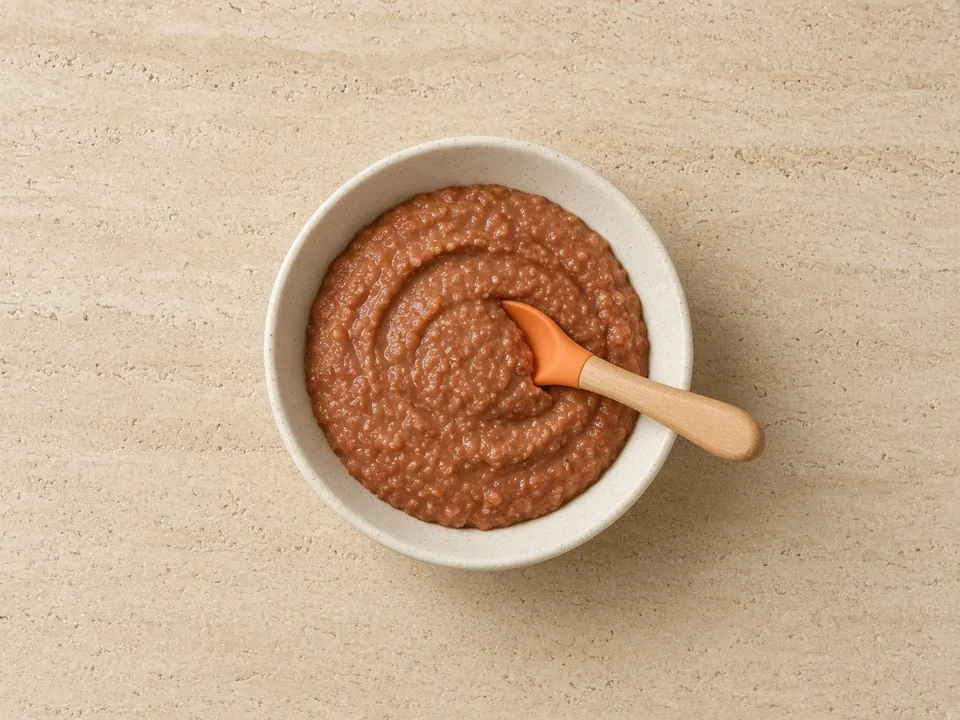
Cooked into soft food
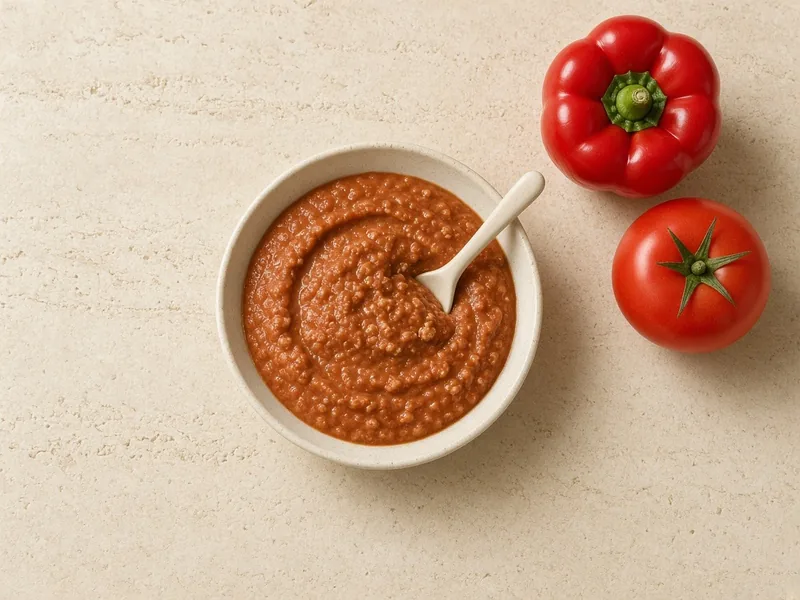
Stir a pinch of sweet paprika into a dish while it cooks, such as a bean stew or tomato sauce made without salt. Then mash or blend your baby's portion to a texture they can manage. Use plain paprika, not seasoning mixes or rubs with salt.
- Size
- A small pinch of sweet (mild) paprika cooked into mashed or soft foods, such as beans, lentils or tomato sauce.
- Check before serving
- Stir well and check there are no dry clumps of spice in your baby's portion.
US and UK advice differ here. The AAP suggests mashed food or soft pieces no larger than ½ inch; the NHS suggests soft finger-sized pieces your baby can hold in their fist. Both agree the food must squash easily.
9 months+
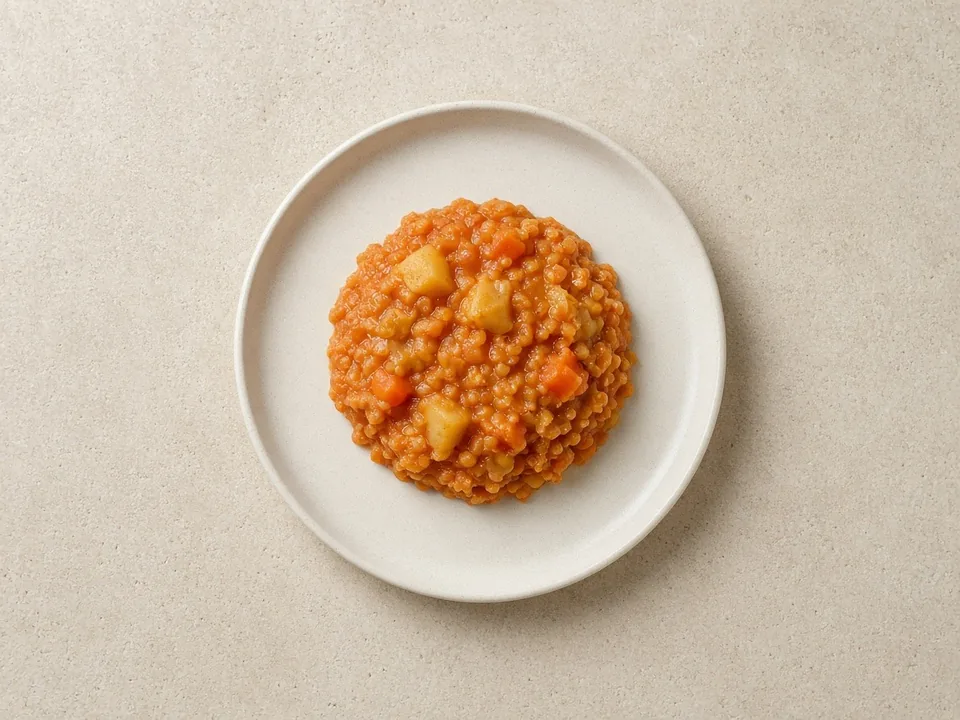
Cooked into dishes
Cook paprika into beans, lentils, chicken, fish, scrambled egg (once egg has been introduced) or vegetable stews.
- Size
- Cooked into food, with soft pieces no bigger than about 1 cm (just under ½ inch).
- Check before serving
- Check that the pieces of food in the dish squash easily between your thumb and finger.
12 months+
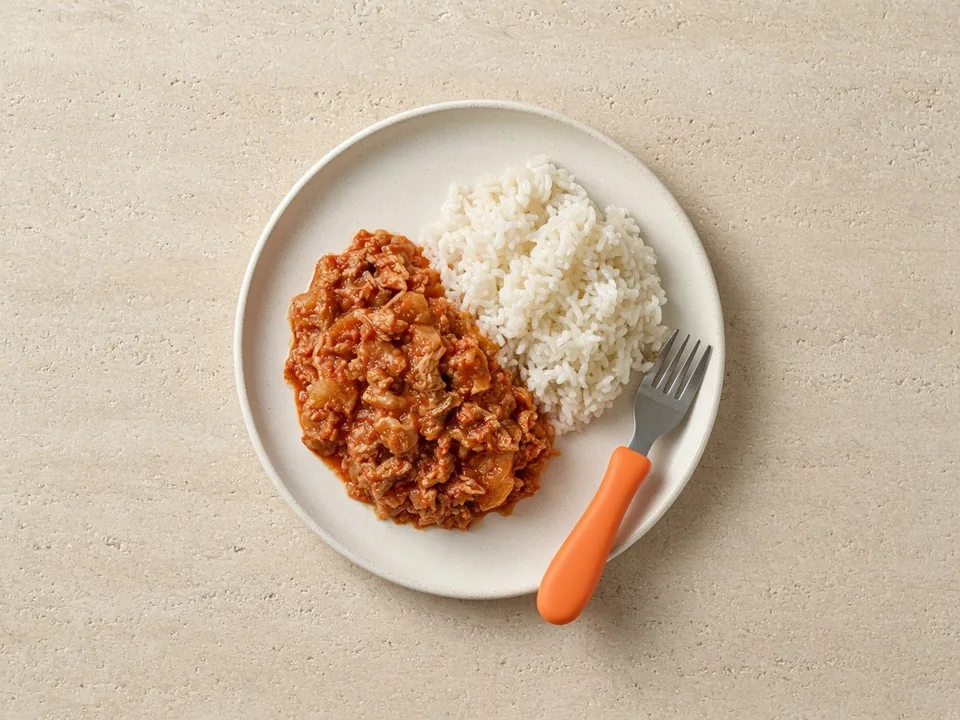
Cooked into family meals
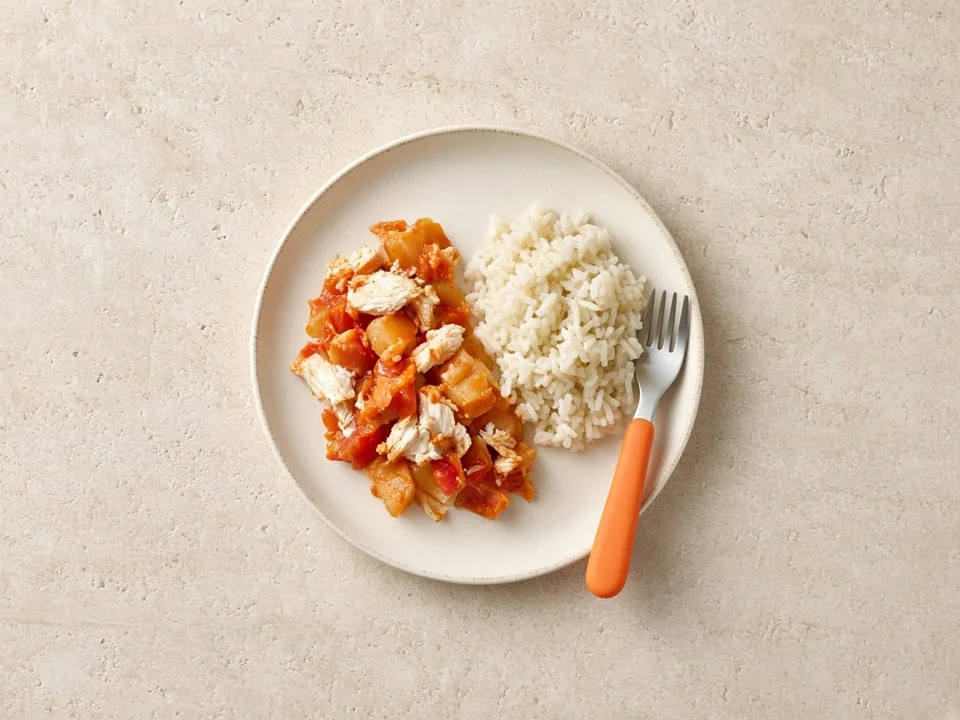
Serve paprika cooked into goulash, stews, mild chili and rice dishes. Take your toddler's portion out before you add salt, hot paprika, chili or seasoning mixes.
- Size
- Cooked into family dishes, in small soft pieces about 1 cm (just under ½ inch) or smaller.
18 months+
Cooked into family dishes
Keep serving paprika cooked into family meals. Stick with sweet or mild paprika for your child's portion, and add any heat to the grown-ups' plates.
- Size
- Cooked into dishes, in bite-sized pieces about 1 cm (just under ½ inch) or smaller.
Always have your child sit upright in a high chair or at the table, and stay with them the whole time they eat. Keep to the size and texture for their stage. Every baby develops on their own timeline.
How to prepare paprika
- 1
Check the label: choose sweet (mild) paprika, not hot paprika, and no seasoning mixes with salt.
- 2
Add a small pinch to the pan with the other ingredients and cook it into the dish.
- 3
Stir well so there are no dry clumps of spice. Don't add salt.
- 4
Mash or blend your baby's portion to a texture they can manage, and let it cool before serving.
How much to offer
Start with a small pinch cooked into a food your baby already knows. An NHS butterbean goulash recipe for babies uses half a tablespoon of paprika for about 25 baby portions. Your baby decides how much to eat: stop when they turn away or close their mouth. Paprika is a flavor, so there's no amount to aim for.
Common mistakes
Reaching for hot paprika or chili powder
Start with sweet paprika. NHS weaning recipes that use chili keep it small: half a teaspoon of chili powder in a dhal for 8 portions (6 months or older), and a pinch or a quarter teaspoon of mild chili powder in a beef curry for 4 (7 to 9 months).
Using seasoning mixes or rubs
Babies shouldn't have added salt. Check the label on spice rubs and seasoning mixes, or use plain paprika.
Offering dry spice on its own
Paprika is a flavoring. Always cook it into food, and never offer a spoonful of dry ground spice.
Seasoning the family pot first
Take your baby's portion out before adding salt, stock cubes or extra heat to the family meal.
Where US and UK guidance differ on paprika
United States(AAP and CDC)Your setting
The AAP says fresh baby food should be cooked with no added salt or seasoning. It doesn't mention paprika or other spices, and no AAP page gives an age for them. If you'd rather follow that line closely, leave paprika out until 12 months, or ask your pediatrician.
United Kingdom(NHS)Your setting
The NHS says not to add salt or sugar, including stock cubes and gravy, to your baby's food or cooking water. Its weaning recipes use paprika from 6 months and small amounts of chili powder, in a dhal from 6 months and a beef curry for 7 to 9 months, and its general salt advice suggests herbs and spices to add flavor instead of salt. If you use paprika, keep it cooked, mild and unsalted.
We cover US and UK guidance in detail. Elsewhere, check your national health service's advice too.
Questions parents ask
Can paprika be a choking hazard for babies?
Ground paprika cooked into soft food is a low choking risk. The texture of the dish matters more than the spice: mash or blend it to suit your baby. Don't offer dry spice on its own. Stay with your child during meals.
Can babies be allergic to paprika?
Paprika is not a common allergen. The AAAAI says true allergy to spices is very rare, and a red rash where a spice touches the skin is usually irritation, not allergy. Spice mixtures can contain sesame, a top allergen, so check the label on blends.
Is paprika healthy for babies?
FoodData Central lists a lot of iron and vitamin A per 100 g of paprika, but a quarter teaspoon weighs only about half a gram and is shared across a whole dish. Paprika adds flavor and color, not nutrients to count on.
Can babies eat paprika?
Yes, from around 6 months, a small amount of sweet paprika cooked into food. The NHS includes paprika in a butterbean goulash recipe for babies from 6 months. US and UK advice is worded differently: see the guidance note below.
Is paprika spicy?
Sweet paprika is mild. Hot paprika has chili heat, and smoked paprika can be sweet or hot, so check the label. Start with sweet paprika. NHS weaning recipes use chili powder only in small amounts: half a teaspoon in a dhal for 8 portions from 6 months, and a pinch of mild chili powder in a beef curry for 4 at 7 to 9 months.
Is there lead in paprika?
Sometimes. The FDA says lead can get into spices from where they're grown or processed, and is sometimes added on purpose to spices such as paprika, turmeric and cinnamon powder. For the ground cinnamon products on its lead alert, the FDA advises checking your cupboards and throwing those products away. If an FDA alert or recall names a paprika product you own, do the same. The FDA also suggests eating a variety of foods and alternating how often you offer the same food.
If your baby refuses paprika
- Many babies need 10 or more tries before they accept a new food. Keep offering it alongside foods they already like.
- Use less paprika and mix it into a food your baby already enjoys.
- Eat some yourself at the same meal. Babies copy what they see.
- Funny faces don't mean they dislike it. They're getting used to a new taste and texture.
Never force or pressure your baby to eat. Some days they'll eat more, some days less, and that's normal.
Buying and storing paprika
- Keep paprika in a closed container somewhere cool and dry.
- Cooked dishes with paprika keep for 3 to 4 days in a covered container in the fridge. Freezer times depend on the dish, so follow the food page or recipe for what you cooked. Reheat cooked dishes only once, to 165°F (74°C), until steaming hot, then let them cool before serving. Cooked rice has stricter rules: cool it within 1 hour, eat it within 1 day and reheat it only once. See the rice page.
- Throw away any food left out at room temperature for more than 2 hours (1 hour if it's hotter than 90°F / 32°C).
When to talk to your doctor
Contact your pediatrician, GP or health visitor if:
- You're worried your child may have eaten a spice that was recalled for lead. Most people have no obvious immediate symptoms of lead exposure, so the FDA advises talking to your healthcare provider.
- You notice mild signs of an allergic reaction after eating, such as a few hives or a little vomiting. See signs of a reaction.
- You're worried about how much your baby eats, their growth, or they refuse most solid food for weeks.
Call 911999your local emergency number (such as 112 in Europe or 000 in Australia) now if your baby has trouble breathing, wheezing, can't cough or cry, has lips, mouth, tongue or throat that suddenly swell, or becomes pale, bluish, floppy or unresponsive. Also call if hives come with repeated vomiting.
Offered paprika?
Add it to your first 100 foods.
Paprika is in your 100 foods
1 of 100 offered · See all
Add a note (likes, dislikes, any reaction)
Saved in this browser only. Think it was a reaction? See signs of an allergic reaction and when to get help.
Recipes with paprika
Helpful guides
Sources
- AAP: When can babies start solid foods?
- NHS: Your baby's first solid foods
- NHS: Salt in your diet
- NHS Best Start in Life: Butterbean goulash with cooked green beans
- NHS Best Start in Life: Delicious dhal
- NHS Best Start in Life: Beef curry with rice
- FDA: FDA issues warning letter to Austrofood and continues activities to ensure safety of cinnamon products
- FDA: Ground cinnamon products added to public health alert due to elevated levels of lead
- AAAAI: Can spices cause allergic reactions?
- USDA FoodData Central: Spices, paprika
- USDA FSIS: Leftovers and food safety
- Food Standards Agency: Home food fact checker
- NHS Best Start in Life: Storing and reheating food
More first foods



Free printable: The First 100 Foods checklist
Tick off foods as your baby tries them. Print it or save it as a PDF, no sign-up needed.