
Peanut butter
The allergen most worth starting early. Thin it, stir it in, and keep it coming.
Checked against official guidance on October 18, 2026 · How we review
Quick answer
Babies can eat peanut butter from around 6 months, once they show signs of being ready for solids. Prepare it as shown below.
How to serve peanut butter by age
6 months+
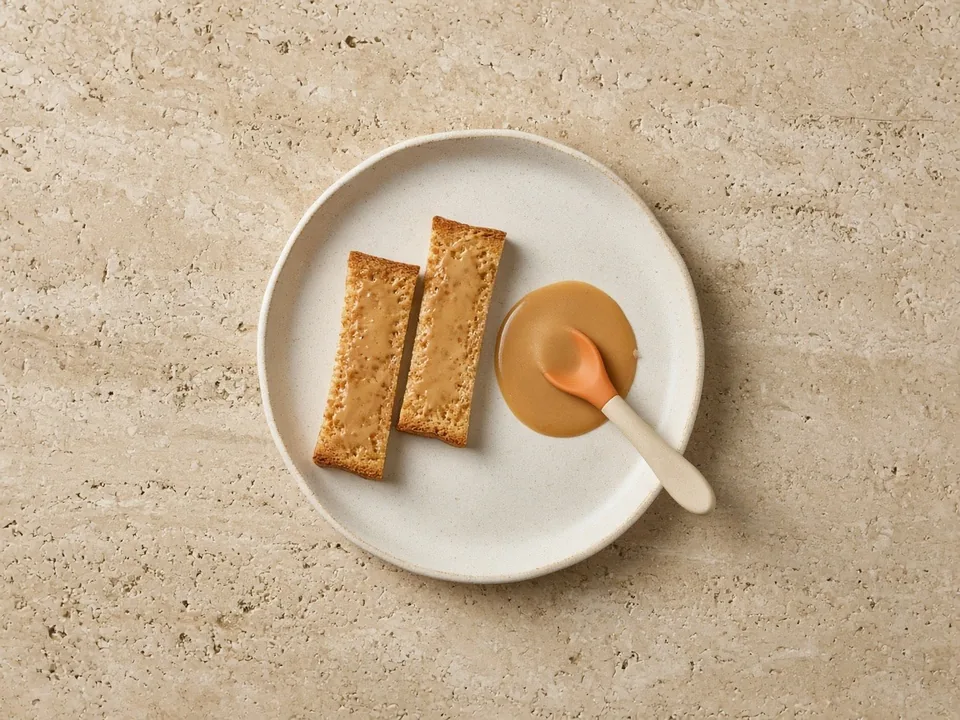
Thinned smooth peanut butter
Stir 2 teaspoons of smooth peanut butter with 2 to 3 teaspoons of hot water until it's thin and blended, let it cool, and serve it on a pre-loaded spoon. Or stir it into a purée, oatmeal or infant cereal your baby already eats, or thin it with breast milk or formula. Peanut powder stirred into a purée works too.
- Size
- Thinned to a smooth, runny purée, or, once wheat has been introduced on its own, a very thin layer on a toast strip about the size of an adult finger, roughly 6–8 cm long and 2 cm wide (2½–3 × ¾ in).
- Check before serving
- Tip the spoon. Thinned peanut butter should slide off smoothly, with no sticky lumps. If it holds its shape, add more liquid.
US and UK advice differ here. The AAP suggests mashed food or soft pieces no larger than ½ inch; the NHS suggests soft finger-sized pieces your baby can hold in their fist. Both agree the food must squash easily.
9 months+
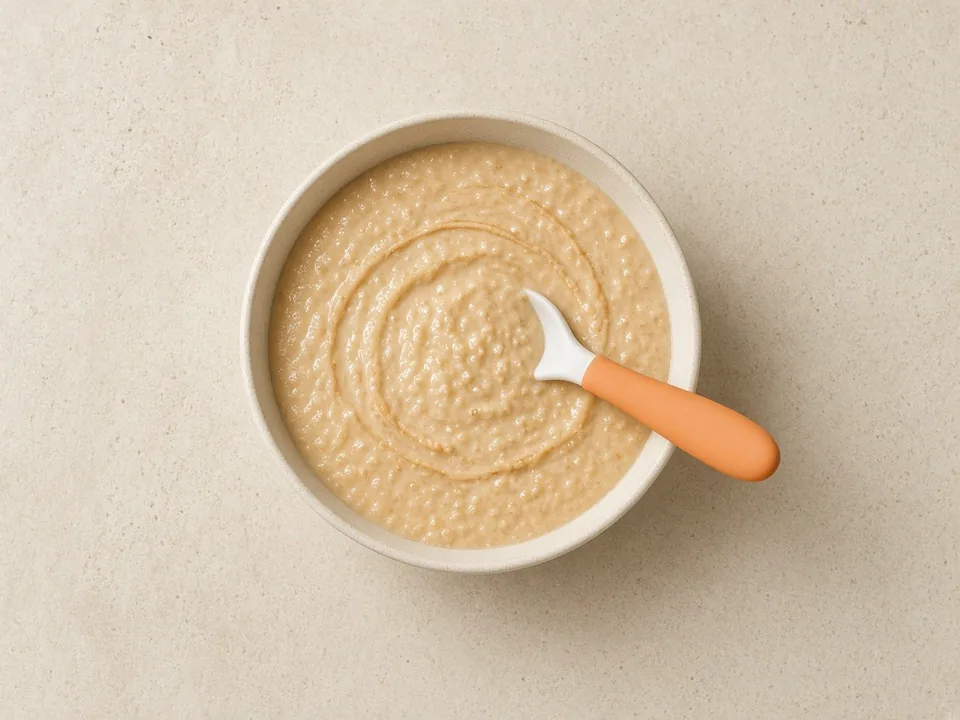
Thinly spread or stirred in
Spread a very thin layer of smooth peanut butter on soft toast or pancake, or keep stirring it into oatmeal, mashed fruit, or plain yogurt once dairy is already in your baby's diet. Check the bread label for honey, which isn't safe before 12 months.
- Size
- Toast or pancake pieces no bigger than about 1 cm (just under ½ inch), with a thin layer of peanut butter, or strips if your baby prefers them.
- Check before serving
- You should be able to see the toast through the spread. If it's thick enough to leave a ridge, scrape some off.
12 months+
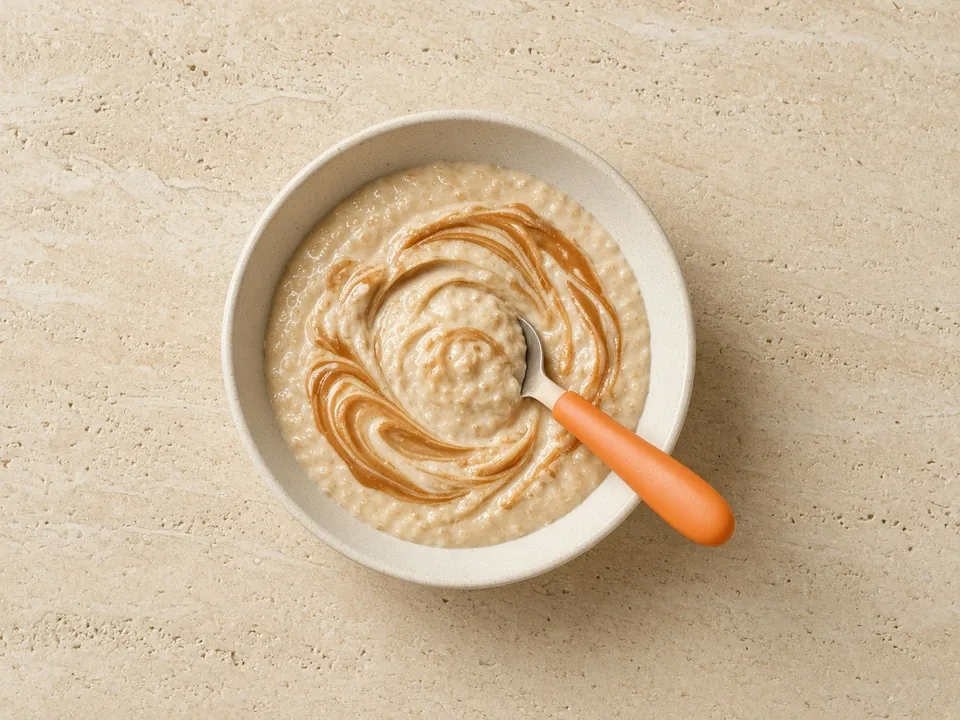
Thin spread or in dishes
Thinly spread on toast, crackers without seeds or nut pieces, or soft bread, or stirred into sauces, oatmeal or baked goods like muffins.
- Size
- Bite-sized pieces about 1 cm (just under ½ inch), thinly spread, or mixed into food.
- Check before serving
- Still check the spread is thin, not a thick layer.
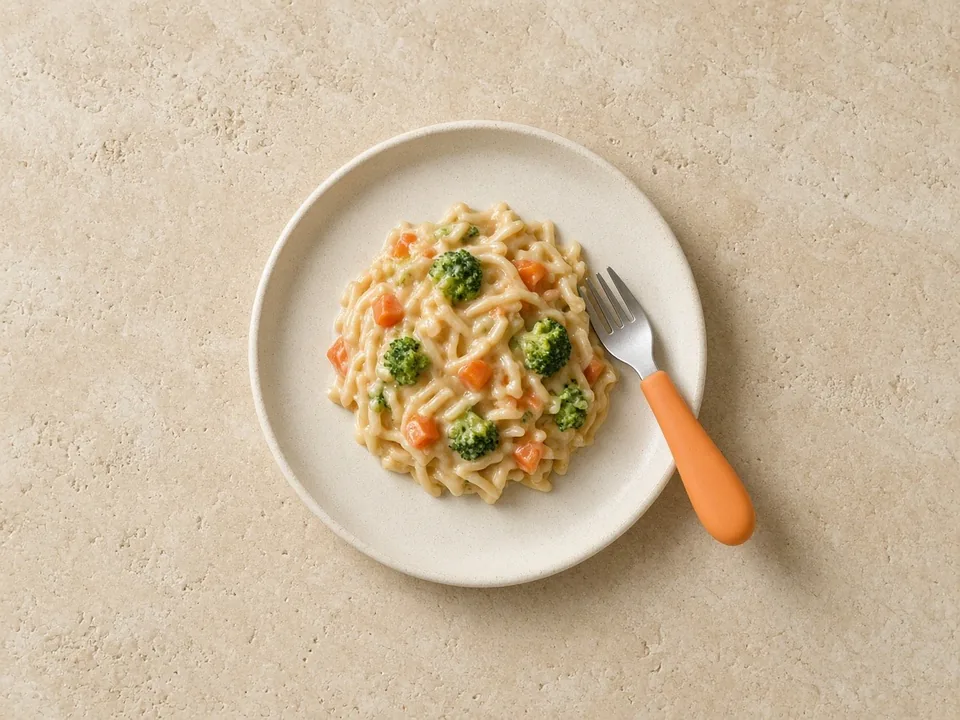
18 months+
Thin spread or in family meals
Use peanut butter in sandwiches spread thinly, peanut sauces for noodles, or baking. Still no spoonfuls or thick globs, and no whole or chopped peanuts: see the guidance note below.
- Size
- Bite-sized pieces about 1 cm (just under ½ inch), or as part of a dish.
Always have your child sit upright in a high chair or at the table, and stay with them the whole time they eat. Keep to the size and texture for their stage. Every baby develops on their own timeline.
How to prepare peanut butter
- 1
Choose smooth peanut butter with no added salt or sugar. Never chunky.
- 2
Measure 2 teaspoons into a bowl and slowly stir in 2 to 3 teaspoons of hot water until thin and blended. Or stir it into breast milk, formula, or a purée your baby has already had.
- 3
Let it cool and check that it slides off the spoon with no lumps.
- 4
Offer a little on the tip of a spoon first, wait 10 minutes, then offer the rest at your baby's usual pace.
- 5
First time? Pick a day your baby is well, at home, when you can watch them for a couple of hours afterward.
How much to offer
Start with a taste on the tip of a spoon. If there's no reaction after 10 minutes, your baby can have the rest of the 2-teaspoon serving at their own pace; they decide how much. Once peanut is in their diet, keep offering it regularly. Expert guidance for higher-risk babies suggests about 2 teaspoons of peanut butter, three times a week. For other babies there's no set amount, so follow your pediatrician's advice if they give one.
Common mistakes
Spoonfuls or thick globs
Thick peanut butter can stick in a young child's throat. Always thin it, stir it into food, or spread it very thinly.
Waiting until toddlerhood
Delaying peanut doesn't prevent allergy and may make it more likely. Offer it from around 6 months, once your baby has started solids, and not before 4 months.
Offering it once and stopping
Once tolerated, peanut should stay part of your baby's usual diet. Use the tracker below to see when you last offered it.
Chunky peanut butter or chopped peanuts
Use smooth peanut butter only. Whole or chopped peanuts are a choking hazard: the AAP says wait until at least 4 years, and the NHS says not under 5.
Where US and UK guidance differ on peanut butter
United States(AAP and CDC)Your setting
Peanut can be introduced from around 6 months. Babies with severe eczema, egg allergy, or an immediate allergic reaction to any food should see their pediatrician first; babies with mild to moderate eczema, or none, don't need testing. No peanut butter from a spoon or in lumps under 4 years, and no whole peanuts until at least 4 (AAP) or 5 (NIAID guideline).
United Kingdom(NHS)Your setting
Peanut can be introduced from around 6 months, crushed, ground or as peanut butter spread onto food such as toast, never on its own (we suggest spreading it thinly). Talk to your GP or health visitor first if your baby has any eczema or food allergy, or there's a family history of allergies. No whole nuts under 5 years.
We cover US and UK guidance in detail. Elsewhere, check your national health service's advice too.
Questions parents ask
Can peanut butter be a choking hazard for babies?
Peanut butter is a high choking risk if it's served thick, on a spoon or in lumps, and whole or chopped peanuts are a choking hazard for young children. Serve smooth peanut butter thinned with water, breast milk or formula, stirred into food, or spread very thinly. Never give whole or chopped peanuts to babies or toddlers. Stay with your child during meals.
Can babies be allergic to peanut butter?
Peanut is one of the most common food allergens. Offer peanut from around 6 months, once your baby has started solids, but not before 4 months, then keep it in their diet regularly. If your baby has severe eczema, an egg allergy, or has had an immediate allergic reaction to any food, talk to your pediatrician before giving peanut: guidelines recommend a check, sometimes with allergy testing, and early introduction (often around 4 to 6 months) matters most for these babies. Don't give the first peanut at home until your doctor has told you how. Babies with mild to moderate eczema can usually start peanut at home around 6 months. For most other babies, no testing is needed.
Is peanut butter healthy for babies?
A source of protein, vitamin E and magnesium. Smooth peanut butter without added salt is low in sodium. It is high in fat and is not a major source of iron.
How do I thin peanut butter for a baby?
Stir 2 teaspoons of smooth peanut butter with 2 to 3 teaspoons of hot water until it's smooth and runny, then let it cool. You can also use breast milk or formula, or stir it into a purée or infant cereal your baby has already had.
Can babies have peanut butter on toast?
Yes, once wheat has been introduced on its own, spread very thinly on soft toast strips. You should be able to see the toast through the spread. Never give thick peanut butter straight from a spoon or in dollops. Thinned, runny peanut butter on a pre-loaded spoon is fine.
How often should my baby eat peanut butter?
Once your baby has had peanut without a reaction, keep offering it regularly. For babies at higher risk, guidelines suggest about 2 teaspoons of peanut butter three times a week. For others there's no exact schedule, so follow your pediatrician's advice.
What if my baby has eczema?
If it's severe, your baby has an egg allergy, or your baby has had an immediate allergic reaction to any food, talk to your pediatrician before the first peanut. They may suggest allergy testing or a first taste in the office. With mild to moderate eczema, US guidelines say peanut can usually be introduced at home around 6 months. In the UK, talk to your GP or health visitor first if your baby has any eczema.
If your baby refuses peanut butter
- Many babies need 10 or more tries before they accept a new food. Keep offering it alongside foods they already like.
- Try another form: stirred into oatmeal or mashed banana (or yogurt, once dairy is in their diet), or thinly spread on toast.
- Eat some yourself at the same meal. Babies copy what they see.
- If your baby keeps refusing peanut and you're relying on it as an early allergen, mention it to your pediatrician.
Never force or pressure your baby to eat. Some days they'll eat more, some days less, and that's normal.
Buying and storing peanut butter
- Keep the jar tightly closed and follow the storage advice on the label.
- Mix thinned peanut butter fresh for each meal, and throw away what's left in the bowl.
- Muffins or pancakes made with peanut butter can be frozen for 2 to 3 months. Reheat only once, to 165°F (74°C), until steaming hot, then let them cool before serving.
- Throw away any food left out at room temperature for more than 2 hours (1 hour if it's hotter than 90°F / 32°C).
When to talk to your doctor
Contact your pediatrician, GP or health visitor if:
- Your baby has severe eczema, an egg allergy, or has had an immediate allergic reaction to any food. See your pediatrician before the first peanut, and don't give it at home until they've told you how.
- Your baby has had any reaction to peanut, even a mild one. Stop offering it until you've talked to your pediatrician.
- Your baby has been eating peanut without problems for a week or more, then has mild allergy symptoms, such as a few hives, within 2 hours of eating it. Stop offering peanut and contact your pediatrician.
- You notice mild signs of an allergic reaction after eating, such as a few hives or a little vomiting. See signs of a reaction.
- You're worried about how much your baby eats, their growth, or they refuse most solid food for weeks.
Call 911999your local emergency number (such as 112 in Europe or 000 in Australia) now if your baby has trouble breathing, wheezing, can't cough or cry, has lips, mouth, tongue or throat that suddenly swell, or becomes pale, bluish, floppy or unresponsive. Also call if hives come with repeated vomiting.
Offered peanut butter?
Add it to your first 100 foods.
Peanut butter is in your 100 foods
1 of 100 offered · See all
Last offered today. Once peanut butter is in your baby's diet, keep offering it regularly.
Add a note (likes, dislikes, any reaction)
Saved in this browser only. Think it was a reaction? See signs of an allergic reaction and when to get help.
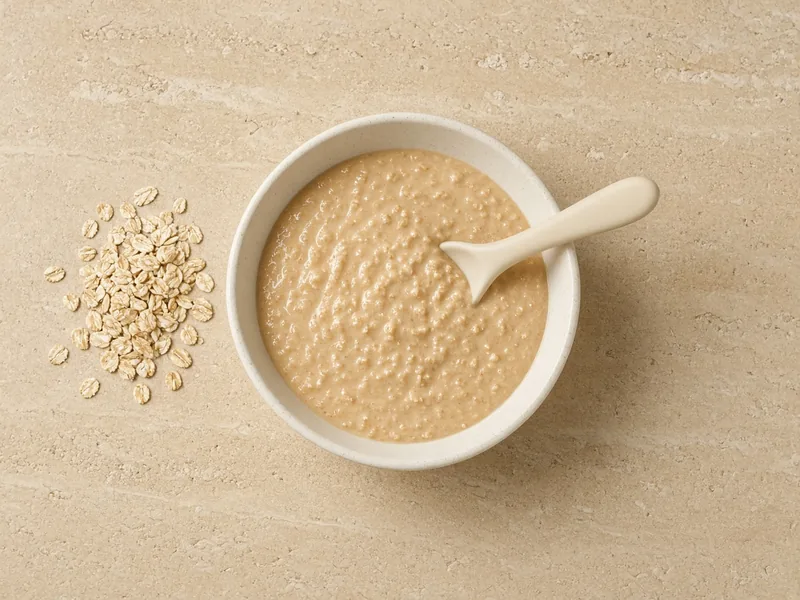
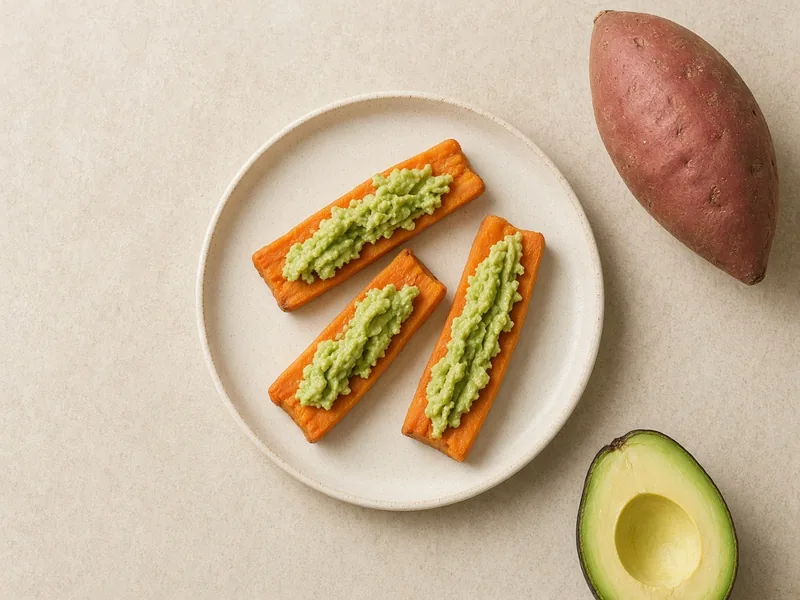
Recipes with peanut butter
Helpful guides
Sources
- NIAID: Addendum guidelines for the prevention of peanut allergy (2017)
- AAAAI/ACAAI/CSACI: Consensus on preventing food allergy through nutrition (2021)
- AAP: When to introduce egg, peanut butter and other common food allergens
- AAP: Peanut allergy: what to know about the latest prevention guidelines
- NHS: Foods to avoid giving babies and young children
- NHS: Food allergies in babies and young children
- CDC: Choking hazards
- USDA FoodData Central: Peanut butter, smooth style, without salt
- USDA FSIS: Leftovers and food safety
- USDA FSIS: Shell eggs from farm to table
- NHS Best Start in Life: Storing and reheating food
- NHS: Help your baby enjoy new foods
More first foods


Free printable: The First 100 Foods checklist
Tick off foods as your baby tries them. Print it or save it as a PDF, no sign-up needed.