
Poblano
A big, mild green chili. Roast it soft, slip off the skin and taste first.
Checked against official guidance on October 18, 2026 · How we review
Quick answer
Babies can eat poblano from around 6 months, once they show signs of being ready for solids. Prepare it as shown below.
How to serve poblano by age
6 months+
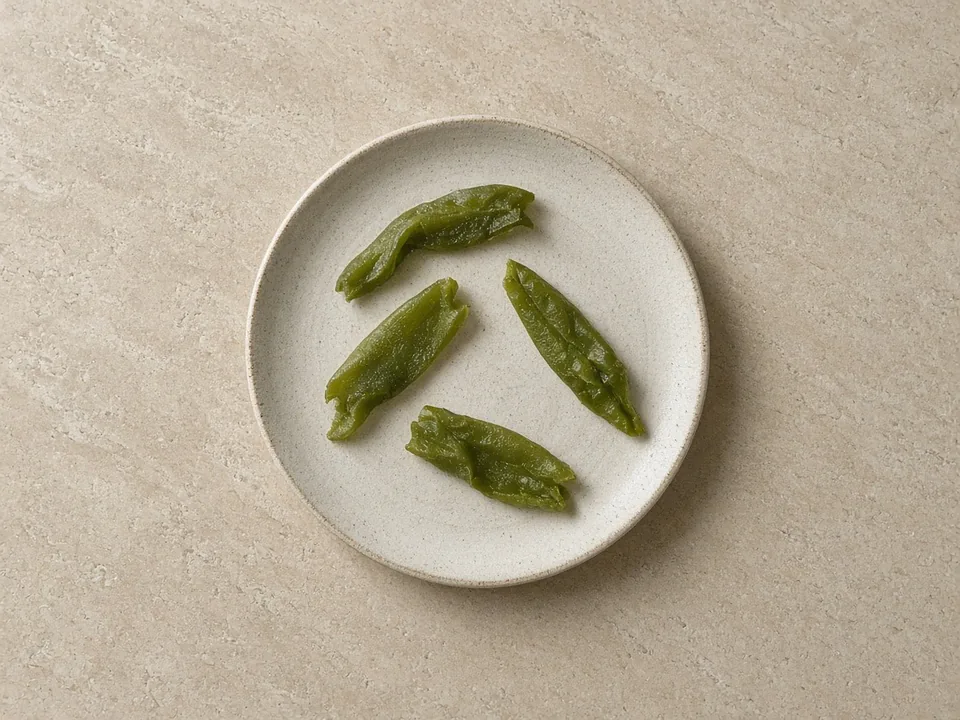
Soft roasted strips, skin removed, or mashed
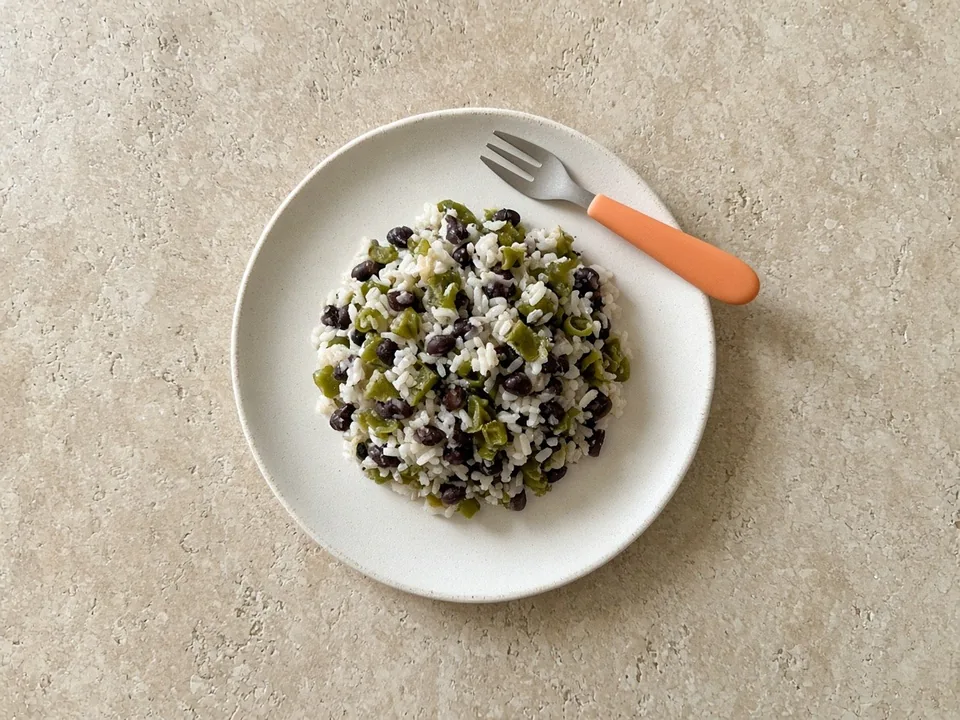
Roast the poblano until very soft, peel off all the skin, and remove the seeds and white ribs. Taste a piece first: if it's mild, offer soft strips or mash them into beans, potato or rice made without salt. If it tastes hot, keep that pepper for the adults, or use a little in a big pot of food. Never offer raw poblano or a whole pepper.
- Size
- Strips about the size of an adult finger, roughly 6–8 cm long and 2 cm wide (2½–3 × ¾ in), or mashed into soft food.
- Check before serving
- Taste it first: it should taste mild. Then squash a strip between your thumb and finger. It should flatten easily, with no skin left on.
US and UK advice differ here. The AAP suggests mashed food or soft pieces no larger than ½ inch; the NHS suggests soft finger-sized pieces your baby can hold in their fist. Both agree the food must squash easily.
9 months+
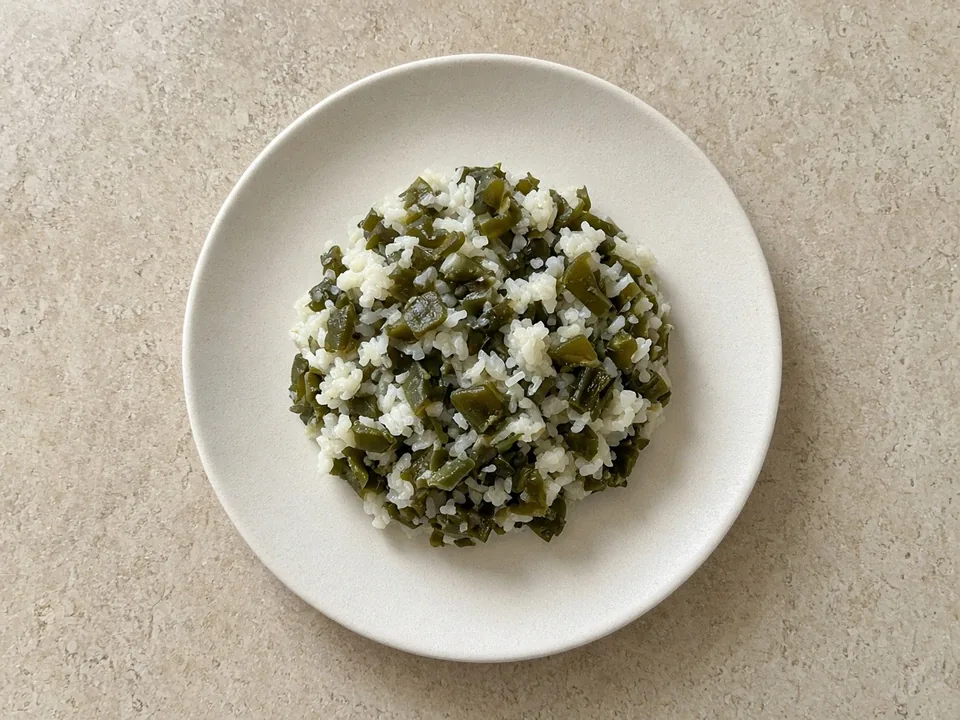
Small soft pieces or cooked into dishes
Chop roasted, peeled poblano into small pieces, or cook it into beans, lentils, eggs (once egg has been introduced on its own), rice or soups. Keep the heat mild, and taste before serving.
- Size
- Pieces no bigger than about 1 cm (just under ½ inch).
- Check before serving
- Each piece should squash flat between your thumb and finger. Taste for heat.
12 months+
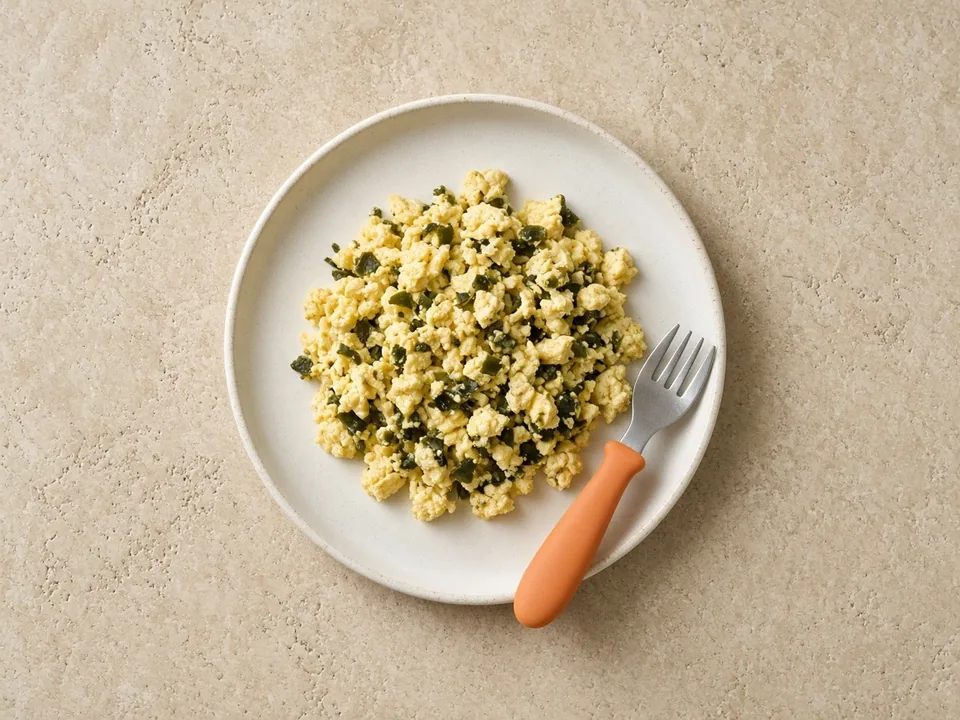
Cooked into family meals
Serve roasted, peeled poblano strips chopped into family dishes such as soft tacos, quesadillas, eggs, soups or rice. Take your toddler's portion out before you add salt, hotter chili or hot sauce. Chiles rellenos are usually battered, fried and filled with cheese, so offer a little of the soft pepper rather than a whole stuffed pepper. Soft-cooked is still safest for young toddlers. See the US vs. UK note on raw poblano.
- Size
- Small soft pieces about 1 cm (just under ½ inch).
- Check before serving
- Still do the squash test and taste for heat.
18 months+
Cooked, peeled pieces or in family dishes
Keep serving poblano roasted or cooked until soft, with the skin removed, and keep it mild. Never offer a whole pepper or an uncooked salsa. For raw poblano, see the guidance note below. Add extra heat to the grown-ups' plates.
- Size
- Bite-sized pieces about 1 cm (just under ½ inch), or chopped into dishes.
- Check before serving
- Still do the squash test, check that the skin is off, and taste for heat.
Always have your child sit upright in a high chair or at the table, and stay with them the whole time they eat. Keep to the size and texture for their stage. Every baby develops on their own timeline.
How to prepare poblano
- 1
Rinse the poblano under running water. Our suggestion is to wear gloves to cut it: poblanos are usually mild, but heat varies, and Poison Control advises gloves for hot peppers. Don't touch your face or eyes, and wash your hands, knife and board before you touch your baby or their food.
- 2
Roast the whole pepper in a hot oven, under the grill (broiler) or over a gas flame, turning it, until the skin blisters and the flesh is very soft. Cover it for a few minutes so the skin loosens.
- 3
Peel off all the skin, then remove the stem, seeds and white ribs. Taste a small piece for heat.
- 4
Cut into finger-sized strips (6 months) or small pieces (9 months+), or cook into the dish. Don't add salt. Let it cool before serving.
How much to offer
Start with one or two soft strips, or a spoonful mixed into a food your baby already knows. Your baby decides how much to eat: stop when they turn away or close their mouth. If a dish seems too hot for them, go back to a milder version and try again another time.
Common mistakes
Skipping the taste test
Poblanos are usually milder than jalapeños, but heat can vary. Poison Control says too much hot pepper can cause nausea, vomiting, belly pain, diarrhea and a burning feeling. Taste each pepper first, and keep any hot one for the adults.
Leaving the skin on
Roasted pepper skin stays papery and tough even when the flesh is soft. Peel it all off: the NHS says removing skins makes vegetables easier to swallow.
Serving raw poblano
Raw poblano is firm with a tough skin, and the CDC lists pieces of hard raw vegetables as a choking hazard. Roast or cook it until soft in the first year. For toddlers, US and UK advice differs on raw pepper: see the guidance note below.
Leaving cut peppers within reach
Little hands that touch cut chili can carry it to their eyes. Keep whole and cut peppers, and the cutting board, out of your child's reach.
Where US and UK guidance differ on poblano
United States(AAP and CDC)Your setting
The AAP says fresh baby food should be cooked with no added salt or seasoning. It doesn't mention chili peppers, and no AAP page gives an age for them. If you'd rather follow that line closely, use roasted bell pepper instead until 12 months, or ask your pediatrician. Keep serving poblano cooked soft and peeled: the CDC lists pieces of hard raw vegetables as a choking hazard.
United Kingdom(NHS)Your setting
The NHS says not to add salt to your baby's food or cooking water. Its weaning recipes include a dhal from 6 months made with chili powder, described as a way to introduce your baby to mild spices. For babies, keep poblano roasted or cooked, peeled, mild and unsalted. The NHS advises grating, mashing, steaming or simmering firm vegetables for very young children, and cutting vegetables like peppers into narrow batons. If you offer raw poblano to a toddler, taste it first and use it only if it's mild, cut it into narrow batons, not chunks, and stay with your child.
We cover US and UK guidance in detail. Elsewhere, check your national health service's advice too.
Questions parents ask
Can poblano be a choking hazard for babies?
Raw poblano is firm with a tough skin, and the CDC lists pieces of hard raw vegetables as a choking hazard. In the first year, roast or cook it until very soft, peel off all the skin, and serve finger-sized strips at 6 months and small pieces from 9 months. Never offer a whole pepper. For toddlers, US and UK advice differs on raw pepper: see the guidance note below. Stay with your child during meals.
Can babies be allergic to poblano?
Poblano is not a common allergen.
Is poblano healthy for babies?
FoodData Central lists raw, seeded poblano at about 128 mg of vitamin C per 100 g, before cooking. It is not a major source of iron, but vitamin C helps the body absorb the iron in plant foods eaten at the same meal, such as beans.
Are poblanos spicy?
Usually only a little. A 2026 lab study measured much less capsaicin, the hot part of chili, in poblanos than in jalapeños. The published heat ratings it lists put poblano at about 1,000 to 1,500 Scoville units, and jalapeño anywhere from about 230 to 63,000. Peppers can still differ, so taste each one before you give it to your baby.
Can babies eat poblano peppers?
Yes, from around 6 months, roasted until soft, peeled, seeded and tasted for heat. Offer soft strips or mash them into food. Don't offer raw poblano under 1 year. If you'd like to follow the AAP's no-seasoning line closely, see the US vs. UK note.
What if my baby's mouth burns after eating chili?
Poison Control says small sips of milk or water may help with the burning. Offer your baby their usual milk, or some water in a cup. Next time, choose a milder pepper or use less.
What should I do if pepper juice gets in my child's eye?
Rinse the eye straight away with lots of room-temperature water for at least 20 minutes. Poison Control suggests wrapping a young child in a towel and letting water from the tap run over the bridge of the nose into the eye. Then call Poison Help (1-800-222-1222) in the US, or NHS 111 in the UK. Go to the emergency room (A&E in the UK) if the pain, redness, swelling or tearing is severe or hasn't settled an hour after you started rinsing, or if your child can't keep the eye open or seems to have trouble seeing.
If your baby refuses poblano
- Many babies need 10 or more tries before they accept a new food. Keep offering it alongside foods they already like.
- Try it blended into beans, a soup or a mild sauce.
- Eat some yourself at the same meal. Babies copy what they see.
- Funny faces don't mean they dislike it. They're getting used to a new taste and texture.
Never force or pressure your baby to eat. Some days they'll eat more, some days less, and that's normal.
Buying and storing poblano
- Keep fresh poblanos in the fridge, at or below 40°F (4°C), out of your child's reach.
- Roasted poblano and dishes made with it keep for 3 to 4 days in a covered container in the fridge. Rice dishes are the exception: cool them within 1 hour, keep them in the fridge for no more than 1 day, and reheat them only once.
- Roasted, peeled strips can be frozen for 3 to 4 months. Thaw them in the fridge and use them within 24 hours of thawing. Reheat only once, to 165°F (74°C), until steaming hot, then let them cool before serving.
- Throw away any food left out at room temperature for more than 2 hours (1 hour if it's hotter than 90°F / 32°C).
When to talk to your doctor
Contact your pediatrician, GP or health visitor if:
- Pepper juice got into your child's eye. Rinse it with lots of room-temperature water for at least 20 minutes, then call Poison Help (1-800-222-1222) in the US or NHS 111 in the UK. Go to the emergency room (A&E in the UK) if the pain, redness, swelling or tearing is severe or hasn't settled an hour after you started rinsing, or if your child can't keep the eye open or seems to have trouble seeing.
- After eating very hot food, your child has diarrhea or belly pain, or vomits once, and you're worried. Call Poison Help in the US or NHS 111 in the UK for advice. If they vomit again and again, have trouble breathing, or become floppy or very sleepy, call your emergency number.
- You notice mild signs of an allergic reaction after eating, such as a few hives or a little vomiting. See signs of a reaction.
- You're worried about how much your baby eats, their growth, or they refuse most solid food for weeks.
Call 911999your local emergency number (such as 112 in Europe or 000 in Australia) now if your baby has trouble breathing, wheezing, can't cough or cry, has lips, mouth, tongue or throat that suddenly swell, or becomes pale, bluish, floppy or unresponsive. Also call if hives come with repeated vomiting.
Offered poblano?
Add it to your first 100 foods.
Poblano is in your 100 foods
1 of 100 offered · See all
Add a note (likes, dislikes, any reaction)
Saved in this browser only. Think it was a reaction? See signs of an allergic reaction and when to get help.
Helpful guides
Sources
- Poison Control: Capsaicin: When the chili is too hot
- Poison Control: First aid for poisonings
- NHS: Eye injuries
- Pandey et al.: Quantitative profiling of capsaicin content in seven chili pepper cultivars using optimized HPLC (Front Plant Sci, 2026)
- AAP: When can babies start solid foods?
- NHS Best Start in Life: Delicious dhal
- NHS Best Start in Life: Preparing food safely
- CDC: Choking hazards
- USDA FoodData Central: Peppers, poblano, seeded, raw
- NIH Office of Dietary Supplements: Vitamin C
- FDA: 7 tips for cleaning fruits and vegetables
- USDA FSIS: Leftovers and food safety
- NHS Best Start in Life: Storing and reheating food
More first foods

Free printable: The First 100 Foods checklist
Tick off foods as your baby tries them. Print it or save it as a PDF, no sign-up needed.