
Rice cakes
A light, crunchy toddler snack. Keep them plain, add a soft topping, and mix up the grains.
Checked against official guidance on October 18, 2026 · How we review
Quick answer
Children can have rice cakes from around 12 months. Prepare it as shown below.
How to serve rice cakes by age
12 months+
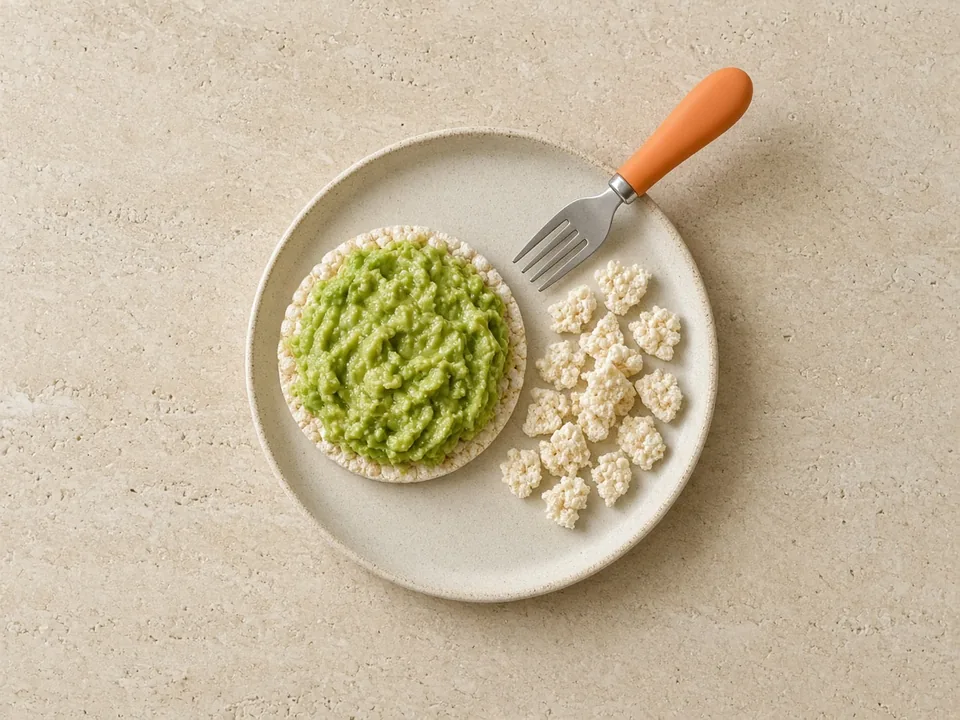
Plain rice cake in small pieces or with a soft topping
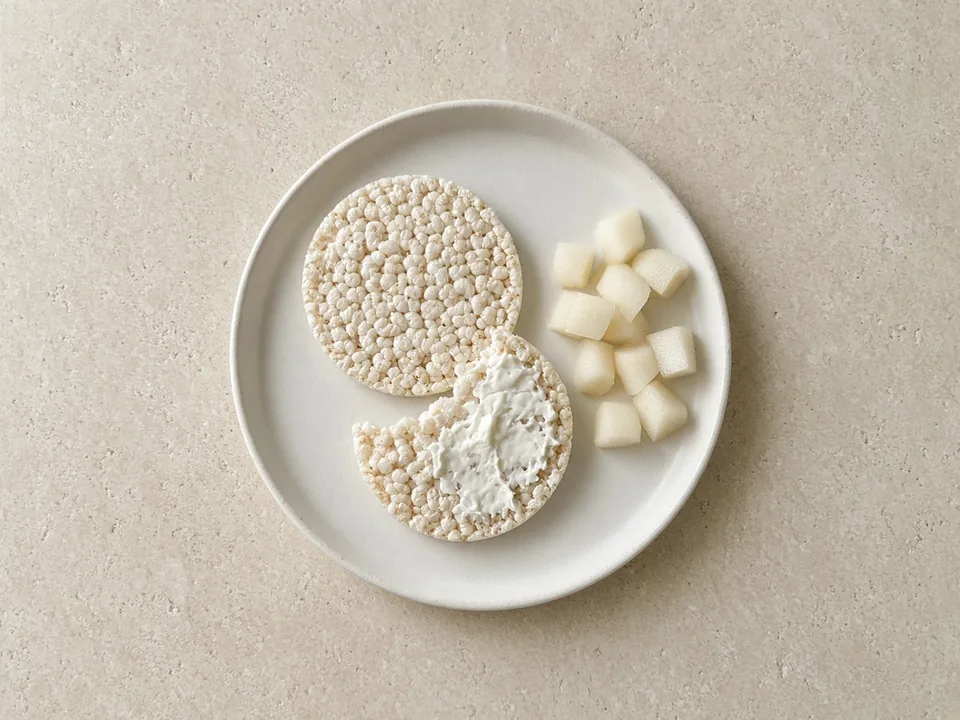
Choose thin, plain rice cakes with no added salt or sugar, as the NHS suggests for toddler snacks. Break one into small pieces, or spread it with a soft food your toddler already eats, like mashed avocado, mashed banana or pasteurized cream cheese, which also softens it a little.
- Size
- Pieces about 1 cm (just under ½ inch), or a thin rice cake with a soft spread.
- Check before serving
- Break a piece and press it between your thumb and finger. It should crumble easily. Skip thick, hard or very crunchy ones.
18 months+
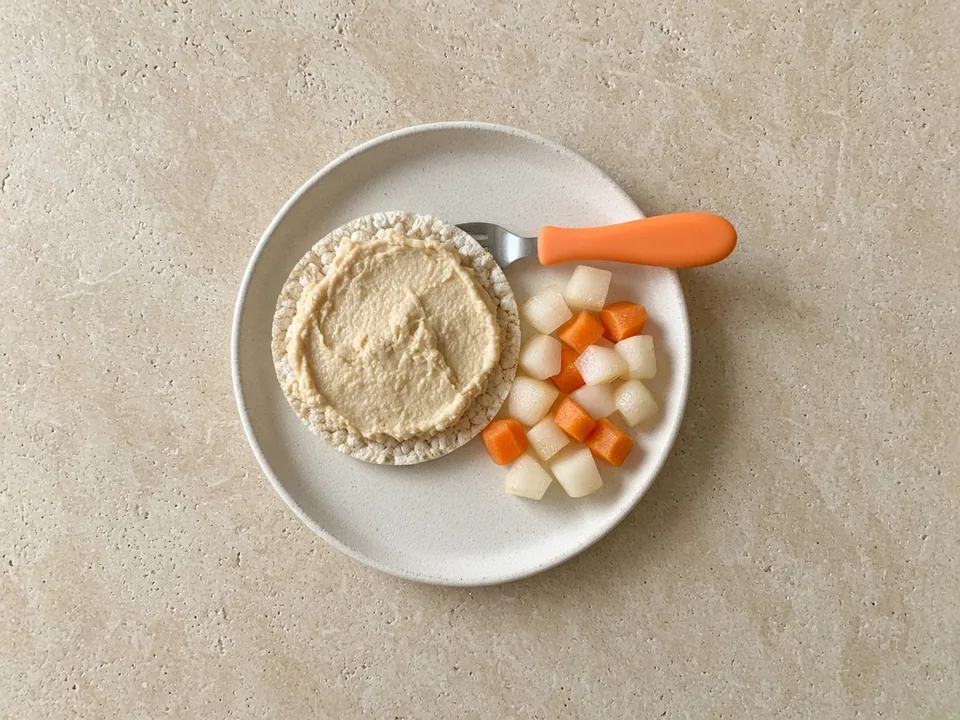
Rice cakes with soft toppings
Offer a rice cake with a soft topping your toddler already eats, such as hummus, mashed egg or a thin spread of smooth nut butter, alongside fruit or vegetables. Hummus contains sesame and nut butter contains nuts: introduce those on their own first. Have your toddler sit down to eat.
- Size
- Pieces about 1 cm (just under ½ inch), or thin rice cakes your toddler bites from.
- Check before serving
- Rice cakes should crumble easily, with no whole seeds or nut pieces.
2 years+
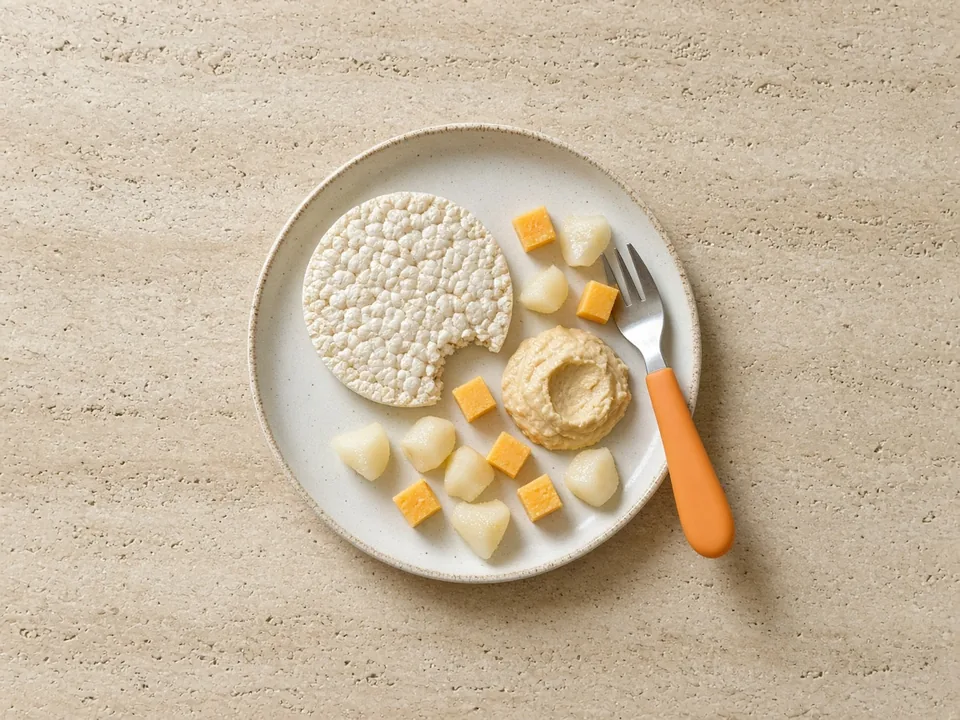
An occasional snack, mixed with other grains
Keep rice cakes as one snack among many. Rice takes up more arsenic than other grains, so rotate them with corn cakes, toast fingers, oatcakes and fruit, and pair them with a protein food such as cheese or hummus.
- Size
- Bite-sized pieces about 1 cm (just under ½ inch), or thin rice cakes your child bites from.
- Check before serving
- Check the label: plain, unsalted and unsweetened, with no whole seeds.
3 years+
Family rice cakes, still plain
Your child can share family rice cakes, but keep choosing plain ones, without coatings like chocolate, yogurt or caramel, and without whole seeds. Your child should sit down to eat.
- Size
- Bite-sized pieces about 1 cm (just under ½ inch), or thin rice cakes your child bites from.
- Check before serving
- No whole seeds or nut pieces, and no sweet coatings.
Always have your child sit upright in a high chair or at the table, and stay with them the whole time they eat. Keep to the size and texture for their stage. Every baby develops on their own timeline.
How to prepare rice cakes
- 1
Read the label. Choose plain rice cakes with no added salt or sugar, no honey, and no whole seeds or nut pieces.
- 2
Break them into small pieces, or add a thin layer of a soft topping your child already eats.
- 3
Serve a rice cake with fruit, vegetables or a protein food, so it isn't the whole snack.
- 4
Have your child sit down to eat, and offer a drink of water with the snack.
How much to offer
One rice cake, or a few pieces, as part of a snack is plenty. Your child decides how much to eat from what you offer. Rotate rice cakes with other grains through the week rather than serving rice snacks every day.
Common mistakes
Salted, flavored or sweet rice cakes
The NHS suggests unsalted and unsweetened rice cakes for toddlers. Plain unsalted ones have only about 26 mg of sodium per 100 g in USDA data, so compare labels and skip salted or flavored ones. Chocolate, yogurt and caramel coatings are added sugar, which US and UK advice says to avoid up to age 4.
Rice snacks every day
Rice tends to take up more arsenic than other crops. The AAP and FDA advise a variety of grains, so mix rice cakes with corn cakes, oats, toast and other snacks.
Seeded rice cakes
The CDC lists crackers and breads with seeds as a choking hazard for young children, and UK early years guidance says not to give whole seeds to children under 5. Sesame is also a common allergen. Pick plain ones.
Snacking on the move
The CDC advises having your child sit up to eat, not lie down, crawl or walk, and not eat in the car or stroller. Dry, crumbly snacks are easier to manage sitting down.
Where US and UK guidance differ on rice cakes
United States(AAP and CDC)Your setting
No AAP or CDC page gives an age for rice cakes. The CDC lists chips, pretzels and similar snack foods as choking hazards for young children, so this page follows the NHS age of 12 months, with rice cakes broken into small pieces or softened with a topping. The AAP advises a variety of grains because rice takes up more arsenic than other crops.
United Kingdom(NHS)Your setting
The NHS lists unsalted and unsweetened rice or corn cakes among snacks from 12 months. It says rice takes up more arsenic than other grains, and the UK sets stricter arsenic limits for foods made for young children.
We cover US and UK guidance in detail. Elsewhere, check your national health service's advice too.
Questions parents ask
Can rice cakes be a choking hazard for babies?
Rice cakes are dry and crunchy. The CDC lists chips, pretzels and similar snack foods, and crackers with seeds, as choking hazards for young children, and advises avoiding hard foods that are difficult to chew and swallow. Choose thin, plain rice cakes that crumble easily, break them into small pieces or add a soft topping, and make sure your child sits down to eat. Stay with your child during meals.
Can babies be allergic to rice cakes?
Rice is not a common allergen, and it's naturally gluten-free. Some rice cakes, though, have added ingredients such as malt (made from barley, which contains gluten), sesame seeds, or milk in yogurt or chocolate coatings, and packaged foods can contain traces of wheat. Read the label, and buy ones labeled gluten-free if your child must avoid gluten.
Are rice cakes healthy for babies?
Plain rice cakes are mostly carbohydrate, with little salt or sugar: plain, unsalted brown rice cakes have about 26 mg of sodium, 0.9 g of sugars and 1.5 mg of iron per 100 g. A rice cake is very light, so a single one gives only a small amount of iron or fiber.
Can babies under 1 have rice cakes?
No official source we use covers rice cakes for babies under 1. The NHS lists unsalted, unsweetened rice or corn cakes among snacks from 12 months, so this page starts there. In the first year, soft finger foods such as lightly toasted bread strips or soft-cooked vegetables are a better fit.
Is there arsenic in rice cakes?
Rice tends to take up more arsenic than other grains, so rice cakes can contain some. That doesn't mean your child can't have them. The UK sets maximum levels of inorganic arsenic in rice products, with stricter limits for foods for young children, and the AAP and FDA advise eating a variety of grains. Mix rice cakes with corn cakes, oats and other snacks.
Are rice cakes healthy for toddlers?
Plain, unsalted ones are a low-salt, low-sugar snack, and the NHS includes them in its toddler snack ideas. They don't have much protein or fiber, so the AAP's idea of a balanced snack works well: add a protein food and a fruit or vegetable, such as hummus and cucumber sticks or cheese and soft fruit.
If your baby refuses rice cakes
- There's no need to keep offering rice cakes. They're one snack among many, and toast strips, fruit and vegetables do the same job.
- Try a different soft topping your toddler already likes.
- Swap in unsalted corn cakes or oatcakes instead, and vary the grains.
- Eat the same snack yourself. Toddlers copy what they see.
Never force or pressure your baby to eat. Some days they'll eat more, some days less, and that's normal.
Buying and storing rice cakes
- Keep rice cakes in their sealed pack or an airtight container in a cool, dry place, and use them by the best-before date.
- Add soft toppings just before serving, and keep opened spreads in the fridge.
- Throw away any food left out at room temperature for more than 2 hours (1 hour if it's hotter than 90°F / 32°C).
When to talk to your doctor
Contact your pediatrician, GP or health visitor if:
- You notice mild signs of an allergic reaction after eating, such as a few hives or a little vomiting. See signs of a reaction.
- You're worried about how much your baby eats, their growth, or they refuse most solid food for weeks.
Call 911999your local emergency number (such as 112 in Europe or 000 in Australia) now if your baby has trouble breathing, wheezing, can't cough or cry, has lips, mouth, tongue or throat that suddenly swell, or becomes pale, bluish, floppy or unresponsive. Also call if hives come with repeated vomiting.
Offered rice cakes?
Add it to your first 100 foods.
Rice cakes is in your 100 foods
1 of 100 offered · See all
Add a note (likes, dislikes, any reaction)
Saved in this browser only. Think it was a reaction? See signs of an allergic reaction and when to get help.
Helpful guides
Sources
- NHS: Your baby's first solid foods
- NHS: Foods to avoid giving babies and young children
- AAP: Heavy metals in baby food
- FDA: What you can do to limit exposure to arsenic
- AAP: Building balanced snacks to feed to toddlers
- CDC: Choking hazards
- Department for Education: Food safety (Help for early years providers)
- NHS: Food allergies in babies and young children
- HHS: Fact sheet on the Dietary Guidelines for Americans, 2025–2030
- MedlinePlus (NIH): Learn about gluten-free diets
- USDA FoodData Central: Snacks, rice cakes, brown rice, plain, unsalted
- USDA FSIS: Leftovers and food safety
More first foods

Free printable: The First 100 Foods checklist
Tick off foods as your baby tries them. Print it or save it as a PDF, no sign-up needed.