
Sausage
Salty and round, so it's an occasional food: cook it through, peel it, and cut it thin.
Checked against official guidance on October 18, 2026 · How we review
Quick answer
Children can have sausage from around 12 months. Prepare it as shown below.
How to serve sausage by age
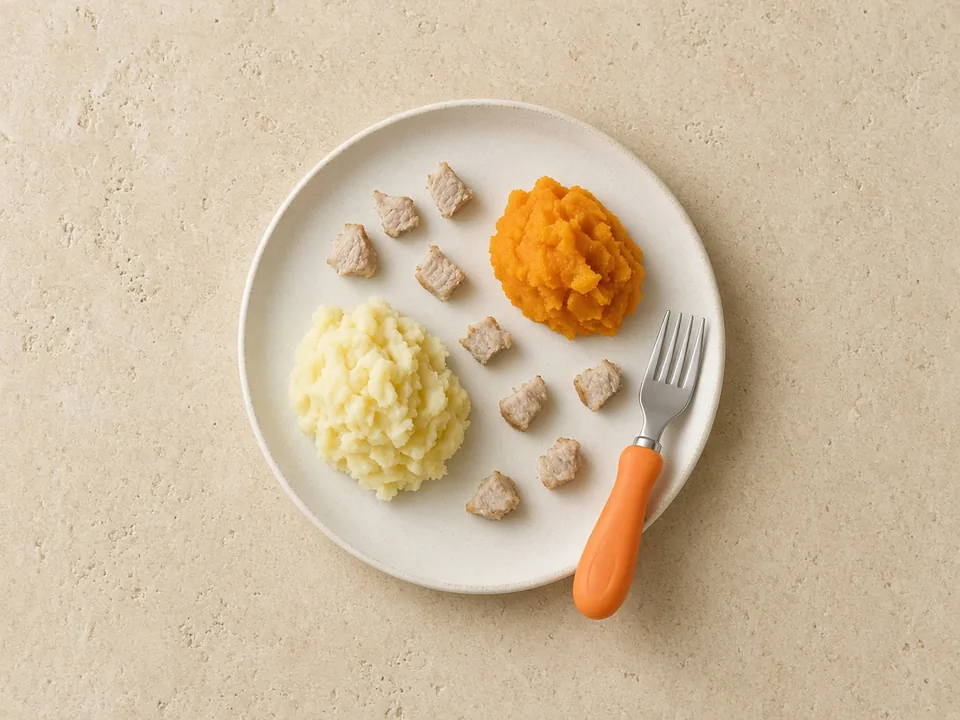
12 months+
Quartered strips, cut into small pieces
If you serve sausage, cook it all the way through, let it cool, and peel off the skin. Cut it in half lengthwise, then in half lengthwise again, then across into small pieces. Offer a few pieces alongside other foods. Sausages are high in salt, so keep them occasional.
- Size
- Cut lengthwise into 4 thin strips, then across into pieces about 1 cm (just under ½ inch). Never round coins.
- Check before serving
- Look at every piece before serving: no round slices or chunks should be left. For fresh sausages, check the middle with a food thermometer (160°F / 71°C, or 165°F / 74°C for chicken or turkey): cured sausages can stay pink when fully cooked.
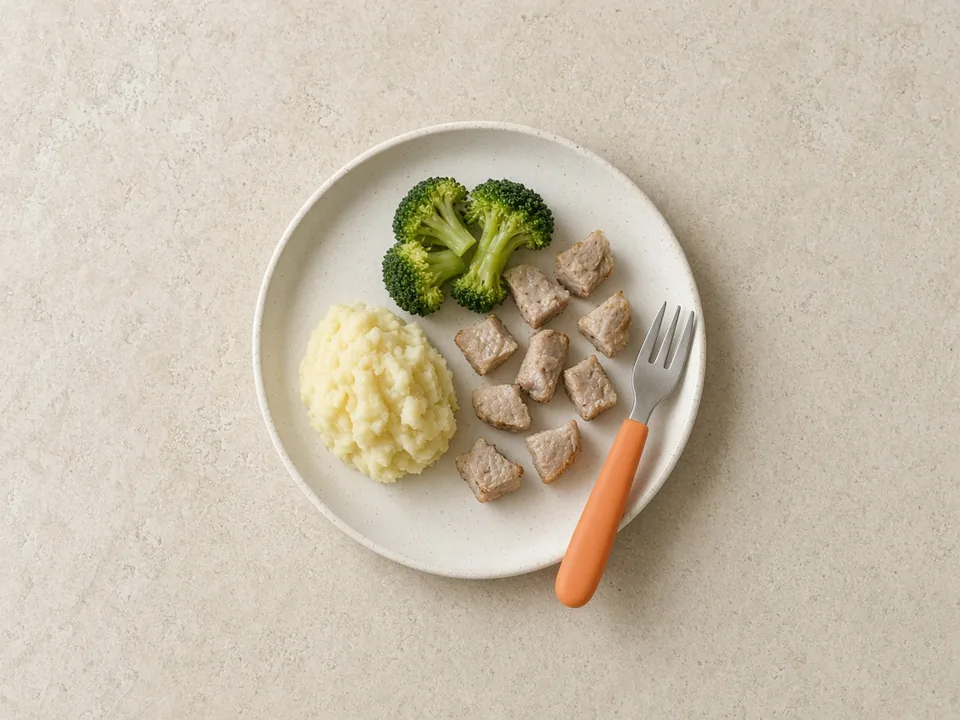
18 months+
Small pieces from quartered strips
Keep cooking, peeling and quartering lengthwise before cutting small. Serve a few pieces with soft vegetables, mash or pasta, rather than as the whole meal.
- Size
- Pieces about 1 cm (just under ½ inch), cut from strips quartered lengthwise.
- Check before serving
- No coins, rounds or chunks. Every piece should be a small, narrow strip.
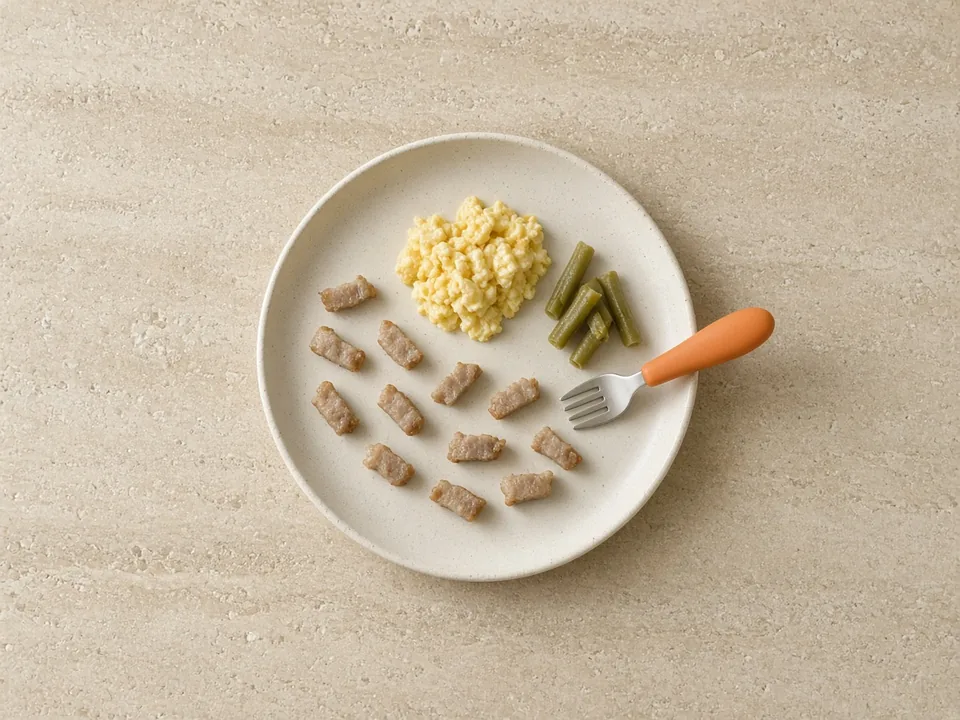
2 years+
Quartered strips, still cut small
A whole sausage, or a sausage in a roll, is still not safe at this age. Keep cutting sausages lengthwise into quarters and then into short pieces. Have your child sit down to eat, and stay with them.
- Size
- Thin strips cut lengthwise, then into pieces about 1 cm (just under ½ inch).
- Check before serving
- No coins, rounds or chunks.
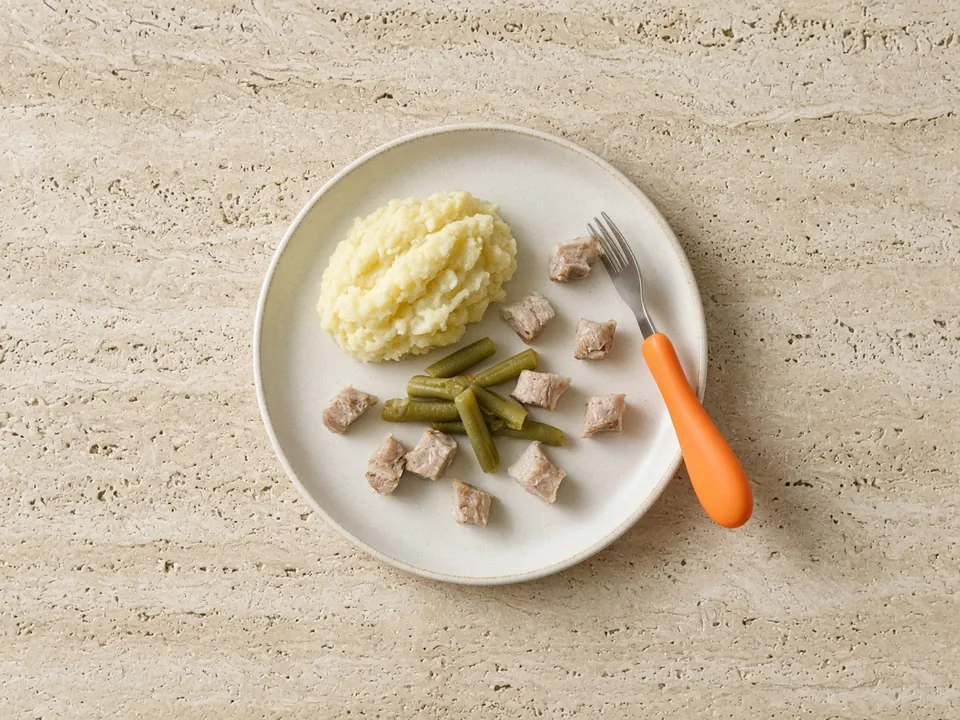
3 years+
Lengthwise strips, cut short
The AAP lists sausages among foods to avoid or change for young children, and advises keeping high-risk foods from children until 4 years or older. Keep cutting sausages lengthwise and small, and keep them to an occasional food.
- Size
- Thin strips cut lengthwise, then into short pieces about 1 cm (just under ½ inch).
- Check before serving
- No coins, rounds or chunks.
Always have your child sit upright in a high chair or at the table, and stay with them the whole time they eat. Keep to the size and texture for their stage. Every baby develops on their own timeline.
How to prepare sausage
- 1
Check the label: is it fresh (raw) or already cooked? Choose lower-salt sausages if you can, and look for allergens such as milk or wheat, which can be added as binders.
- 2
Cook fresh sausages to 160°F (71°C) for pork, beef or lamb, or 165°F (74°C) for chicken or turkey, measured in the middle with a food thermometer. Color isn't a reliable check: cured sausages can stay pink when cooked through. Reheat precooked sausages to 165°F (74°C), until steaming hot all the way through.
- 3
Let it cool, then peel off the skin.
- 4
Cut it in half lengthwise, then in half lengthwise again, so you have 4 long, thin strips. Cut the strips across into pieces about 1 cm (just under ½ inch). Never cut sausages into round coins.
How much to offer
Offer a few small pieces alongside other foods, not a whole sausage. Sausages are high in salt, so keep them an occasional food. Your child decides how much to eat from what you offer: stop when they turn away or say they're done.
Common mistakes
Cutting round coins
Round slices are just the right size and shape to block a small airway. Cut lengthwise into quarters first, then into small pieces.
Not cooking it all the way through
Fresh sausages are raw meat. Cook them to 160°F (71°C), or 165°F (74°C) for poultry sausages, and check with a food thermometer: color alone isn't reliable.
Offering salami, pepperoni or chorizo
Dry sausages like salami and pepperoni aren't cooked, and USDA FSIS says very young children might want to avoid them. They're chewy and very salty too: the NHS lists chorizo among salty foods babies shouldn't have.
Offering sausages before 12 months
The CDC and AAP list sausages and meat sticks as choking hazards, and the NHS says babies shouldn't eat salty foods like sausages and bacon. Offer soft, fresh meat instead.
Where US and UK guidance differ on sausage
United States(AAP and CDC)Your setting
The CDC and AAP list sausages and meat sticks among foods to avoid or change for young children, and the AAP lists meat sticks among foods to avoid under 1. The CDC also names sausages among the processed meats (with lunch meats, hot dogs and ham) that are high in salt, and says to avoid foods high in salt for young children. If you follow US advice, skip sausages or serve them only now and then. USDA FSIS says to cook fresh pork or beef sausages to 160°F and poultry sausages to 165°F.
United Kingdom(NHS)Your setting
The NHS says babies shouldn't eat salty foods such as sausages and chorizo, and to limit processed meat for children, though small amounts are OK. Peel off the skin and cut sausages into short strips: in half and then lengthways, or as thinly as possible. Guidance for UK nurseries goes further: avoid sausages because of their high salt content.
We cover US and UK guidance in detail. Elsewhere, check your national health service's advice too.
Questions parents ask
Can sausage be a choking hazard for babies?
Sausages are a well-known choking hazard for young children: their size and round shape can block a small airway. Skip them in the first year. For toddlers, cook them through, peel off the skin, cut them lengthwise into thin strips, then into small pieces, and never serve round coins. The AAP lists sausages among the high-risk foods to keep from children, or change before serving, until 4 years or older, depending on the child. Stay with your child while they eat.
Can babies be allergic to sausage?
Sausages are not a common allergen themselves, but fresh sausages can contain binders such as wheat flour and nonfat dry milk. Check the ingredients if your child has a food allergy. In the UK, allergens are highlighted in bold in the ingredients list, and the NHS also lists celery and mustard as foods that can trigger allergies.
Is sausage healthy for babies?
A source of protein, but high in salt and fat. 100 g of pan-fried pork sausage has about 814 mg of sodium and 27 g of fat, over the NHS 'high salt' level of 600 mg of sodium per 100 g.
Can babies eat sausages?
Not before 12 months. Sausages are a choking hazard on the CDC and AAP lists, and the NHS says babies shouldn't eat salty foods like sausages. Offer soft, fresh meat instead, such as shredded chicken or minced beef.
How do I cut sausages for a toddler?
Peel off the skin, cut the sausage in half lengthwise, then in half lengthwise again, and cut the 4 strips across into pieces about 1 cm (just under ½ inch). Never cut round coins: they're the right size to block a child's airway.
Are reduced-salt sausages OK?
They're the better choice when you do serve sausage. FoodData Central lists about 294 mg of sodium per 100 g of reduced-sodium pork sausage, compared with about 814 mg for regular. They're still processed meat, so keep them occasional and cut them the same way.
Can toddlers have salami or pepperoni?
They're best skipped, or a little heated until steaming hot and chopped finely now and then (heating is our suggestion). Dry sausages aren't cooked, and USDA FSIS says very young children might want to avoid them because germs like E. coli can survive the drying process. They're also chewy and very salty. See our pepperoni and salami pages.
If your baby refuses sausage
- There's no need to keep offering sausages. They're an occasional food, and fresh meat, fish, eggs and beans give the same protein with less salt.
- If your toddler wants what the family is eating, offer a few small pieces alongside foods they already like.
- Many toddlers prefer softer foods. Soft meatballs or shredded chicken are easy swaps.
- Funny faces don't mean they dislike it. They're getting used to a new taste and texture.
Never force or pressure your baby to eat. Some days they'll eat more, some days less, and that's normal.
Buying and storing sausage
- Keep sausages in the fridge. Cook fresh (raw) sausages within 1 to 2 days, or freeze them for 1 to 2 months.
- Cooked sausages keep for 3 to 4 days in a covered container in the fridge, or 2 to 3 months in the freezer.
- Reheat only once, to 165°F (74°C), until steaming hot, then let them cool before cutting and serving.
- Throw away any food left out at room temperature for more than 2 hours (1 hour if it's hotter than 90°F / 32°C).
When to talk to your doctor
Contact your pediatrician, GP or health visitor if:
- Your child had a choking episode, even if the food came out and they seem fine. The NHS advises getting medical help, because part of the food could be left behind.
- Your child has diarrhea, vomiting, tummy cramps or a fever after eating sausage that may have been undercooked. Food poisoning in young children can lead to dehydration.
- You notice mild signs of an allergic reaction after eating, such as a few hives or a little vomiting. See signs of a reaction.
- You're worried about how much your baby eats, their growth, or they refuse most solid food for weeks.
Call 911999your local emergency number (such as 112 in Europe or 000 in Australia) now if your baby has trouble breathing, wheezing, can't cough or cry, has lips, mouth, tongue or throat that suddenly swell, or becomes pale, bluish, floppy or unresponsive. Also call if hives come with repeated vomiting.
Offered sausage?
Add it to your first 100 foods.
Sausage is in your 100 foods
1 of 100 offered · See all
Add a note (likes, dislikes, any reaction)
Saved in this browser only. Think it was a reaction? See signs of an allergic reaction and when to get help.
Helpful guides
Sources
- CDC: Choking hazards
- AAP: Choking prevention for babies and children
- AAP: When can babies start solid foods?
- NHS Best Start in Life: Preparing food safely
- NHS Best Start in Life: Foods and drinks to avoid
- USDA FSIS: Sausages and food safety
- CDC: Safer food choices for children under 5
- USDA FoodData Central: Pork sausage, link/patty, cooked, pan-fried
- USDA FoodData Central: Pork sausage, reduced sodium, cooked
- NHS: Food labels
- NHS: Food allergies in babies and young children
- Department for Education: Food safety (Help for early years providers)
- NHS: How to stop a child from choking
- USDA FSIS: Leftovers and food safety
- CDC: Foods and drinks to avoid or limit
- NHS Best Start in Life: Storing and reheating food
More first foods

Free printable: The First 100 Foods checklist
Tick off foods as your baby tries them. Print it or save it as a PDF, no sign-up needed.