
Seaweed
A savory sprinkle from the sea. Plain nori, crumbled finely, a little at a time.
Checked against official guidance on October 18, 2026 · How we review
Quick answer
Babies can eat seaweed from around 6 months, once they show signs of being ready for solids. Prepare it as shown below.
How to serve seaweed by age
6 months+
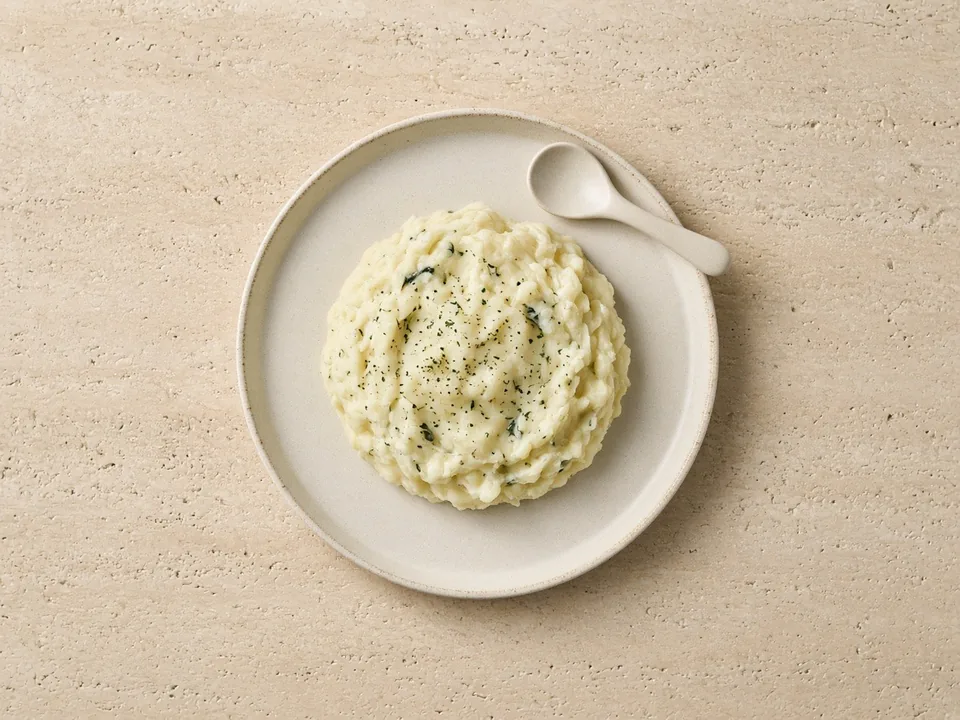
A pinch of crumbled nori stirred into soft food
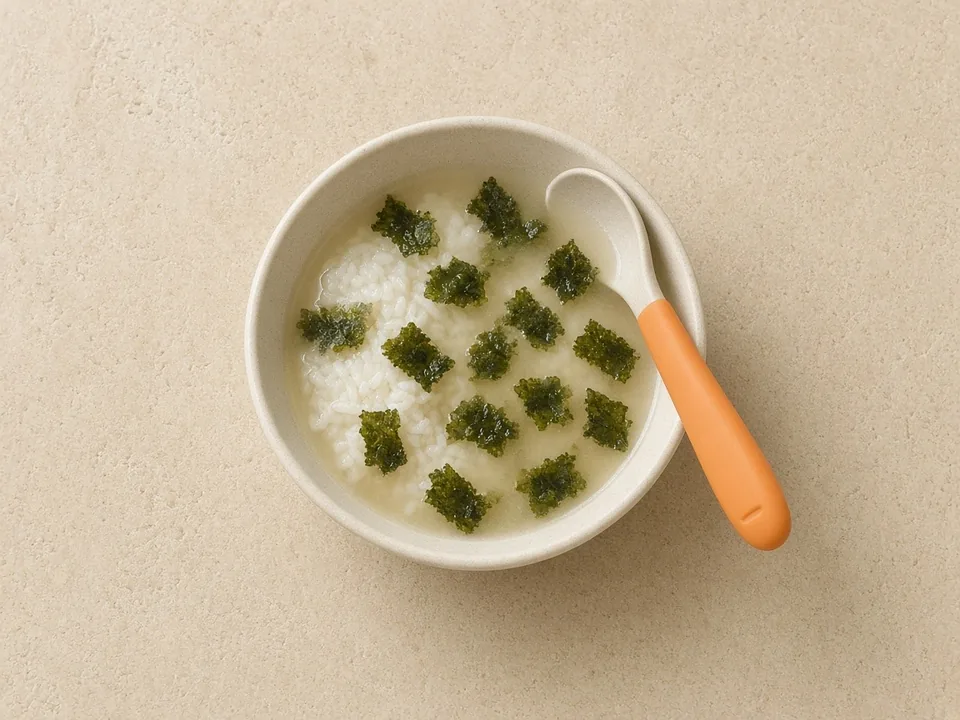
Use plain, unseasoned nori (laver). Crumble or blend a small pinch into tiny flakes and stir it into a soft food your baby already eats, so it softens. Don't offer whole or torn sheets.
- Size
- Crumbled into tiny flakes and mixed into a mash, purée, rice or scrambled egg.
- Check before serving
- Look for any large dry flakes or strips. If you see any, crumble them smaller or stir them in until they soften.
US and UK advice differ here. The AAP suggests mashed food or soft pieces no larger than ½ inch; the NHS suggests soft finger-sized pieces your baby can hold in their fist. Both agree the food must squash easily.
9 months+
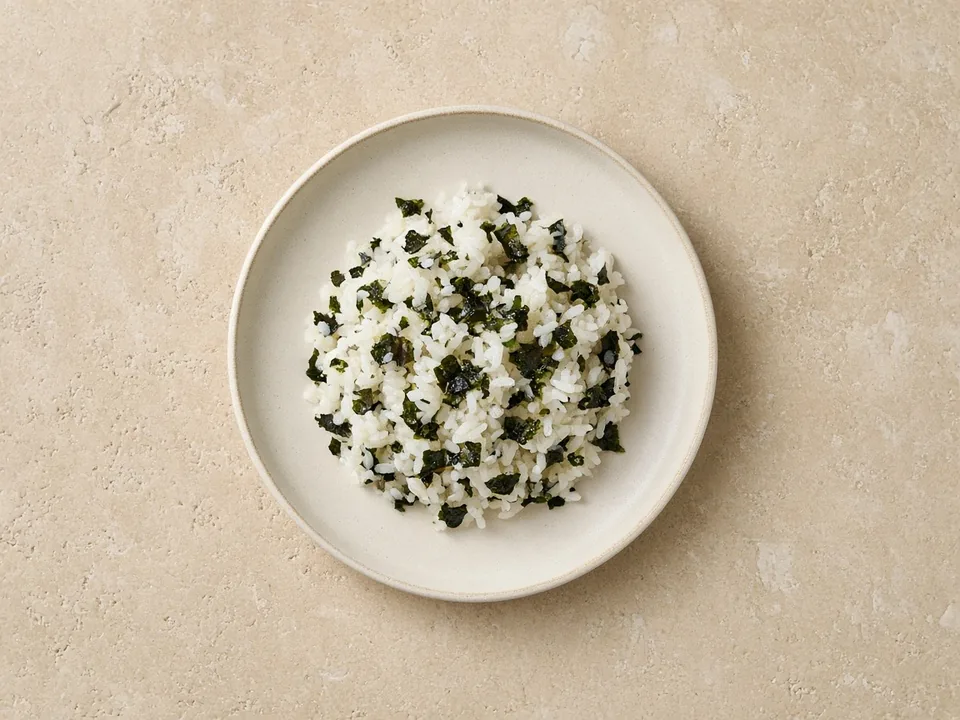
Fine flakes mixed into dishes
Sprinkle a small pinch of finely crumbled plain nori over rice, lentils, mashed potato or scrambled egg (once egg has been introduced), and stir it in so it softens.
- Size
- Flakes no bigger than about 1 cm (just under ½ inch), softened in food.
- Check before serving
- Check there are no dry pieces stuck together. Stir until every flake is soft.
12 months+
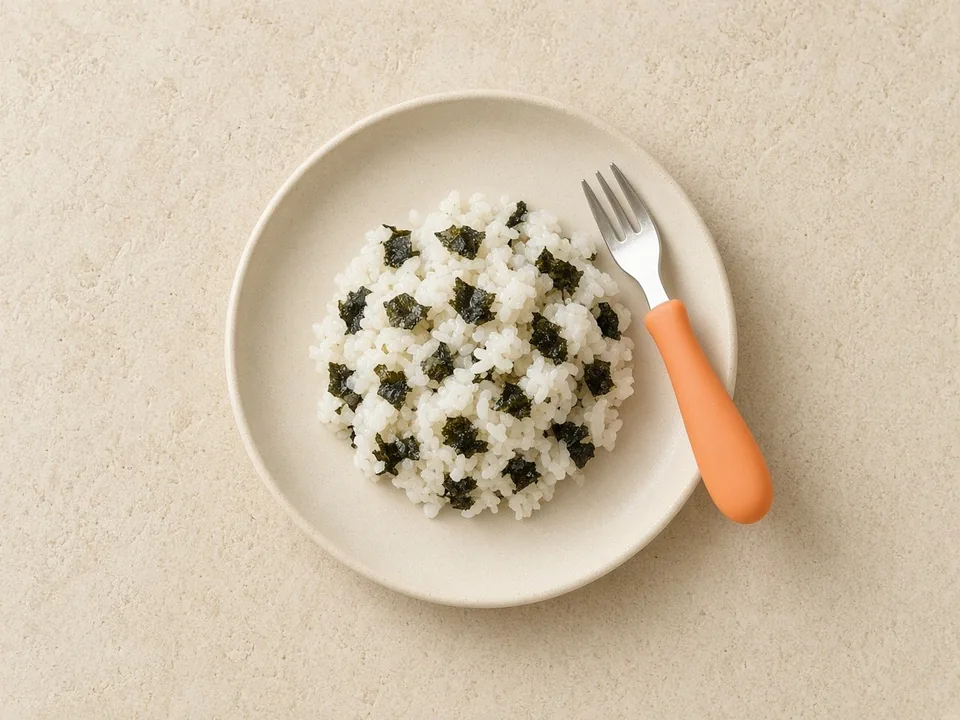
Small flakes in family meals
Add a little crumbled or snipped plain nori to rice, noodles, soups or eggs. Take your toddler's portion out before you add soy sauce, salt or seasoned seaweed.
- Size
- Small soft pieces about 1 cm (just under ½ inch), mixed into food.
- Check before serving
- Still check for large dry pieces before serving.
18 months+
Small snipped pieces in dishes
Snip plain nori into small pieces and mix them into rice, noodles or soup, where they soften. Keep amounts small. Skip seasoned seaweed snacks for now.
- Size
- Bite-sized pieces about 1 cm (just under ½ inch), softened in rice, soup or noodles.
- Check before serving
- Still check that pieces are small and softened, not dry sheets.
Always have your child sit upright in a high chair or at the table, and stay with them the whole time they eat. Keep to the size and texture for their stage. Every baby develops on their own timeline.
How to prepare seaweed
- 1
Buy plain, unseasoned nori (laver) sold as food. Check the label: avoid hijiki, and skip wakame, kelp and kombu for babies and toddlers.
- 2
Wash your hands, then crumble or snip a small pinch into tiny flakes, or blend it to a powder.
- 3
Stir it into warm, soft food so the flakes soften. Don't add salt or soy sauce.
- 4
Check for any large or dry pieces, then let the food cool before serving.
How much to offer
Start with a small pinch mixed into food your baby already knows, and keep it to a pinch or so now and then. Seaweed is a flavoring, not a main food, and it is very high in iodine. Your baby decides how much of their meal to eat: stop when they turn away or close their mouth.
Common mistakes
Using hijiki
The UK Food Standards Agency advises people not to eat hijiki seaweed: it contains high levels of a form of arsenic linked to cancer. Use plain nori. Don't swap in wakame, kelp or kombu.
Using kelp, kombu or wakame
Other seaweeds can hold far more iodine than nori: figures quoted by the UK Committee on Toxicity give 29 to 46 mcg per gram of dried nori, 94 to 185 mcg for wakame and 241 to 4,921 mcg for kombu. Skip kelp, kombu, wakame and kelp supplements for babies and toddlers, including broth made from them.
Using a lot, or using it often
Iodine levels in seaweed vary a lot, and too much iodine can affect how the thyroid works. A small pinch now and then is plenty.
Giving seasoned seaweed snacks
Seasoned seaweed snacks can have added salt, and some contain soy sauce or sesame. Babies shouldn't have added salt. Use plain nori and check the label.
Questions parents ask
Can seaweed be a choking hazard for babies?
Dried seaweed is thin and dry, and the CDC lists uncooked dried vegetables among choking hazards for young children. Crumble plain nori into tiny flakes and stir it into soft, moist food so it softens. Don't give babies whole or torn sheets, or crisp seaweed snacks. Stay with your child during meals.
Can babies be allergic to seaweed?
Seaweed is not a common allergen. Seasoned seaweed snacks can contain soy sauce or sesame oil, and soy and sesame are both major allergens in the US. Check the label, and introduce soy and sesame on their own first.
Is seaweed healthy for babies?
Seaweed is one of the richest food sources of iodine, but levels vary hugely: the NIH reports 16 to 2,984 mcg per gram in commercial seaweeds. Just 2 tablespoons of flaked dried nori (5 g) have about 116 mcg, nearly all of the 130 mcg a day babies 7–12 months need, which is why a small pinch is enough. No upper limit is set for babies under 1; for children 1–3 years it is 200 mcg a day from food, drinks and supplements together.
Can babies eat seaweed?
Plain nori can be offered from around 6 months as a small pinch, crumbled finely into soft food. Keep amounts small because seaweed is very high in iodine. Avoid hijiki, kelp, kombu and wakame, and seasoned seaweed snacks.
Are seaweed snacks OK for toddlers?
Seasoned seaweed snacks can be salted and can contain soy or sesame, and the crisp sheets are dry and thin. Plain nori crumbled into food is a better choice. Save the snacks for later, in small amounts, and check the label.
Is seaweed a good source of iodine for my baby?
It isn't a reliable one. Iodine levels in seaweed vary so much that a little can be a lot. Breast milk or formula, and later foods like dairy, eggs and fish, are steadier sources. If your child doesn't eat these, ask your doctor or health visitor about iodine rather than adding more seaweed.
Can babies eat sushi?
Not sushi made with raw fish: babies and young children shouldn't have raw fish. Rice rolled in a whole sheet of nori is also hard for babies to manage. A little crumbled nori mixed into soft rice is a safer way to try the taste.
If your baby refuses seaweed
- Many babies need 10 or more tries before they accept a new food. Keep offering it alongside foods they already like.
- Mix a tiny pinch into a food your baby already enjoys, such as rice or scrambled egg.
- Eat some yourself at the same meal. Babies copy what they see.
- Funny faces don't mean they dislike it. They're getting used to a new taste and texture.
Never force or pressure your baby to eat. Some days they'll eat more, some days less, and that's normal.
Buying and storing seaweed
- Keep dried nori sealed in its packet somewhere cool and dry, so it stays crisp.
- Cooked egg, lentil or vegetable dishes with seaweed stirred in keep for 3 to 4 days in a covered container in the fridge. Rice dishes are the exception: cool them within 1 hour, keep them in the fridge for no more than 1 day, and reheat them only once.
- Egg or lentil dishes with seaweed can be frozen for 2 to 3 months. Rice dishes can be frozen too if they go in the freezer within 1 hour of cooking; thaw them in the fridge, eat them within 24 hours of thawing and reheat them only once. Reheat only once, to 165°F (74°C), until steaming hot, then let them cool before serving.
- Throw away any food left out at room temperature for more than 2 hours (1 hour if it's hotter than 90°F / 32°C).
When to talk to your doctor
Contact your pediatrician, GP or health visitor if:
- Your child eats a lot of seaweed, takes kelp supplements, or has a thyroid condition. Ask about iodine before offering more seaweed.
- Your child follows a plant-based diet and doesn't have dairy, eggs or fish. Ask whether they need an iodine supplement instead of relying on seaweed.
- You notice mild signs of an allergic reaction after eating, such as a few hives or a little vomiting. See signs of a reaction.
- You're worried about how much your baby eats, their growth, or they refuse most solid food for weeks.
Call 911999your local emergency number (such as 112 in Europe or 000 in Australia) now if your baby has trouble breathing, wheezing, can't cough or cry, has lips, mouth, tongue or throat that suddenly swell, or becomes pale, bluish, floppy or unresponsive. Also call if hives come with repeated vomiting.
Offered seaweed?
Add it to your first 100 foods.
Seaweed is in your 100 foods
1 of 100 offered · See all
Add a note (likes, dislikes, any reaction)
Saved in this browser only. Think it was a reaction? See signs of an allergic reaction and when to get help.
Helpful guides
Sources
- NIH Office of Dietary Supplements: Iodine (health professional fact sheet)
- NIH Office of Dietary Supplements: Iodine (consumer fact sheet)
- NHS: Iodine
- UK Committee on Toxicity: Statement on the potential effects of excess iodine intake during preconception, pregnancy and lactation
- Food Standards Agency: Importing fruit and vegetables (hijiki seaweed advice)
- NHS Stockport (Allergy North West): Meeting iodine requirements on a dairy milk free diet
- CDC: Choking hazards
- NHS: Foods to avoid giving babies and young children
- CDC: Safer food choices
- FDA: Food allergies
- Food Standards Agency: Home food fact checker
- NHS Best Start in Life: Storing and reheating food
- USDA FSIS: Leftovers and food safety
- USDA FSIS: Shell eggs from farm to table
- NHS: Help your baby enjoy new foods
More first foods



Free printable: The First 100 Foods checklist
Tick off foods as your baby tries them. Print it or save it as a PDF, no sign-up needed.