
Seitan
A chewy, savory meat swap made from wheat gluten. Blend it smooth first, then mince it very finely.
Checked against official guidance on October 18, 2026 · How we review
Quick answer
Babies can eat seitan from around 6 months, once they show signs of being ready for solids. Prepare it as shown below.
How to serve seitan by age
6 months+
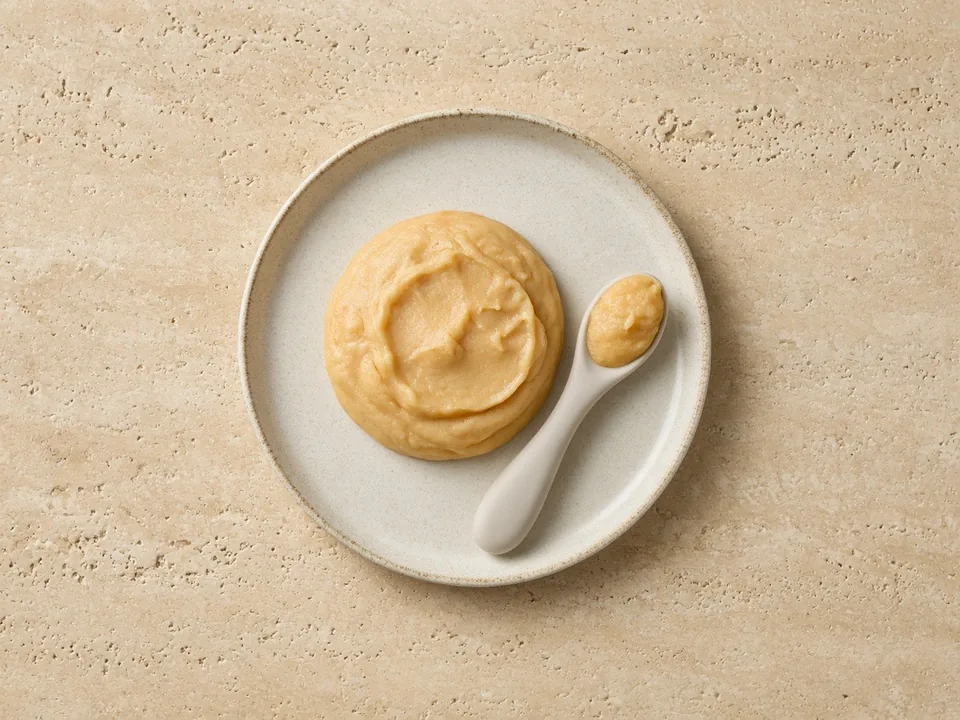
Blended smooth into soft food
Simmer plain seitan in unsalted water until warmed through, then blend it with a little of the cooking water until completely smooth. Stir a small amount into a food your baby already eats, such as mashed potato, mashed sweet potato or a smooth vegetable sauce.
- Size
- Blended until completely smooth and mixed into mash or a thick sauce, on a pre-loaded spoon. Not in strips, chunks or crumbs: seitan is too chewy to squash.
- Check before serving
- Rub a little between your thumb and finger. It should feel smooth, with no chewy lumps or rubbery bits. If there are, blend it for longer.
US and UK advice differ here. The AAP suggests mashed food or soft pieces no larger than ½ inch; the NHS suggests soft finger-sized pieces your baby can hold in their fist. Both agree the food must squash easily.
9 months+
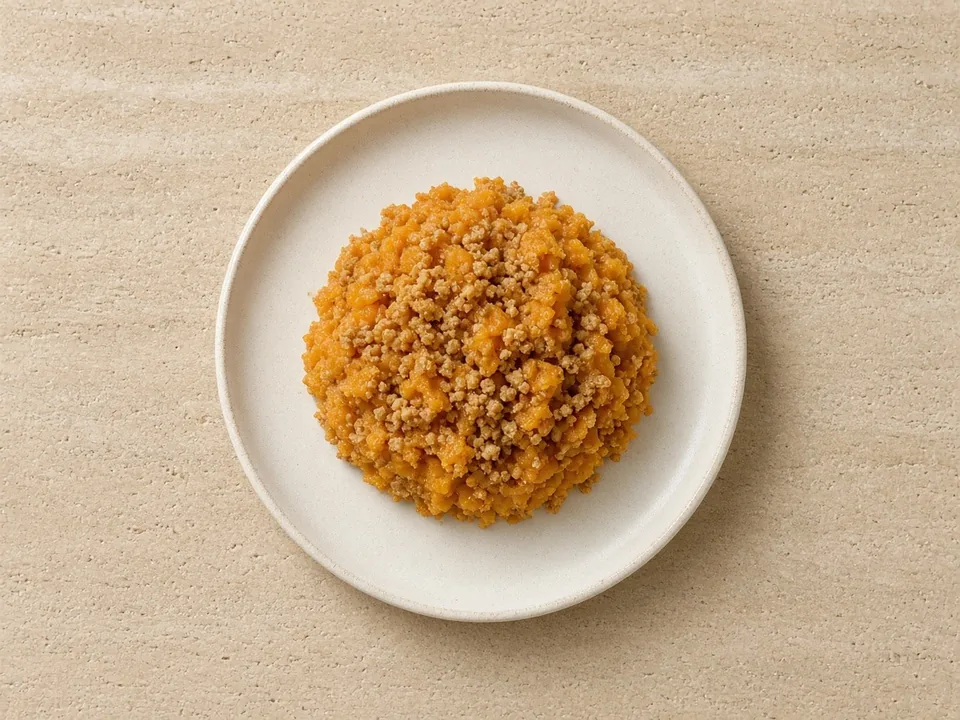
Finely minced in moist dishes
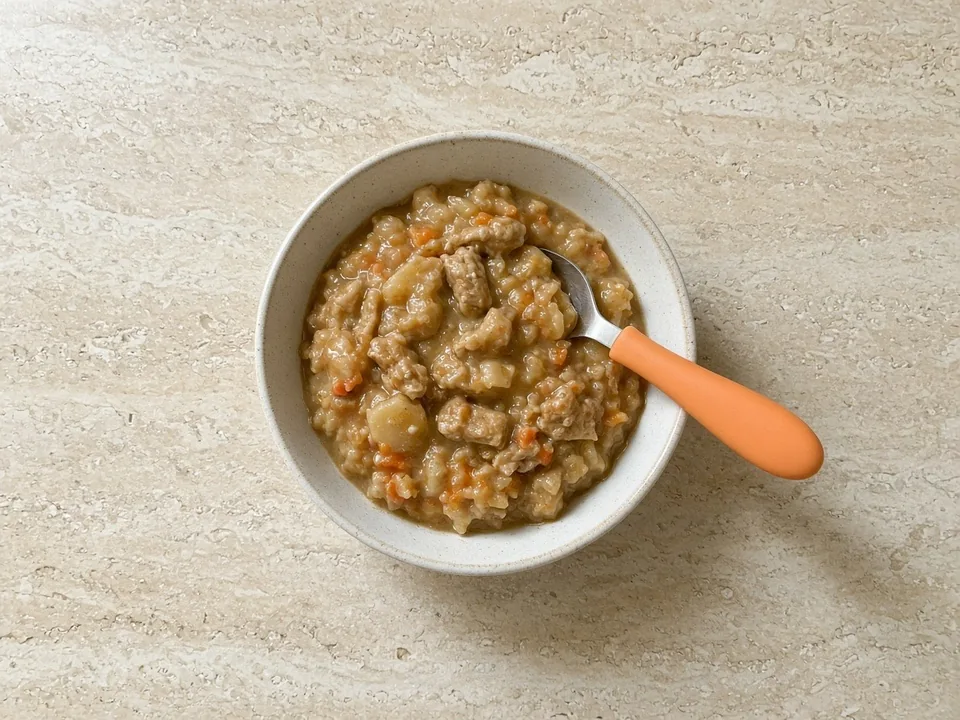
Stir finely minced seitan into soft rice, pasta sauce, mashed vegetables or a mild stew, so the crumbs are coated in something soft and moist.
- Size
- Minced into crumbs much smaller than 1 cm (just under ½ inch), mixed into a moist food.
- Check before serving
- Pick out any rubbery pieces that don't break up when you press them between your fingers.
12 months+
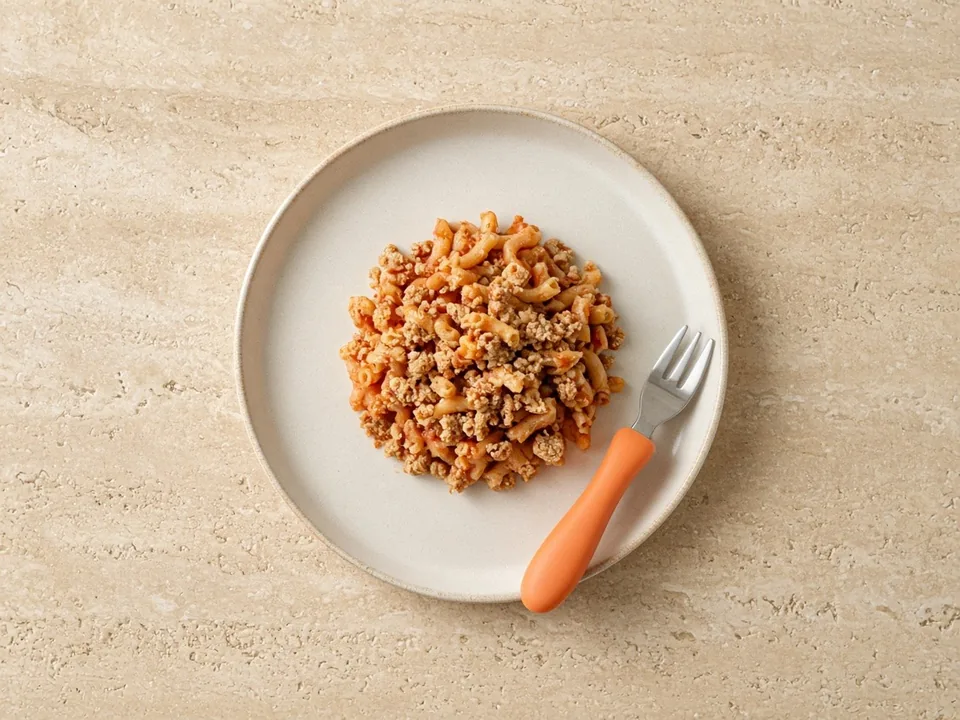
Finely chopped in sauces
Serve finely chopped seitan simmered in sauces, chili or stews, or in place of ground meat in pasta sauce. Take your child's portion out before adding salt or soy sauce.
- Size
- Finely chopped, smaller than about 1 cm (just under ½ inch), in a moist dish.
- Check before serving
- Check that pieces are small and soft enough to chew, with no thick or rubbery chunks.
18 months+
Small thin pieces in family meals
Offer seitan the way your family eats it: in stir-fries, curries, stews or wraps, sliced thinly and cut small. Avoid crisp fried or very chewy pieces, and keep salty sauces to a small amount.
- Size
- Thin, bite-sized pieces about 1 cm (just under ½ inch), simmered in sauce.
- Check before serving
- Taste a piece yourself. If it's very chewy or rubbery, chop it smaller or mince it.
Always have your child sit upright in a high chair or at the table, and stay with them the whole time they eat. Keep to the size and texture for their stage. Every baby develops on their own timeline.
How to prepare seitan
- 1
Offer seitan only after your baby has eaten wheat on its own without a reaction, and soy too if the seitan contains it. Or make your own from vital wheat gluten and water.
- 2
Choose plain seitan and read the label: check the salt and added sugar, and look for soy and other legumes, since many store-bought seitans are made with soy sauce or soy flour, and some contain beans, lentils or chickpea flour.
- 3
If you make your own from vital wheat gluten, use water instead of stock or soy sauce, and simmer it until cooked through.
- 4
Warm store-bought seitan by simmering it in unsalted water, then blend, mince or chop it to suit your baby's age and mix it into a soft, moist food. Do the finger test, then let it cool before serving.
- 5
First time? Pick a day your baby is well, at home, when you can watch them for a couple of hours afterward.
How much to offer
Once wheat is already in your baby's diet, start with a small amount: a teaspoon of blended seitan mixed into mash. If there's no reaction, offer more next time. Your baby decides how much to eat: stop when they turn away or close their mouth. Keep offering wheat regularly.
Common mistakes
Serving strips or chunks
Seitan is dense and chewy, and doesn't squash like soft foods. The CDC lists tough or large chunks of meat as a choking hazard, and seitan chews the same way. Blend it completely smooth for young babies and mince it very finely from about 9 months.
Using salty or sweetened store-bought seitan
Store-bought seitan in FoodData Central has about 300 to 450 mg of sodium per 100 g (about 0.75 to 1.1 g of salt), often from soy sauce or added salt, and babies under 1 should have less than 1 g of salt a day. One of those products also lists brown sugar, and US and UK advice is to avoid added sugar up to age 4. Choose the lowest-salt one with no added sugar, offer small amounts, or make your own without salt or sugar.
Missing the soy and other legumes
Many seitans are made with soy sauce or soy flour, and some also contain beans, lentils or chickpea flour. Read the ingredients, and wait until your baby has eaten soy on its own before offering a seitan that contains it.
Thinking it's a gluten-free swap
Seitan is made from wheat gluten. It's never suitable for a child with celiac disease or a wheat allergy.
Questions parents ask
Can seitan be a choking hazard for babies?
Seitan is dense and chewy, so pieces can be hard for babies and toddlers to break down. The CDC lists tough or large chunks of meat as a choking hazard, and seitan chews the same way. Blend it completely smooth for young babies, mince it very finely from about 9 months, chop it small and serve it in a moist sauce for toddlers, and avoid crisp fried pieces. Stay with your child during meals.
Can babies be allergic to seitan?
Seitan is made from wheat gluten, the main protein in wheat. Wheat is a common food allergen, and wheat allergy is most common in children; about two-thirds outgrow it. Foods with gluten can be introduced from around 6 months, one new allergen at a time and in small amounts, so you can spot any reaction. Because seitan is almost pure wheat protein, and many store-bought seitans also contain soy, offer it once wheat, and soy if the label lists it, have each been eaten on their own without a reaction. Once wheat is part of your baby's diet and they're fine with it, keep offering it regularly. Gluten is also what triggers celiac disease, a lifelong autoimmune condition that affects at least 1 in 100 people in the UK.
Is seitan healthy for babies?
Seitan is high in protein: store-bought seitan in FoodData Central has about 18 to 25 g of protein and about 1.7 mg of iron per 100 g. That's under the amount we use for the iron-rich label, and babies eat only small amounts, so it isn't counted as an iron-rich food.
Is seitan gluten-free?
No. Seitan is made from wheat gluten, so it isn't suitable for anyone with celiac disease or on a gluten-free diet.
Can a baby with a wheat allergy eat seitan?
No. Seitan is made almost entirely of wheat protein, so it's never suitable for a child with a wheat allergy.
Can I make seitan at home for my baby?
Yes. Homemade seitan lets you leave out the salt, sugar and soy sauce. Plain vital wheat gluten is low in sodium; use water instead of stock or soy sauce, and simmer it until cooked through.
If your baby refuses seitan
- Many babies need 10 or more tries before they accept a new food. Keep offering it alongside foods they already like.
- Mix it into foods your baby already likes, such as mashed potato or a favorite pasta sauce.
- Eat some yourself at the same meal. Babies copy what they see.
- Funny faces don't mean they dislike it. They're getting used to a new taste and texture.
Never force or pressure your baby to eat. Some days they'll eat more, some days less, and that's normal.
Buying and storing seitan
- Keep store-bought seitan in the fridge and follow the date and storage advice on the pack.
- Cooked seitan keeps for 3 to 4 days in a covered container in the fridge. Rice dishes are the exception: cool them within 1 hour, keep them in the fridge for no more than 1 day, and reheat them only once.
- Cooked seitan can be frozen in small portions for 3 to 4 months. Reheat only once, to 165°F (74°C), until steaming hot, then let it cool before serving.
- Throw away any food left out at room temperature for more than 2 hours (1 hour if it's hotter than 90°F / 32°C).
When to talk to your doctor
Contact your pediatrician, GP or health visitor if:
- Your baby has had any reaction to wheat, even a mild one. Stop offering it until you've talked to your pediatrician.
- Your child has ongoing diarrhea, tummy pain or bloating, or isn't growing as expected. Ask your doctor whether testing for celiac disease is needed, and don't cut gluten out before you've talked to them, because stopping it first can affect the test results.
- A parent, brother or sister has celiac disease. Mention it to your doctor and ask about testing, even if your child has no symptoms: the NHS says close family members should be tested.
- You notice mild signs of an allergic reaction after eating, such as a few hives or a little vomiting. See signs of a reaction.
- You're worried about how much your baby eats, their growth, or they refuse most solid food for weeks.
Call 911999your local emergency number (such as 112 in Europe or 000 in Australia) now if your baby has trouble breathing, wheezing, can't cough or cry, has lips, mouth, tongue or throat that suddenly swell, or becomes pale, bluish, floppy or unresponsive. Also call if hives come with repeated vomiting.
Last offered today. Once seitan is in your baby's diet, keep offering it regularly.
Add a note (likes, dislikes, any reaction)
Saved in this browser only. Think it was a reaction? See signs of an allergic reaction and when to get help.
Helpful guides
Sources
- ACAAI: Wheat allergy
- NHS: Food allergies in babies and young children
- NHS: Coeliac disease
- MedlinePlus (NIH): Learn about gluten-free diets
- Celiac Disease Foundation: Sources of gluten
- CDC: Choking hazards
- USDA FoodData Central: Seitan, wheat protein, cubed (branded product, ingredients list)
- USDA FoodData Central: Seitan, original (branded product, ingredients list)
- USDA FoodData Central: Vital wheat gluten
- NHS: Salt in your diet
- NHS: Food labels
- NHS: Foods to avoid giving babies and young children
- HHS: Fact sheet on the Dietary Guidelines for Americans, 2025–2030
- USDA FSIS: Leftovers and food safety
- Food Standards Agency: Home food fact checker
- NHS Best Start in Life: Storing and reheating food
- NHS: Help your baby enjoy new foods
More first foods

Free printable: The First 100 Foods checklist
Tick off foods as your baby tries them. Print it or save it as a PDF, no sign-up needed.