
Venison
Lean, rich deer meat that turns tender with long, slow cooking.
Checked against official guidance on October 18, 2026 · How we review
Quick answer
Babies can eat venison from around 6 months, once they show signs of being ready for solids. Prepare it as shown below.
How to serve venison by age
6 months+
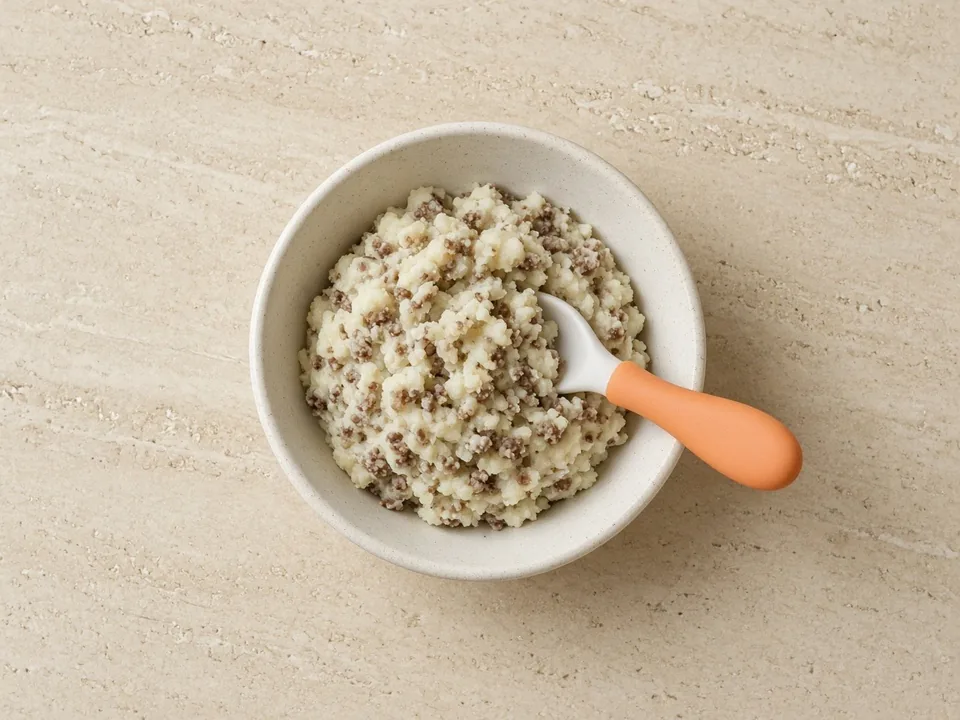
Tender strips, soft patties or minced
Slow-cook venison shoulder or stewing venison in liquid until it falls apart, then pull it into finger-length strips along the grain. Or shape ground venison into soft finger-shaped patties cooked to 160°F (71°C), or stir cooked, finely minced venison into mashed potato.
- Size
- Strips or patties about the size of an adult finger, roughly 6–8 cm long and 2 cm wide (2½–3 × ¾ in), or minced and mixed into mash.
- Check before serving
- Squash a strip between your thumb and finger. It should fall apart into soft shreds. If it's springy or you have to pull hard, cook it longer or mince it.
US and UK advice differ here. The AAP suggests mashed food or soft pieces no larger than ½ inch; the NHS suggests soft finger-sized pieces your baby can hold in their fist. Both agree the food must squash easily.
9 months+
Small soft shreds
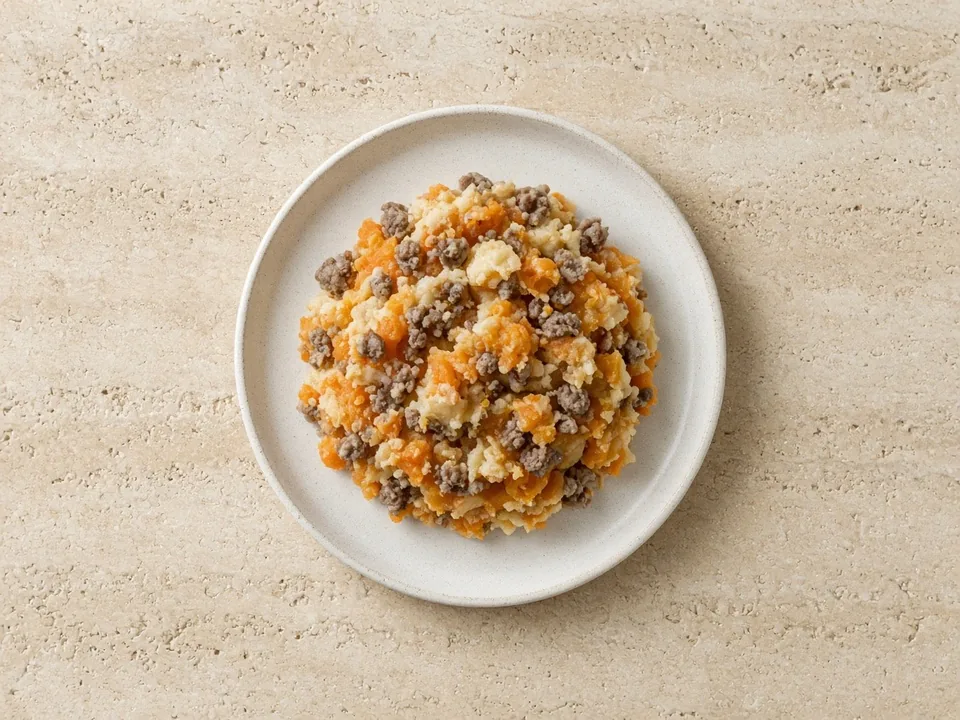
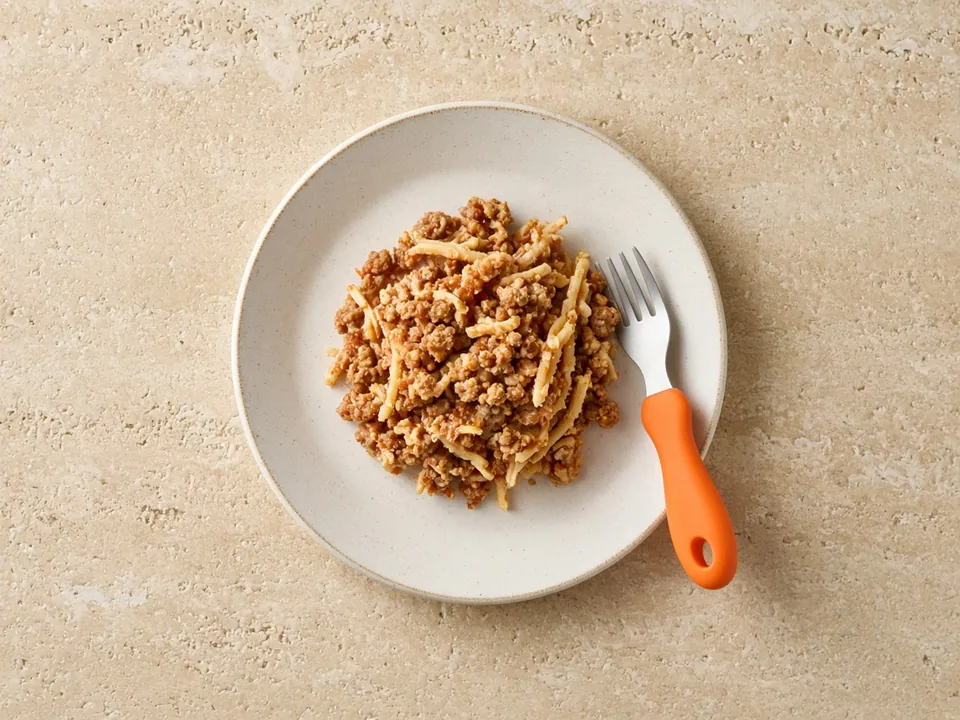
Offer small shreds of slow-cooked venison or pieces of a soft patty for pincer-grasp practice, or mix cooked ground venison into a soft pasta sauce or mashed root vegetables.
- Size
- Pieces no bigger than about 1 cm (just under ½ inch).
- Check before serving
- Each shred should squash flat between your thumb and finger. Skip any chewy or stringy bits.
12 months+
Shredded or in family meals
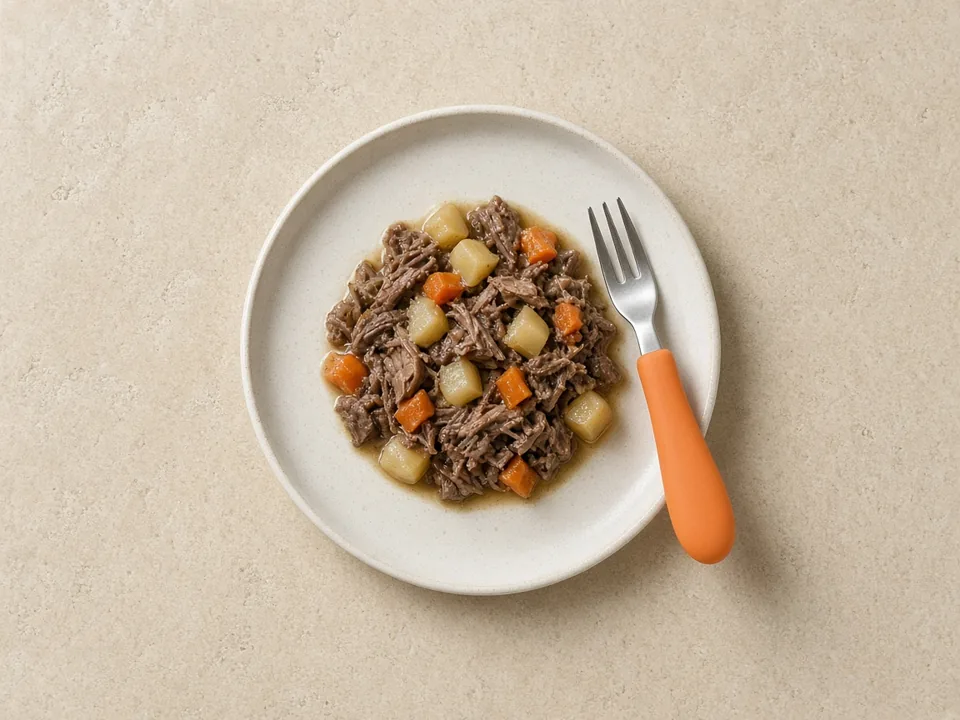
Serve tender venison from family meals: shredded from a slow-cooked stew, venison chili, or meatballs cut into small pieces. Leave salt, stock cubes and gravy out of your toddler's portion.
- Size
- Bite-sized pieces about 1 cm (just under ½ inch), or shredded.
- Check before serving
- It should still pull apart easily with a fork. Cut off sinew, gristle and tough bits.
18 months+
Pieces or mixed into dishes
Offer tender venison the way your family eats it: in stews, cottage pie, bolognese or soft tortillas, cut small. Venison steaks are very lean and often chewy: chop them very small or choose slow-cooked cuts.
- Size
- Bite-sized pieces about 1 cm (just under ½ inch).
- Check before serving
- Still check that each piece pulls apart easily with a fork.
Always have your child sit upright in a high chair or at the table, and stay with them the whole time they eat. Keep to the size and texture for their stage. Every baby develops on their own timeline.
How to prepare venison
- 1
Choose farmed venison, or ask your supplier whether wild venison was shot with lead ammunition (see the guidance note below). There's no need to rinse raw meat. Wash your hands, board and knife after handling it.
- 2
For strips, cover venison shoulder or stewing venison with water or unsalted liquid and simmer for at least 2 hours, or braise it, until it falls apart with a fork. Venison is very lean, so slow, moist cooking keeps it tender. Don't add salt or stock cubes.
- 3
For patties, mix ground venison with a little mashed potato, shape into fingers and cook to 160°F (71°C) in the center. Check with a food thermometer.
- 4
Let it cool, remove any bone, sinew and gristle, then pull it into strips or mince it. Do the squash test before serving.
How much to offer
Start with a strip or two, or a spoonful of minced venison mixed into mash. Your baby decides how much to eat: stop when they turn away or close their mouth. Lots of sucking and chewing with little swallowed is normal at first.
Common mistakes
Serving wild venison shot with lead
The Food Standards Agency says cutting down on lead-shot game is especially important for toddlers and children, because lead can harm the developing brain and nervous system, and that there is no agreed safe level of lead. Large game sold in supermarkets is generally farmed and has no or very low lead levels. Venison from a butcher, farm shop or hunter may have been shot with lead, so ask your supplier.
Serving it pink
Venison steaks and roasts are often served rare or pink for adults. The NHS lists game among meats to cook all the way through, with no pink left. For babies, slow-cook venison until it falls apart, cook ground venison to 160°F (71°C), and cook any steak or roast you share with a toddler until no pink is left (USDA FSIS gives 160°F (71°C) for venison roasts), checked with a food thermometer.
Serving chunks or slices of steak
Tough or large chunks of meat are a choking hazard, and lean venison steak gets chewy quickly. Use slow-cooked venison that falls apart, soft patties, or minced venison mixed into other food.
Adding salt, stock cubes or gravy
Babies shouldn't have added salt, and stock cubes and gravy are often high in salt. Cook your baby's portion plain, or take it out before seasoning.
Where US and UK guidance differ on venison
United States(AAP and CDC)Your setting
The USDA's general chart doesn't list venison. Its roasting chart gives 160°F (71°C) for venison roasts, and all ground meat needs 160°F (71°C), checked with a food thermometer. USDA FSIS notes that wild game killed by hunters isn't inspected, so chill it fast and cook it through. Slow-cooking venison until it falls apart takes it well past this. For wild deer, check your state's advice on chronic wasting disease: the CDC suggests strongly considering testing the deer before you eat the meat.
United Kingdom(NHS)Your setting
The NHS doesn't give temperatures. It counts venison as red meat and says to cook game, burgers and rolled joints all the way through, until no pink is left. The Food Standards Agency says cutting down on lead-shot game such as wild deer is especially important for toddlers and children, and that farmed game sold in supermarkets generally has no or very low lead levels.
We cover US and UK guidance in detail. Elsewhere, check your national health service's advice too.
Questions parents ask
Can venison be a choking hazard for babies?
Tough or large chunks of meat, bones, meat sticks and sausages are choking hazards for young children. Venison is very lean and can turn chewy. Cook it until it falls apart, remove bones, sinew and gristle, and serve it as finger-length strips that shred easily, soft patties or minced. Skip venison jerky and venison sausages for babies. Stay with your baby during meals.
Can babies be allergic to venison?
Venison is not one of the common food allergens.
Is venison healthy for babies?
A source of protein, iron, zinc and vitamin B12. FoodData Central lists about 5.0 mg of iron and 8.6 mg of zinc per 100 g of braised venison shoulder, and the iron in meat includes heme iron, which the body absorbs more easily than iron from plant foods.
Is venison good for babies' iron?
Yes. 100 g of braised venison shoulder has about 5.0 mg of iron, so a baby portion of about 20 g gives around 1 mg. Babies aged 7 to 12 months need 11 mg of iron a day from all their food, so offer iron-rich foods at several meals: meat, beans and lentils, and iron-fortified cereal.
Is wild venison safe for babies?
Wild game shot with lead can contain small pieces of lead. The UK Food Standards Agency says cutting down on lead-shot game is especially important for toddlers and children, and that farmed game sold in supermarkets generally has no or very low lead levels. USDA FSIS adds that wild game killed by hunters hasn't been inspected and may carry parasites, so it must be handled carefully and cooked through. In the US, the CDC says hunters in areas with chronic wasting disease should strongly consider having the deer tested before eating the meat, and should not eat meat from a deer that tests positive or looked sick. The CDC says this disease has never been reported in people. Farmed venison is the simpler choice for a baby.
Can babies eat venison sausages or jerky?
No. Sausages and meat sticks are on the CDC's choking hazard list, and processed meats are often high in salt. Offer slow-cooked or minced venison instead.
If your baby refuses venison
- Many babies need 10 or more tries before they accept a new food. Keep offering it alongside foods they already like.
- Venison can taste stronger, or more "gamey", than beef. Mix a little into foods your baby already likes, such as mashed potato or pasta sauce.
- Moisten dry venison with a little of its cooking liquid, breast milk or formula.
- Eat some yourself at the same meal. Babies copy what they see.
Never force or pressure your baby to eat. Some days they'll eat more, some days less, and that's normal.
Buying and storing venison
- Keep raw venison in a sealed container on the bottom shelf of the fridge, at 40°F (4°C) or below, and cook or freeze it by its use-by date.
- Cooked venison keeps for 3 to 4 days in a covered container in the fridge.
- Cooked venison dishes can be frozen for 3 to 4 months. Reheat only once, to 165°F (74°C), until steaming hot, then let them cool before serving.
- Throw away any food left out at room temperature for more than 2 hours (1 hour if it's hotter than 90°F / 32°C).
When to talk to your doctor
Contact your pediatrician, GP or health visitor if:
- You notice mild signs of an allergic reaction after eating, such as a few hives or a little vomiting. See signs of a reaction.
- You're worried about how much your baby eats, their growth, or they refuse most solid food for weeks.
Call 911999your local emergency number (such as 112 in Europe or 000 in Australia) now if your baby has trouble breathing, wheezing, can't cough or cry, has lips, mouth, tongue or throat that suddenly swell, or becomes pale, bluish, floppy or unresponsive. Also call if hives come with repeated vomiting.
Offered venison?
Add it to your first 100 foods.
Venison is in your 100 foods
1 of 100 offered · See all
Add a note (likes, dislikes, any reaction)
Saved in this browser only. Think it was a reaction? See signs of an allergic reaction and when to get help.
Helpful guides
Sources
- USDA FSIS: Roasting those "other" holiday meats
- USDA FSIS: Safe minimum internal temperature chart
- Food Standards Agency: Lead-shot game
- CDC: Choking hazards
- AAP: When can babies start solid foods?
- NHS: Your baby's first solid foods
- NHS: Meat in your diet
- USDA FoodData Central: Game meat, deer, shoulder clod, lean only, cooked, braised
- NIH Office of Dietary Supplements: Iron
- USDA FSIS: Leftovers and food safety
- CDC: About chronic wasting disease (CWD)
- USDA FSIS: Washing food: does it promote food safety?
- NHS Best Start in Life: Storing and reheating food
More first foods

Free printable: The First 100 Foods checklist
Tick off foods as your baby tries them. Print it or save it as a PDF, no sign-up needed.