
Cheese and carrot scones
Savory scones with grated mild cheddar and soft-cooked carrot, made with baking powder and no added salt or sugar. Contains wheat and milk: offer them once your baby has had each on its own.
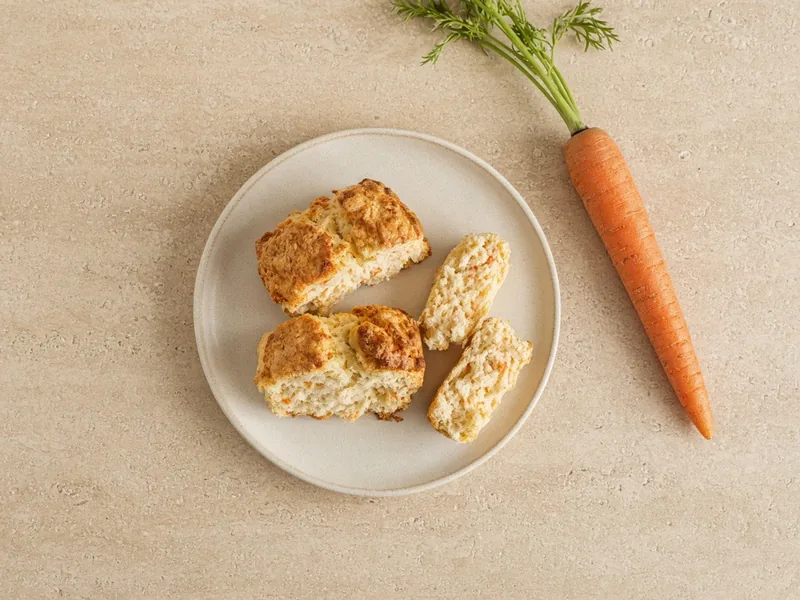
- From
- 6 months
- Time
- 40 min
- Makes
- About 9 scones
Contains wheatContains milk
Ingredients
- 240 g (2 cups)plain (all-purpose) wheat flournot self-raising (self-rising) flour, so you know exactly what goes in
- 2 tspbaking powdera normal baking amount; don't add extra
- 50 g (3½ tbsp)cold unsalted buttercut into small cubes
- 60 g (⅔ cup)finely grated mild cheddarpasteurized and full-fat; compare labels and choose a lower-salt one
- 1 smallcarrotabout 80 g (3 oz)
- about 150 ml (⅔ cup)whole cow's milkor breast milk or formula (see the US and UK note)
Steps
- 1Wash your hands. Heat the oven to 200°C (400°F) and line a baking tray. Scrub the carrot with a clean vegetable brush under running water, peel it and grate it finely.
- 2Cook the grated carrot in a small pan with 2 tbsp of water over medium-low heat for about 5 minutes, stirring, until soft. Add a splash more water if the pan dries before it's ready. Squash a few shreds between your thumb and finger: they should flatten easily, with no crunch. Let it cool for 10 minutes.
- 3Mix the flour and baking powder in a bowl. Rub in the butter with your fingertips until it looks like fine breadcrumbs. Stir in the cheese and the cooled carrot. Don't add salt or sugar.
- 4Add the milk a little at a time and mix with a knife to a soft, slightly sticky dough. Don't taste the raw dough: raw flour can carry germs.
- 5Pat the dough out on a floured surface to about 2.5 cm (1 in) thick and cut it into 9 squares. Place them on the tray, then wash your hands, the bowl, the knife and the work surface with warm, soapy water.
- 6Bake for about 15 minutes, until risen and golden, and cooked through with no doughy middle when you break one open. Let them cool on a rack.
- 7For your baby, split a cooled scone open, trim off the crisp top and bottom crust, and cut the soft inside into strips about 6–8 cm long and 2 cm wide (2½–3 × ¾ in). Squash a strip between your thumb and finger: it should feel soft, not dry and crumbly or crisp, with no firm carrot.
How to serve it by age
6 months+
Once your baby has had wheat and dairy (such as plain full-fat yogurt) on their own without a reaction, offer one or two soft strips from the inside of a scone, with the crust trimmed off.
9 months+
Offer pieces from the soft inside, with the crust trimmed off, no bigger than about 1 cm (just under ½ inch), or keep offering soft strips. A thin layer of something soft your baby already eats, such as mashed avocado or plain yogurt, keeps dry crumbs from scattering in the mouth.
12 months+
Split a scone, trim off any hard, crisp crust, and serve narrow strips or bite-sized pieces about 1 cm (just under ½ inch) with soup, soft-cooked vegetables or a thin spread of unsalted butter, as part of the family meal.
Where US and UK guidance differ on this recipe
United States(AAP and CDC)Your setting
The CDC says not to give cow's milk before 12 months. If you follow US advice, use breast milk or formula instead of milk in the dough.
United Kingdom(NHS)Your setting
The NHS says cows' milk can be used in cooking or mixed with food from around 6 months, but shouldn't be given as a main drink until your baby is 1 year old.
We cover US and UK guidance in detail. Elsewhere, check your national health service's advice too.
If your baby reacts
This recipe contains wheat, milk. Introduce one new allergen at a time, mixed into a food your baby already eats, before serving it in a dish with other new foods. Contact your pediatrician, GP or health visitor if you notice mild signs after eating, such as a few hives or a little vomiting. See signs of a reaction.
Call 911999your local emergency number (such as 112 in Europe or 000 in Australia) now if your baby has trouble breathing, wheezing, can't cough or cry, has lips, mouth, tongue or throat that suddenly swell, or becomes pale, bluish, floppy or unresponsive. Also call if hives come with repeated vomiting.
Leftovers and the rest of the family
Storing it
Keep cooled scones in a covered container in the fridge for 3 to 4 days, or freeze them for 3 to 4 months (wrap them well). Thaw them in the fridge and use them within 24 hours of thawing. If you warm them, do it only once, until steaming hot, 165°F (74°C), then let them cool and check they're still soft before serving. Throw away anything left in your baby's bowl. Don't leave scones at room temperature for more than 2 hours, or 1 hour if it's hotter than 90°F (32°C).

For the grown-ups
Bake a full batch and serve them warm with soup. Adults can add a pinch of salt, black pepper or mustard powder to their scones, or split and spread them with butter and a slice of extra cheese.
Foods in this recipe





Free printable: The First 100 Foods checklist
Tick off foods as your baby tries them. Print it or save it as a PDF, no sign-up needed.
Sources
- NHS: Your baby's first solid foods
- NHS: Foods to avoid giving babies and young children
- CDC: Cow's milk and milk alternatives
- CDC: Choking hazards
- FDA: Handling flour safely: what you need to know
- FDA: 7 tips for cleaning fruits and vegetables
- CDC: Safer food choices for children under 5
- USDA FSIS: Leftovers and food safety
- NHS Best Start in Life: Storing and reheating food