
Chicken & sweet potato bites
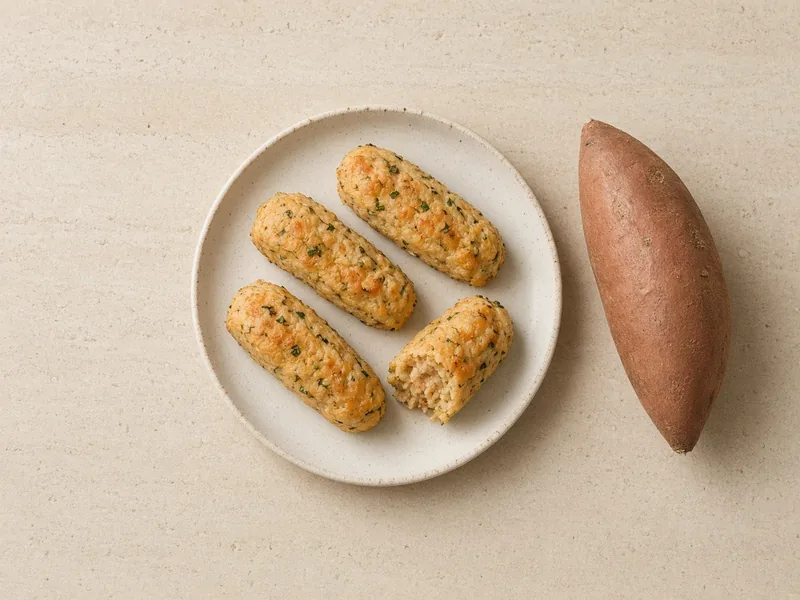
Soft finger-shaped bites of ground chicken mixed with mashed sweet potato, baked until cooked through. No egg, flour or breadcrumbs, and they freeze well for quick meals.
- From
- 6 months
- Time
- 50 min
- Makes
- About 20 finger-shaped bites
No top allergens
Ingredients
- 500 g (1 lb 2 oz)ground (minced) chickenthigh or a mix of thigh and breast, so it stays moist; plain, with nothing added (check the label for salt, broth or seasoning)
- 1 mediumsweet potatoabout 250 g (9 oz)
- 2 tbspfinely chopped fresh parsleyoptional, leaves only
- 1 tbspvegetable or olive oilfor the tray
Steps
- 1Wash your hands. Scrub the sweet potato under running water, peel it and cut it into chunks. Steam or boil the chunks for about 12 to 15 minutes, until very soft, then drain well, mash and let it cool for 15 minutes.
- 2Heat the oven to 200°C (400°F) and line a baking tray. Rinse the parsley under running water, pat it dry, pick the leaves off the stems and chop them finely.
- 3Mix the chicken, sweet potato and parsley in a bowl. Don't rinse raw chicken: washing it spreads bacteria, and only cooking kills them. Don't taste the raw mixture. Wash your hands, the bowl and anything else that touched raw chicken in hot, soapy water.
- 4With damp hands, shape the mixture into fingers about 6–8 cm long and 2 cm wide (2½–3 × ¾ in), flattened rather than round. If it's too soft to shape, chill it for 15 minutes first. Place them on the tray and brush them lightly with the oil.
- 5Bake for about 15 to 20 minutes, turning them halfway, until cooked through and 165°F (74°C) in the center of the thickest one, checked with a food thermometer. Don't judge doneness by color alone (see the US and UK note).
- 6Let them cool on the tray. Break one open and squash it between your thumb and finger: it should be soft and moist. Trim off any crisp edges, and check they're only just warm before serving.
How to serve it by age
6 months+
Offer one or two whole finger-shaped bites to hold and gnaw. Each one should squash easily between your thumb and finger. Don't roll them into small round balls for babies.
9 months+
Cut bites into pieces no bigger than about 1 cm (just under ½ inch) for pincer-grasp practice, or keep offering whole soft fingers to bite. Serve with soft-cooked broccoli or peas pressed flat.
12 months+
Serve whole bites or bite-sized pieces about 1 cm (just under ½ inch) with vegetables and plain yogurt to dip (once dairy has been introduced), as part of the family meal.
Where US and UK guidance differ on this recipe
United States(AAP and CDC)Your setting
The AAP says fresh baby food should be cooked with no added salt or seasoning. It doesn't mention parsley, and doesn't give an age for herbs. If you'd rather follow that line closely, leave the parsley out until 12 months, or ask your pediatrician. Cook ground chicken to 165°F (74°C), checked with a food thermometer: the USDA says color isn't a sign of safety, and safely cooked chicken can still look pink.
United Kingdom(NHS)Your setting
The NHS says not to add salt, stock cubes or gravy to your baby's food or cooking water. Its own recipes for babies from 6 months use herbs (lemony chicken strips) and spices (garam masala in sweet potato patties). The NHS doesn't give a temperature: it says to cook chicken all the way through, until the juices run clear and there's no pink or red meat left.
We cover US and UK guidance in detail. Elsewhere, check your national health service's advice too.
Leftovers and the rest of the family
Storing it
Cool leftover bites quickly and keep them in a covered container in the fridge for 3 to 4 days, or freeze them for up to 3 months (freeze them in a single layer, then pack them together once frozen solid). Reheat from frozen or thawed, only once, until steaming hot, 165°F (74°C), then let them cool before serving. Throw away anything left in your baby's bowl. Don't leave bites at room temperature for more than 2 hours, or 1 hour if it's hotter than 90°F (32°C).

For the grown-ups
Shape bigger patties for the adults from the same mixture and serve them with salad and a squeeze of lemon. Add salt, pepper or chili at the table.
Foods in this recipe



Free printable: The First 100 Foods checklist
Tick off foods as your baby tries them. Print it or save it as a PDF, no sign-up needed.
Sources
- USDA FSIS: Safe minimum internal temperature chart
- USDA FSIS: Chicken from farm to table
- AAP: When can babies start solid foods?
- NHS: Your baby's first solid foods
- USDA FSIS: Leftovers and food safety
- NHS: Meat in your diet
- NHS Best Start in Life: Lemony chicken strips
- NHS Best Start in Life: Sweet potato patties
- NHS Best Start in Life: Storing and reheating food