
Cottage cheese pancakes
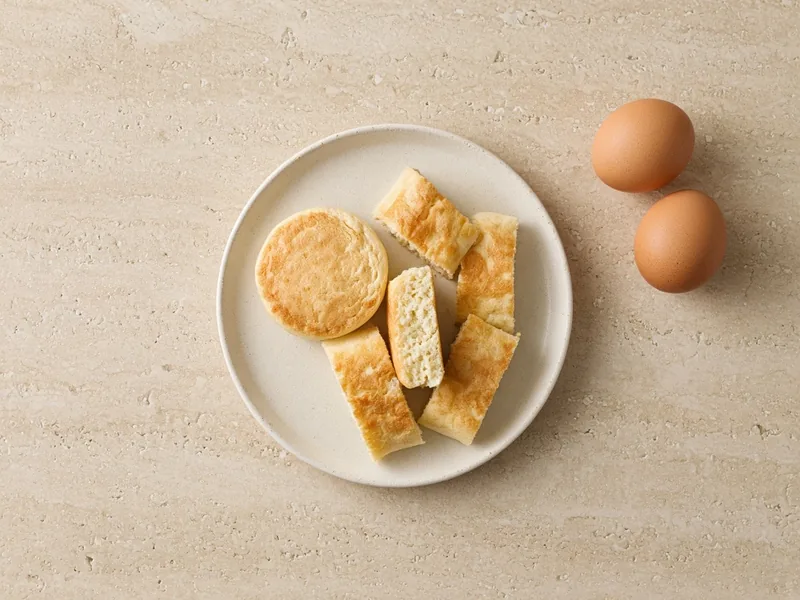
Soft little pancakes made from cottage cheese, egg and a little flour, with no sugar or salt. Contains milk, egg and wheat: offer them once your baby has had each of these on its own.
- From
- 6 months
- Time
- 20 min
- Makes
- About 10 small pancakes
Contains milkContains eggContains wheat
Ingredients
- 150 g (⅔ cup)full-fat cottage cheeseplain and made from pasteurized milk. Compare labels and pick one with less sodium
- 2eggs
- 50 g (6 tbsp)plain (all-purpose) wheat flour
- 2 tbspwhole cow's milk, breast milk or formulasee the US and UK note on cow's milk before 12 months
- 1–2 tspvegetable oilfor the pan
Steps
- 1Wash your hands. Blend the cottage cheese, or mash it well with a fork, until there are no large curds left, so the pancakes cook evenly.
- 2Whisk in the eggs and the milk, then stir in the flour to make a thick batter. Don't add sugar, honey, syrup or salt. Don't taste the raw batter: raw flour and raw egg can carry germs. Wash your hands, the bowl, utensils and work surface with warm, soapy water after handling them.
- 3Heat a little oil in a nonstick pan over medium-low heat. Add tablespoons of batter, spreading each into a pancake about 8 cm (3 in) across.
- 4Cook for 2 to 3 minutes until the underside is golden and the edges have set, then flip and cook for another 2 minutes. They're done when the middle is set all the way through, with no wet batter: tear one open to check. If you use a food thermometer, the center should reach 160°F (71°C). Lower the heat if they brown too fast.
- 5Let them cool on a plate for a few minutes, then cut them for your baby's stage. Squash a piece between your thumb and finger to check it's soft, and check the temperature before serving.
How to serve it by age
6 months+
Offer only after dairy, egg and wheat have each been introduced on their own. Cut each pancake into strips about the size of an adult finger, roughly 6–8 cm long and 2 cm wide (2½–3 × ¾ in). Each strip should squash easily between your thumb and finger.
9 months+
Cut into pieces no bigger than about 1 cm (just under ½ inch) for pincer-grasp practice, or keep serving strips.
12 months+
Cut into narrow strips or bite-sized pieces about 1 cm (just under ½ inch), topped with mashed fruit instead of syrup or honey. Honey is safe from 12 months as far as botulism goes, but it's an added sugar, and the NHS says children aged 4 and under should avoid sugar, including honey. Squash flat or quarter blueberries and other small round fruit.
Where US and UK guidance differ on this recipe
United States(AAP and CDC)Your setting
The CDC says not to give cow's milk before 12 months. If you follow US advice, use breast milk or formula in your baby's batter instead. The CDC lists cottage cheese made from pasteurized milk as a safer choice for children under 5, and says egg dishes should reach 160°F (71°C).
United Kingdom(NHS)Your setting
The NHS says cows' milk can be used in cooking or mixed with food from around 6 months, but shouldn't be given as a main drink until 1 year. It lists cottage cheese among the pasteurized full-fat cheeses babies can have from 6 months.
We cover US and UK guidance in detail. Elsewhere, check your national health service's advice too.
If your baby reacts
This recipe contains milk, egg, wheat. Introduce one new allergen at a time, mixed into a food your baby already eats, before serving it in a dish with other new foods. Contact your pediatrician, GP or health visitor if you notice mild signs after eating, such as a few hives or a little vomiting. See signs of a reaction.
Call 911999your local emergency number (such as 112 in Europe or 000 in Australia) now if your baby has trouble breathing, wheezing, can't cough or cry, has lips, mouth, tongue or throat that suddenly swell, or becomes pale, bluish, floppy or unresponsive. Also call if hives come with repeated vomiting.
Leftovers and the rest of the family
Storing it
Cooked pancakes keep for 3 to 4 days in a covered container in the fridge, or 2 to 3 months in the freezer (freeze them in a single layer, then pack them together once frozen). Thaw them in the fridge and use them within 24 hours of thawing, or reheat them from frozen. Reheat only once, until steaming hot, 165°F (74°C), then let them cool and check they're still soft before serving. Throw away anything left in your baby's bowl. Don't leave pancakes at room temperature for more than 2 hours, or 1 hour if it's hotter than 90°F (32°C).

For the grown-ups
Double the batch for the whole family. Adults and older children can add their own toppings at the table once the baby's portion is set aside.
Foods in this recipe


Free printable: The First 100 Foods checklist
Tick off foods as your baby tries them. Print it or save it as a PDF, no sign-up needed.
Sources
- NHS: Your baby's first solid foods
- NHS: Foods to avoid giving babies and young children
- CDC: Cow's milk and milk alternatives
- CDC: Safer food choices for children under 5
- CDC: Choking hazards
- FDA: Handling flour safely: what you need to know
- USDA FSIS: Shell eggs from farm to table
- USDA FSIS: Leftovers and food safety
- NHS Best Start in Life: Storing and reheating food