
Homemade fish fingers
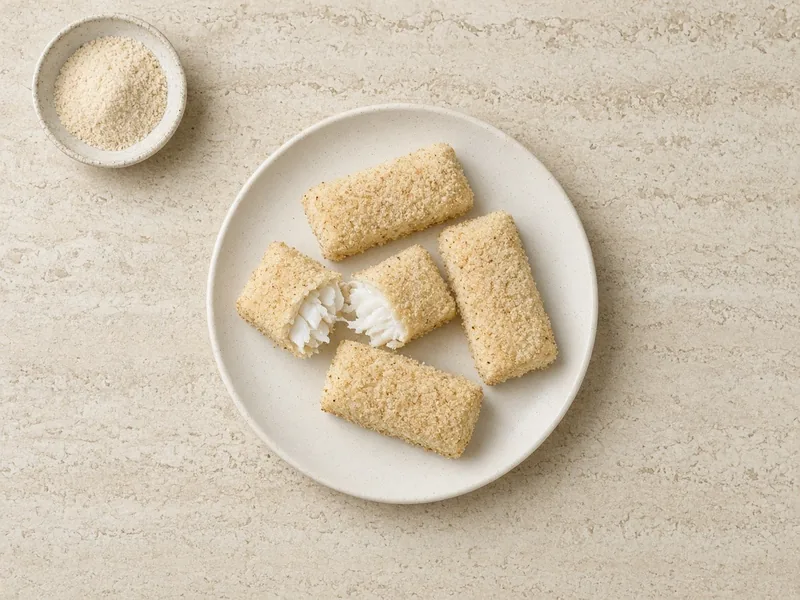
Oven-baked fish fingers made from a boneless, low-mercury white fish or salmon, dipped in egg and fine breadcrumbs. Contains fish, egg and wheat: offer them once your baby has had each on its own.
- From
- 6 months
- Time
- 35 min
- Makes
- 2 adults and 1 baby (about 16 fingers)
Contains fishContains eggContains wheat
Ingredients
- 400 g (14 oz)skinless white fish or salmon filletcod, pollock or haddock (not smoked), or salmon; fresh, or frozen and thawed in the fridge overnight
- 1egg
- 60 g (1 cup)fine plain breadcrumbsmade from wheat bread; or blitz day-old plain bread (see the label check in step 3)
- 1 tbspvegetable or olive oilfor the tray
Steps
- 1Wash your hands, and wash them again after handling raw fish or raw egg. Keep the raw fish away from foods that won't be cooked. Heat the oven to 200°C (400°F) and brush a baking tray with the oil.
- 2Pat the fish dry. Run your fingers slowly over the whole fillet, on both sides, and pull out every bone you find (tweezers help with salmon). Cut it into fingers about 6–8 cm long and 2 cm wide (2½–3 × ¾ in), feeling each one again for bones.
- 3Check the breadcrumb or bread label: choose one lower in salt, with no honey (not safe under 12 months), and with no other allergens your baby hasn't had yet. Beat the egg in a shallow dish with 1 tbsp of water. Spread the breadcrumbs on a plate. Don't add salt. Dip each finger in the egg, let the extra drip off, then roll it in a thin, even layer of crumbs.
- 4Lay the fingers on the tray with space between them and bake for about 15 to 20 minutes, turning them halfway, until the coating is golden and dry, with no wet egg, and the fish is opaque, flakes easily and reaches 145°F (63°C) in the thickest part.
- 5Let them cool for a few minutes. Break one open and check the fish is opaque all the way through and has no bones. Trim off any hard, crisp coating from your baby's fingers, and check they're only just warm before serving.
How to serve it by age
6 months+
Once your baby has had fish, egg and wheat each on their own without a reaction, offer one or two whole fish fingers to hold and gnaw. Squash one between your thumb and finger first: the fish should flake and squash easily, and the coating should be soft, with nothing hard or crunchy. Peel off any crisp coating, or lift the fish out of the coating and offer large, soft, boneless flakes.
9 months+
Break fish fingers into pieces or flakes no bigger than about 1 cm (just under ½ inch) for pincer-grasp practice, feeling each one for bones, with soft-cooked vegetables on the side.
12 months+
Serve whole fish fingers or bite-sized pieces about 1 cm (just under ½ inch) with soft-cooked vegetables or potato wedges, as part of the family meal. Keep checking for bones.
Where US and UK guidance differ on this recipe
United States(AAP and CDC)Your setting
Cod, pollock, haddock and salmon are on the FDA's low-mercury 'Best choices' list. For ages 1–3, a serving is about 1 oz, twice a week from that list. USDA FSIS says to cook fish to 145°F (63°C).
United Kingdom(NHS)Your setting
The NHS counts cod, haddock and pollock as white fish, and salmon as oily fish: boys can have up to 4 portions of oily fish a week, and girls no more than 2. Children under 16 shouldn't have shark, swordfish or marlin. Baked fish is a healthier choice than fried, and the NHS's own homemade fish finger recipe bakes the fish in an egg and breadcrumb coating.
We cover US and UK guidance in detail. Elsewhere, check your national health service's advice too.
If your baby reacts
This recipe contains fish, egg, wheat. Introduce one new allergen at a time, mixed into a food your baby already eats, before serving it in a dish with other new foods. Contact your pediatrician, GP or health visitor if you notice mild signs after eating, such as a few hives or a little vomiting. See signs of a reaction.
Call 911999your local emergency number (such as 112 in Europe or 000 in Australia) now if your baby has trouble breathing, wheezing, can't cough or cry, has lips, mouth, tongue or throat that suddenly swell, or becomes pale, bluish, floppy or unresponsive. Also call if hives come with repeated vomiting.
Leftovers and the rest of the family
Storing it
Cool leftover fish fingers quickly and keep them in a covered container in the fridge for 3 to 4 days, or freeze them for 1 to 2 months (freeze them in a single layer, then pack them together once frozen). Reheat only once, until steaming hot, 165°F (74°C), then let them cool and check they're still soft before serving. Throw away anything left in your baby's bowl. Don't leave fish fingers at room temperature for more than 2 hours, or 1 hour if it's hotter than 90°F (32°C).

For the grown-ups
Coat your baby's fingers first, then add salt, black pepper, paprika or dried herbs to the rest of the breadcrumbs for the adults. Serve with oven wedges, peas and a lemony yogurt dip. For your baby, keep the wedges soft enough to squash, mash the peas (under 9 months) or press each one flat (from 9 months), and offer the dip only once your baby has had dairy on its own.
Foods in this recipe






Free printable: The First 100 Foods checklist
Tick off foods as your baby tries them. Print it or save it as a PDF, no sign-up needed.
Sources
- NHS: Your baby's first solid foods
- NHS: Foods to avoid giving babies and young children
- NHS: Fish and shellfish
- NHS Healthier Families: Homemade fish fingers with sweet potato wedges
- FDA: Advice about eating fish
- USDA FSIS: Safe minimum internal temperature chart
- FDA: Once baby arrives (Food safety for moms-to-be)
- USDA FSIS: Leftovers and food safety
- NHS Best Start in Life: Storing and reheating food