
Pasta primavera
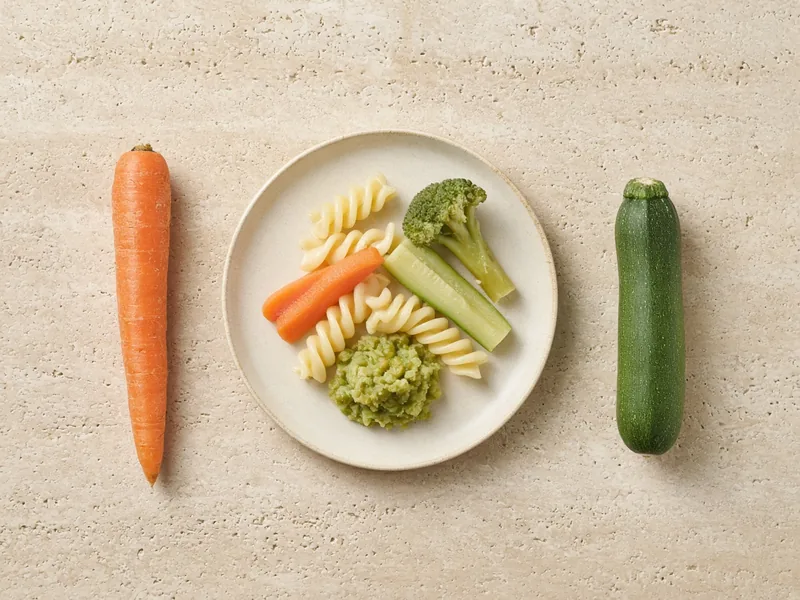
Soft pasta tossed with steamed carrot, broccoli, zucchini and peas and a little olive oil, with no added salt. Contains wheat: offer it once your baby has had wheat on its own.
- From
- 6 months
- Time
- 30 min
- Makes
- 2 adults and 1 baby
Contains wheat
Ingredients
- 200 g (7 oz)dried wheat pastalarge shapes such as fusilli or penne for the baby
- 1 mediumcarrot
- 1 small headbroccoliabout 200 g (7 oz)
- 1 mediumzucchini (courgette)
- 100 g (⅔ cup)frozen peas
- 1–2 tbspolive oil
- 2 tbspfinely grated hard cheeseoptional; pasteurized, such as mild cheddar. It contains milk: use it only once your baby has had dairy on its own
Steps
- 1Wash your hands. Scrub the carrot under running water and peel it. Rinse the broccoli and zucchini. Cut the carrot and zucchini lengthwise into sticks about 6–8 cm long and 2 cm wide (2½–3 × ¾ in), never round coins, and cut the broccoli into large florets with a long stem.
- 2Boil the pasta in plenty of unsalted water for a few minutes longer than the package says, until a piece squashes easily between your fingers.
- 3Meanwhile, steam the carrot for about 5 minutes, then add the broccoli and zucchini and steam for 6 to 8 minutes more, adding the peas for the last 5, until every vegetable squashes easily between your fingers.
- 4Drain the pasta and toss it with the carrot, broccoli, zucchini and olive oil, keeping the peas apart. Don't add salt.
- 5Take your baby's portion out now, before any salt or seasoning goes in. Put a spoonful of peas in a small bowl for your baby: mash them with a fork for a baby under 9 months, or press each pea flat from 9 months. Stir the rest of the peas into the family pasta. If you use the cheese, stir it into your baby's portion only if they've already had dairy on its own. Spread your baby's portion on a plate to cool, and check it's only just warm before serving.
How to serve it by age
6 months+
Once your baby has had wheat on its own without a reaction, offer a few large, very soft pasta shapes, soft carrot and zucchini sticks, and a broccoli floret held by its stem. Mash the peas and serve them on a pre-loaded spoon.
9 months+
Cut the pasta and vegetables into pieces no bigger than about 1 cm (just under ½ inch), and press each pea flat, for pincer-grasp practice.
12 months+
Serve the family dish, with pasta in small shapes or pieces about 1 cm (just under ½ inch), vegetables chopped to the same size, and peas still squashed.
If your baby reacts
This recipe contains wheat. Introduce one new allergen at a time, mixed into a food your baby already eats, before serving it in a dish with other new foods. Contact your pediatrician, GP or health visitor if you notice mild signs after eating, such as a few hives or a little vomiting. See signs of a reaction.
Call 911999your local emergency number (such as 112 in Europe or 000 in Australia) now if your baby has trouble breathing, wheezing, can't cough or cry, has lips, mouth, tongue or throat that suddenly swell, or becomes pale, bluish, floppy or unresponsive. Also call if hives come with repeated vomiting.
Leftovers and the rest of the family
Storing it
Cool leftovers quickly in a shallow container and keep them covered in the fridge for 3 to 4 days, or freeze them for 3 to 4 months (the vegetables will be softer after thawing). Reheat only once, until steaming hot, 165°F (74°C), then let it cool before serving. Throw away anything left in your baby's bowl. Don't leave it at room temperature for more than 2 hours, or 1 hour if it's hotter than 90°F (32°C).

For the grown-ups
Take your baby's portion out first, then add salt, black pepper, lemon zest, garlic and grated Parmesan to the rest for the adults. Spaghetti or linguine works for the adults; keep large shapes for the baby.
Foods in this recipe


Free printable: The First 100 Foods checklist
Tick off foods as your baby tries them. Print it or save it as a PDF, no sign-up needed.