
Pea and mint mash
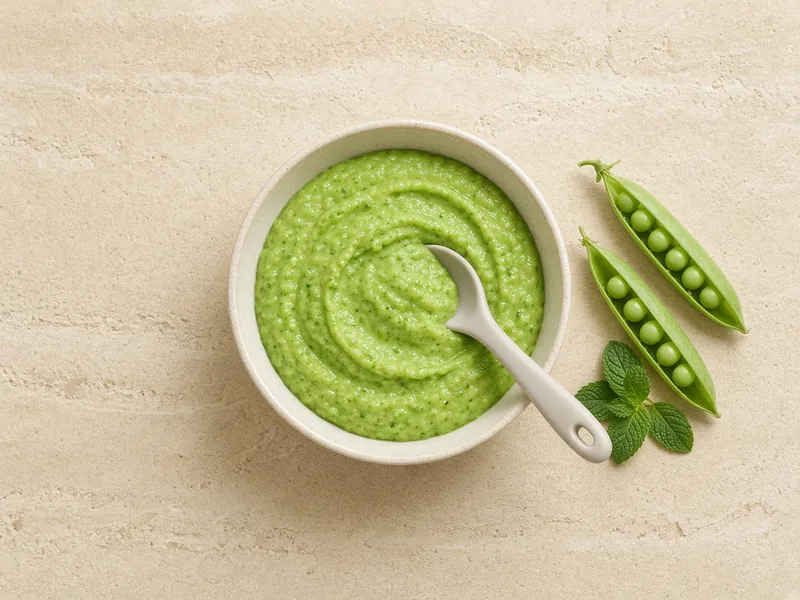
Frozen peas cooked until very soft and mashed with a few fresh mint leaves. A bright green, not-too-sweet first food that's ready in 10 minutes and freezes well in ice cube trays.
- From
- 6 months
- Time
- 10 min
- Makes
- About 6 baby portions
No top allergens
Ingredients
- 200 g (1½ cups)frozen peasor fresh shelled peas
- 4–5fresh mint leavesoptional, no stems
- 2–4 tbspbreast milk, formula or the cooking waterto thin
Steps
- 1Wash your hands. Rinse the mint leaves under running water, pick them off the stems and chop them finely. Using fresh peas? Rinse the pods before shelling them. Frozen peas can go straight into the pan.
- 2Bring a small pan of water to the boil, without salt. Add the peas and cook for about 4 to 6 minutes, until they're very soft and squash easily between your thumb and finger.
- 3Add the chopped mint for the last minute of cooking, so it softens.
- 4Drain the peas and mint, keeping a little of the cooking water.
- 5Blend until smooth for first tastes, or mash with a fork or potato masher for a lumpier texture. If you mash, check that every pea is broken open, with no whole round peas, and that there are no whole mint leaves or large pieces of leaf. Stir in breast milk, formula or cooking water a little at a time until it's soft and spoonable.
- 6Let it cool, and check it's only just warm before serving.
How to serve it by age
6 months+
Serve smooth or slightly lumpy on a pre-loaded spoon your baby can hold, or let them scoop it with their fingers. Once your baby has had wheat on its own, you can spread it thinly on a lightly toasted plain bread finger (no honey) about the size of an adult finger.
9 months+
Mash it more roughly, with soft lumps. Offer a few cooked peas on the side, each one pressed flat, for pincer-grasp practice. Never serve them whole and round.
12 months+
Stir the mash into pasta, risotto or mashed potato for the family meal, or serve it as a dip for soft-cooked vegetable sticks. Keep squashing any whole peas.
Where US and UK guidance differ on this recipe
United States(AAP and CDC)Your setting
The AAP says fresh baby food should be cooked with no added salt or seasoning. It doesn't mention mint or other herbs, and no AAP page gives an age for them. If you'd rather follow that line closely, leave the mint out until 12 months, or ask your pediatrician.
United Kingdom(NHS)Your setting
The NHS says not to add salt or sugar, including stock cubes and gravy, to your baby's food or cooking water. Its weaning recipes use fresh mint in a beetroot dip from 6 months. If you use mint, chop it finely, cook it in, and keep the dish unsalted.
We cover US and UK guidance in detail. Elsewhere, check your national health service's advice too.
Leftovers and the rest of the family
Storing it
Cool leftovers quickly and keep them in a covered container in the fridge for 3 to 4 days. For batch cooking, spoon the mash into an ice cube tray, freeze it, then move the cubes to a labeled, dated freezer bag and use them within 3 months. Thaw in the fridge or microwave, use it within 24 hours of thawing, and reheat it only once, until steaming hot, 165°F (74°C), then let it cool before serving. Throw away anything left in your baby's bowl, and any mash left out at room temperature for more than 2 hours (1 hour if it's hotter than 90°F / 32°C).

For the grown-ups
Make a double batch: take your baby's portion out, then add butter, salt and pepper to the rest for a side for the adults, or loosen it with stock for a quick pea soup.
Foods in this recipe

Free printable: The First 100 Foods checklist
Tick off foods as your baby tries them. Print it or save it as a PDF, no sign-up needed.
Sources
- NHS: Green mash recipe
- NHS: Beetroot dip with pitta bread fingers
- NHS: Your baby's first solid foods
- AAP: When can babies start solid foods?
- AAP: Is it OK to make my own baby food?
- FDA: 7 tips for cleaning fruits and vegetables
- USDA FSIS: Leftovers and food safety
- NHS Best Start in Life: Storing and reheating food
- NHS: Foods to avoid giving babies and young children