
Peanut butter oatmeal
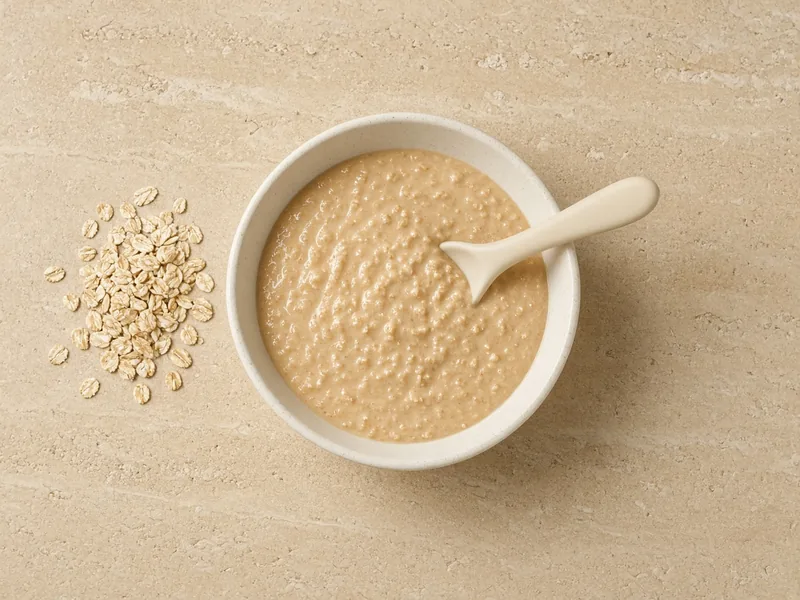
Soft oatmeal with smooth peanut butter thinned and stirred through, an easy way to offer peanut. Peanut is the only new food here: give oats on their own first. Once your baby has had peanut without a reaction, keep it in their diet regularly, as part of their usual meals.
- From
- 6 months
- Time
- 10 min
- Makes
- 1 baby portion (2 teaspoons of peanut butter)
Contains peanut
Ingredients
- 2 tbspquick or rolled oatsplain, with no added sugar or salt
- 120 ml (½ cup)waterfor cooking the oats
- 2 tspsmooth peanut butterno added salt or sugar, never chunky
- 2–3 tsphot waterto thin the peanut butter
- 1–2 tspbreast milk or formulaoptional, to loosen
Steps
- 1Wash your hands. Put the oats and water in a small pan and simmer, stirring, a little longer than the package says, until very soft and thick. Don't add salt or sugar.
- 2For first tastes, mash or blend the oatmeal until smooth. Loosen it with breast milk or formula if it's too thick.
- 3In a separate small bowl, measure 2 teaspoons of smooth peanut butter and slowly stir in 2 to 3 teaspoons of hot water until the peanut butter is thinned and well blended, with no lumps.
- 4Stir the thinned peanut butter into the oatmeal until there are no streaks or sticky bits left.
- 5Let it cool, stir well and check the temperature before serving. Tip the spoon: the oatmeal should slide off smoothly. If it holds a sticky lump, stir in a little more water.
How to serve it by age
6 months+
Pick a day your baby is well, at home, when you can watch them for a couple of hours afterward. Start small: offer a little on the tip of a spoon, wait 10 minutes, and if there's no reaction, let your baby eat the rest at their usual pace. If your baby has severe eczema, an egg allergy, or has had an immediate allergic reaction to any food, talk to your pediatrician before the first peanut, and don't give it at home until they've told you how.
9 months+
Serve the oatmeal thicker and lumpier, with soft lumps no bigger than about 1 cm (just under ½ inch). Stir in mashed banana, or pear cooked until soft and mashed, if your baby already eats them.
12 months+
Share the family pot. Always stir the peanut butter in, thinned, rather than adding a dollop on top. No spoonfuls of thick peanut butter, and no whole or chopped peanuts.
Where US and UK guidance differ on this recipe
United States(AAP and CDC)Your setting
US guidelines (NIAID) say babies with severe eczema or an egg allergy should see their pediatrician before peanut, and the AAP adds babies who have had an immediate allergic reaction to any food. The pediatrician may suggest allergy testing or a first taste in the office. Babies with mild to moderate eczema, or none, can usually start peanut at home around 6 months. The AAP suggests thinning peanut butter into cereal, purée or yogurt.
United Kingdom(NHS)Your setting
The NHS says to talk to your GP or health visitor first if your baby has eczema or a food allergy, or there's a family history of food allergies, eczema, asthma or hay fever. It says nut butter can be given from the start of weaning if it's spread onto a food such as toast, and never on its own. This recipe stirs it in thinned, as the AAP suggests, so there are no thick lumps.
We cover US and UK guidance in detail. Elsewhere, check your national health service's advice too.
If your baby reacts
This recipe contains peanut. Introduce one new allergen at a time, mixed into a food your baby already eats, before serving it in a dish with other new foods. Contact your pediatrician, GP or health visitor if you notice mild signs after eating, such as a few hives or a little vomiting. See signs of a reaction.
Call 911999your local emergency number (such as 112 in Europe or 000 in Australia) now if your baby has trouble breathing, wheezing, can't cough or cry, has lips, mouth, tongue or throat that suddenly swell, or becomes pale, bluish, floppy or unresponsive. Also call if hives come with repeated vomiting.
Leftovers and the rest of the family
Storing it
Best made fresh. Cool leftovers that haven't been served quickly and keep them in a covered container in the fridge for 3 to 4 days, or freeze small portions and use them within 3 months. Reheat only once, until steaming hot, 165°F (74°C), stir well, then let it cool before serving. Throw away anything left in your baby's bowl. Don't leave the oatmeal at room temperature for more than 2 hours, or 1 hour if it's hotter than 90°F (32°C).

For the grown-ups
Make a bigger pot for everyone, stir in thinned peanut butter for the whole family, and sweeten everyone's bowl with mashed banana or soft-cooked fruit instead of sugar or syrup.
Foods in this recipe



Free printable: The First 100 Foods checklist
Tick off foods as your baby tries them. Print it or save it as a PDF, no sign-up needed.
Sources
- NIAID: Addendum guidelines for the prevention of peanut allergy (2017)
- AAP: When to introduce egg, peanut butter and other common food allergens
- NHS: Food allergies in babies and young children
- NHS: Foods to avoid giving babies and young children
- AAP: When can babies start solid foods?
- CDC: Choking hazards
- USDA FSIS: Leftovers and food safety
- NHS Best Start in Life: Storing and reheating food