
Polenta fingers
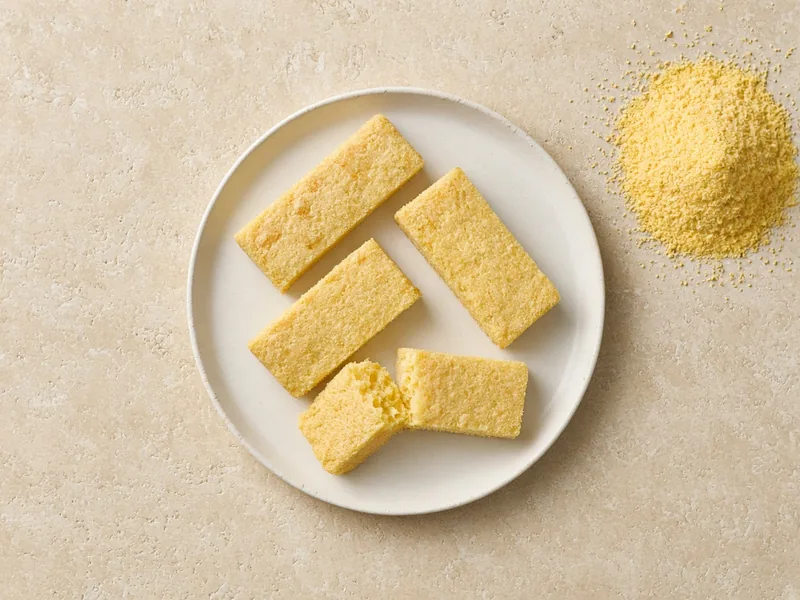
Soft polenta cooked with no salt, set in the fridge and cut into fingers, then warmed through. Naturally gluten-free and egg-free, and easy for little hands to hold.
- From
- 6 months
- Time
- 80 min
- Makes
- About 16 fingers
No top allergensOptional extra contains milk
Ingredients
- 100 g (⅔ cup)quick-cook (instant) polentaplain cornmeal, with no added salt or flavorings. If your child must avoid gluten, check the label
- 500 ml (2 cups)water
- 2 tbspfinely grated mild cheddaroptional; pasteurized, and choose a lower-salt one. Cheese is made from milk, so only add it once your baby has had dairy on its own without a reaction
- 1 tspvegetable or olive oilfor the dish and tray
Steps
- 1Wash your hands. Lightly oil a small dish or tin, about 20 cm (8 in) square.
- 2Bring the water to a boil in a pan, then pour in the polenta slowly, whisking all the time so no lumps form. Turn the heat down low.
- 3Cook for about 5 minutes, or as the pack says, stirring often, until thick, smooth and pulling away from the sides of the pan. Hot polenta can spit, so stir with a long spoon. Don't add salt. Stir in the cheese, if using, until it melts.
- 4Spread the polenta in the dish about 2 cm (¾ in) thick and smooth the top. Put the dish straight into the fridge so it cools quickly: you don't need to wait for it to stop steaming, and a shallow dish cools faster. Once it has stopped steaming, cover it and leave it for at least 1 hour, until set firm enough to cut.
- 5Heat the oven to 180°C (350°F). Cut the polenta into fingers about 6–8 cm long and 2 cm wide (2½–3 × ¾ in) and lay them on a lightly oiled tray.
- 6Warm them for about 10 to 15 minutes, turning once, until steaming hot all the way through, 165°F (74°C), but still pale, not crisp or crunchy. Let them cool. Squash one between your thumb and finger: it should be soft all the way through, with no hard edges. Check they're only just warm before serving.
How to serve it by age
6 months+
Offer one or two whole soft fingers, about the size of an adult finger, so your baby can hold one in their fist with a bit sticking out. Or serve soft, freshly cooked polenta on a pre-loaded spoon.
9 months+
Cut fingers into pieces no bigger than about 1 cm (just under ½ inch) for pincer-grasp practice, or keep offering whole soft fingers. Serve with a smooth vegetable sauce, mashed beans or flaked fish.
12 months+
Serve fingers or bite-sized pieces about 1 cm (just under ½ inch) with stews, tomato sauce or soft-cooked vegetables. Keep them soft rather than hard and crunchy, and don't stir whole corn kernels into polenta for young children: they're a choking hazard.
If your baby reacts
The optional extras contain milk. Introduce one new allergen at a time, mixed into a food your baby already eats, before serving it in a dish with other new foods. Contact your pediatrician, GP or health visitor if you notice mild signs after eating, such as a few hives or a little vomiting. See signs of a reaction.
Call 911999your local emergency number (such as 112 in Europe or 000 in Australia) now if your baby has trouble breathing, wheezing, can't cough or cry, has lips, mouth, tongue or throat that suddenly swell, or becomes pale, bluish, floppy or unresponsive. Also call if hives come with repeated vomiting.
Leftovers and the rest of the family
Storing it
Cool cooked polenta quickly. Set polenta and fingers keep in a covered container in the fridge for 3 to 4 days, or freeze them for 3 to 4 months (freeze them in a single layer, then pack them together once frozen). Reheat only once, until steaming hot, 165°F (74°C), then let them cool before serving. Throw away anything left in your baby's bowl. Don't leave polenta at room temperature for more than 2 hours, or 1 hour if it's hotter than 90°F (32°C).

For the grown-ups
Cut your baby's fingers first, then season the rest with salt, pepper and extra parmesan and grill or pan-fry them until golden for the adults. They're good with a stew or ragù.
Foods in this recipe


Free printable: The First 100 Foods checklist
Tick off foods as your baby tries them. Print it or save it as a PDF, no sign-up needed.