
Roasted red pepper hummus
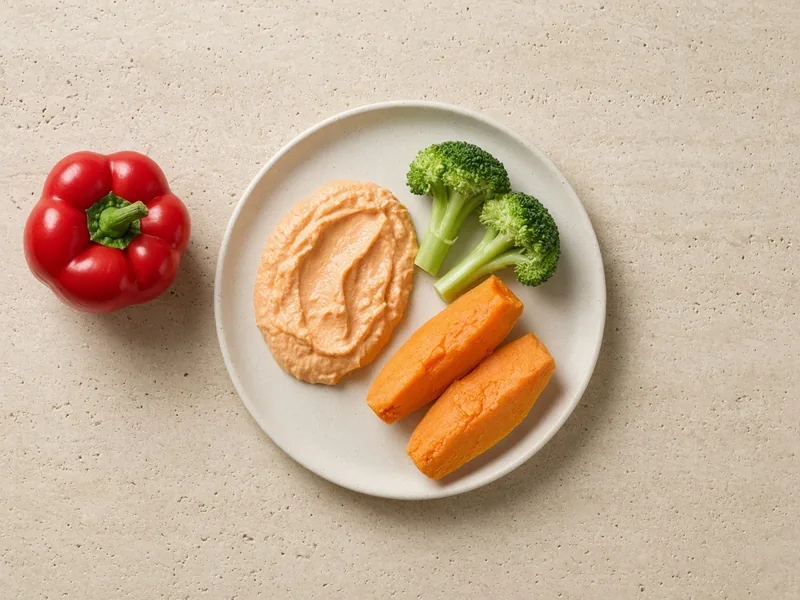
Smooth homemade hummus blended with soft roasted red pepper, with no added salt, served with soft-cooked broccoli and sweet potato to dip. Contains sesame (from tahini): offer it once your baby has had sesame and chickpeas on their own.
- From
- 6 months
- Time
- 40 min
- Makes
- About 8 baby portions of hummus, plus dippers
Contains sesame
Ingredients
- 1 largered bell pepperfresh, not jarred roasted peppers in brine, which are usually salted
- 1 can (400 g / 15 oz)chickpeasno-salt-added, canned in water; about 240 g (1½ cups) drained
- 1–2 tbsptahinimade from sesame only, with no added salt or sugar
- 1 tbsplemon juicesqueezed through a small strainer to catch seeds
- 1 tbspolive oilplus a little for the pepper
- 2–4 tbspwaterto thin the batch. Use water, not breast milk or formula, for hummus you'll keep; thin only your baby's portion with breast milk or formula, just before serving
- 1 small headbroccolifor dipping
- 1 mediumsweet potatofor dipping
Steps
- 1Wash your hands. Heat the oven to 200°C (400°F). Rinse the pepper and broccoli under running water. Scrub the sweet potato under running water and peel it. Rinse the lemon skin before you cut it.
- 2Cut the pepper in half, remove the stem, seeds and white ribs, and cut it into wide strips. Brush with a little oil and roast for about 20 to 25 minutes, until very soft. Let the strips cool, then peel off the thin skin: it can stay tough even when the flesh is soft.
- 3Cut the sweet potato lengthwise into sticks about the size of an adult finger, roughly 6–8 cm long and 2 cm wide (2½–3 × ¾ in). Cut the broccoli into large florets with a long stem to hold, and peel the tough outer layer off thick stems. Steam the sweet potato for about 10 to 15 minutes and the broccoli for about 5 to 8 minutes, until a knife slides in with no resistance. Squash a stick and a floret between your thumb and finger: both should flatten easily.
- 4Drain the chickpeas and rinse them well under running water. For the smoothest hummus, simmer them in fresh water for 5 minutes, then drain and let them cool.
- 5Blend the chickpeas, peeled pepper, tahini, lemon juice, olive oil and 2 tablespoons of water until completely smooth, scraping down the sides. Add more water a little at a time until it's soft and creamy. Check there are no whole chickpeas, pieces of pepper skin or firm bits left. Don't add salt.
- 6Let the vegetables cool, and check everything is only just warm before serving.
How to serve it by age
6 months+
Once your baby has had chickpeas and sesame each on their own without a reaction, thin a spoonful of hummus with a little water, breast milk or formula, just before serving. Offer it on a pre-loaded spoon, or let your baby dip the soft sweet potato sticks and broccoli florets. Once wheat has been introduced, strips of lightly toasted plain bread (no seeds or honey) about the size of an adult finger, thinly spread, work too. No crackers, chips, or raw pepper or carrot sticks: they're hard and a choking hazard.
9 months+
Serve the hummus thicker, as a dip or spread thinly on strips of lightly toasted plain bread once wheat has been introduced. Cut the vegetables into pieces no bigger than about 1 cm (just under ½ inch), or keep offering soft sticks to bite.
12 months+
Serve it as a family dip with soft-cooked vegetables and, once wheat has been introduced, soft pita or toast fingers. Keep it as a dip or thin spread rather than spoonfuls of thick hummus. Skip whole chickpeas, sesame seeds or pine nuts sprinkled on top. Keep raw pepper or carrot sticks and chips for the adults: the CDC lists hard raw vegetables and chips as choking hazards for young children.
Where US and UK guidance differ on this recipe
United States(AAP and CDC)Your setting
The AAP says fresh baby food should be cooked with no added salt or seasoning. It doesn't mention lemon juice, and doesn't give an age for it. If you'd rather follow that line closely, leave the lemon juice out until 12 months, or ask your pediatrician.
United Kingdom(NHS)Your setting
NHS recipes for babies use lemon juice: its lemony chicken strips, for babies from 6 months, are squeezed with lemon juice before baking.
We cover US and UK guidance in detail. Elsewhere, check your national health service's advice too.
If your baby reacts
This recipe contains sesame. Introduce one new allergen at a time, mixed into a food your baby already eats, before serving it in a dish with other new foods. Contact your pediatrician, GP or health visitor if you notice mild signs after eating, such as a few hives or a little vomiting. See signs of a reaction.
Call 911999your local emergency number (such as 112 in Europe or 000 in Australia) now if your baby has trouble breathing, wheezing, can't cough or cry, has lips, mouth, tongue or throat that suddenly swell, or becomes pale, bluish, floppy or unresponsive. Also call if hives come with repeated vomiting.
Leftovers and the rest of the family
Storing it
Only keep hummus that was thinned with water. Hummus thinned with breast milk or formula is for that meal only: throw away what's left. Keep hummus in a covered container in the fridge for 3 to 4 days, or freeze it in small portions and use it within 3 months. Thaw it in the fridge and eat it within 24 hours of thawing. Cooked vegetables keep for 3 to 4 days in the fridge; serve them cold, or reheat them only once, until steaming hot, 165°F (74°C), then let them cool before serving. Throw away anything left in your baby's bowl, and any hummus your baby has dipped into. Don't leave hummus or vegetables at room temperature for more than 2 hours, or 1 hour if it's hotter than 90°F (32°C).

For the grown-ups
Spoon out your baby's portion first, then add salt, garlic, smoked paprika or a pinch of chili flakes to the rest for the adults. Serve it with warm pita and raw pepper sticks for the adults.
Foods in this recipe







Free printable: The First 100 Foods checklist
Tick off foods as your baby tries them. Print it or save it as a PDF, no sign-up needed.
Sources
- NHS: Food allergies in babies and young children
- CDC: Choking hazards
- NHS: Preparing food safely for babies
- AAP: When can babies start solid foods?
- NHS Best Start in Life: Lemony chicken strips
- FDA: 7 tips for cleaning fruits and vegetables
- USDA FSIS: Leftovers and food safety
- NHS Best Start in Life: Storing and reheating food
- NHS: Foods to avoid giving babies and young children