
Sweet potato toast
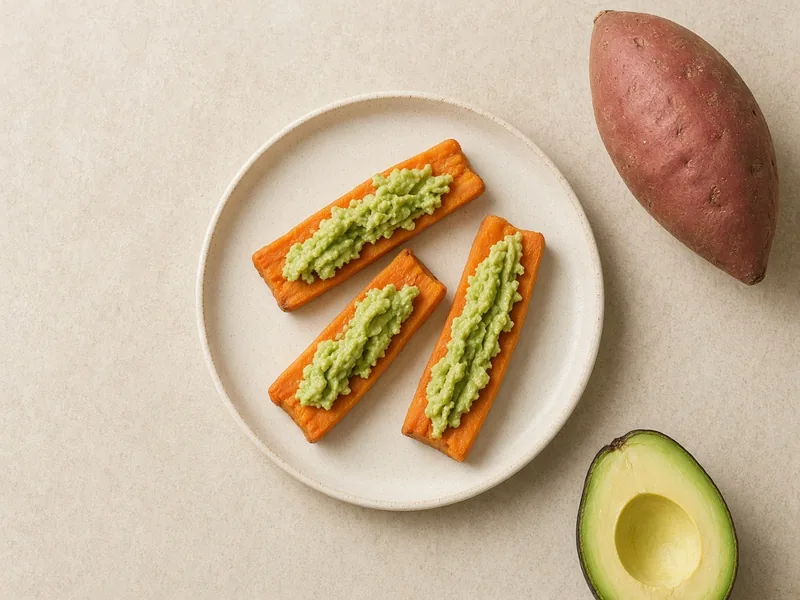
Long slices of sweet potato roasted until soft, then topped with mashed avocado or a thin layer of thinned peanut butter. The avocado version has no common allergens; the peanut butter version contains peanut, so offer it once your baby has had peanut on its own.
- From
- 6 months
- Time
- 35 min
- Makes
- About 8 slices
No top allergensOptional extra contains peanut
Ingredients
- 1 mediumsweet potatoabout 250 g (9 oz)
- 1 tbspvegetable or olive oil
- ½ripe avocadosoft enough to squash easily with a fork; for the avocado topping
- 2 tspsmooth peanut butteroptional, instead of avocado; contains peanut, so use it only once your baby has had peanut on its own; no added salt or sugar, never chunky
- 2–3 tsphot waterto thin the peanut butter
Steps
- 1Wash your hands. Heat the oven to 200°C (400°F). Scrub the sweet potato with a clean vegetable brush under running water, then peel it. Rinse the avocado skin too.
- 2Cut the sweet potato lengthwise into slices about 1 cm (just under ½ inch) thick. Brush both sides with oil and lay them flat on a lined baking tray.
- 3Cover the tray with foil and roast for 15 minutes, so the slices steam soft. Then take off the foil, turn them, and roast for another 10 to 15 minutes, until a knife slides through with no resistance. Take them out before the edges turn crisp.
- 4Let the slices cool. Squash one between your thumb and finger: it should squash easily all the way through. Trim off any hard, browned edges.
- 5For the avocado topping, mash the avocado with a fork until smooth. For the peanut butter topping, stir the peanut butter with the hot water until thin and runny, then let it cool.
- 6Spread a thin layer of topping over each slice. With peanut butter, you should be able to see the sweet potato through it. Scrape off any thick patches.
How to serve it by age
6 months+
Cut a slice into fingers about the size of an adult finger, roughly 6–8 cm long and 2 cm wide (2½–3 × ¾ in), or offer a whole wide, soft slice to hold. Start with the avocado topping. Offer the peanut butter version only once your baby has had peanut on its own without a reaction. The first time, pick a day your baby is well, at home, when you can watch them for a couple of hours afterward. If your baby has eczema or a food allergy, talk to your doctor before the first peanut (see the US and UK note).
9 months+
Cut topped slices into pieces no bigger than about 1 cm (just under ½ inch) for pincer-grasp practice, or keep offering soft fingers. Keep the peanut butter layer thin.
12 months+
Serve whole soft slices or bite-sized pieces about 1 cm (just under ½ inch) for breakfast or a snack. Still no thick layers or spoonfuls of peanut butter, and no whole or chopped nuts on top.
Where US and UK guidance differ on this recipe
United States(AAP and CDC)Your setting
For babies under 1, the AAP says that apart from mashed banana, most fruits should be cooked until soft. If you follow US advice closely, use only fully ripe avocado that squashes easily and mash it well, or ask your pediatrician. For peanut, the AAP says babies with severe eczema, or who have had an immediate allergic reaction to any food (such as egg), are at high risk, so talk to your pediatrician before the first peanut.
United Kingdom(NHS)Your setting
The NHS lists grabbable bits of avocado among first finger foods from around 6 months. Use fully ripe avocado that squashes easily. The NHS says nut butter can be spread onto a food such as toast, never given on its own. Talk to your GP or health visitor first if your baby has eczema or a food allergy, or there's a family history of food allergies, eczema, asthma or hay fever.
We cover US and UK guidance in detail. Elsewhere, check your national health service's advice too.
If your baby reacts
The optional extras contain peanut. Introduce one new allergen at a time, mixed into a food your baby already eats, before serving it in a dish with other new foods. Contact your pediatrician, GP or health visitor if you notice mild signs after eating, such as a few hives or a little vomiting. See signs of a reaction.
Call 911999your local emergency number (such as 112 in Europe or 000 in Australia) now if your baby has trouble breathing, wheezing, can't cough or cry, has lips, mouth, tongue or throat that suddenly swell, or becomes pale, bluish, floppy or unresponsive. Also call if hives come with repeated vomiting.
Leftovers and the rest of the family
Storing it
Top the slices just before serving, because avocado turns brown quickly; throw away any leftover topped avocado slices the same day. Plain roasted slices keep in a covered container in the fridge for 3 to 4 days, or freeze them for 3 to 4 months (freeze them in a single layer, then pack them together once frozen). Reheat only once, until steaming hot, 165°F (74°C), then let them cool before adding the topping. Throw away anything left in your baby's bowl. Don't leave slices at room temperature for more than 2 hours, or 1 hour if it's hotter than 90°F (32°C).

For the grown-ups
Older children and adults can top their slices with mashed avocado, chili flakes and a squeeze of lime, or a fried egg, and a pinch of salt added at the table.
Foods in this recipe



Free printable: The First 100 Foods checklist
Tick off foods as your baby tries them. Print it or save it as a PDF, no sign-up needed.
Sources
- NHS: Sweet potato fingers recipe
- NHS: Foods to avoid giving babies and young children
- CDC: Choking hazards
- USDA FSIS: Leftovers and food safety
- AAP: When can babies start solid foods?
- NHS: Your baby's first solid foods
- NHS: Food allergies in babies and young children
- NHS Best Start in Life: Storing and reheating food
- AAP: When to introduce egg, peanut butter and other common food allergens