
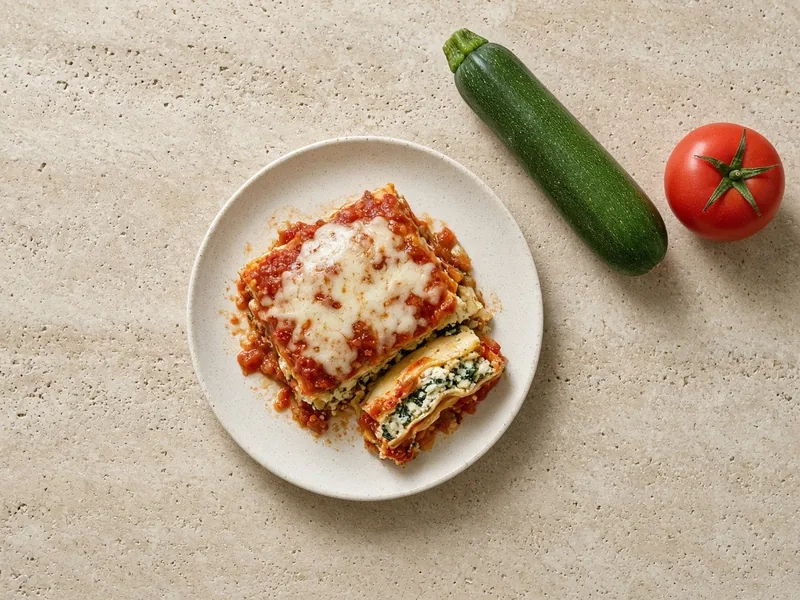
Vegetable lasagna
Soft lasagna sheets layered with a no-salt-added tomato sauce of zucchini, carrot and onion, and a spinach and ricotta layer, with a thin cheese top. Contains milk and wheat: offer it once your baby has had dairy and wheat each on their own.
- From
- 6 months
- Time
- 90 min
- Makes
- 2 adults and 1 baby, with leftovers
Contains milkContains wheatOptional extra contains egg
Ingredients
- 9 sheets (about 180 g / 6 oz)dried lasagna sheetsmade from wheat and no egg (check the label: fresh lasagna sheets and some dried ones contain egg). If yours contain egg, offer this only once your baby has had well-cooked egg on its own without a reaction, on a day they're well, at home, when you can watch them for a couple of hours afterward
- 1onionfinely chopped
- 2 mediumzucchini (courgettes)
- 1 mediumcarrot
- 1 can (400 g / 14 oz)chopped tomatoesno salt added
- 1 tbsptomato paste (purée)check the label for no added salt
- 100 ml (scant ½ cup)water
- 1 tbspolive or vegetable oil
- 100 g (3½ oz)fresh spinachor the same weight of frozen spinach
- 250 g (1 cup)whole-milk ricottamade from pasteurized milk (check the label)
- 40 g (⅓ cup)grated mozzarellamade from pasteurized milk; a thin layer for the top
Steps
- 1Wash your hands. Scrub the carrot under running water, peel it and grate it finely. Rinse the zucchini, trim the ends and grate them. Rinse and peel the onion, then chop it finely. Rinse the spinach, remove any thick stems, then wilt it in a pan with a splash of water for 2 to 3 minutes (cook frozen spinach until it's steaming hot all the way through), squeeze out the water and chop it very finely, with no whole leaves or long strands left. Check both cheese labels say made from pasteurized milk. Heat the oven to 190°C (375°F).
- 2Heat the oil in a large pan over medium-low heat and cook the onion gently for about 10 minutes, until very soft and see-through. Add the carrot and zucchini and cook for 5 minutes more. Stir in the tomatoes, tomato paste and water, and simmer, partly covered, for 15 to 20 minutes, until the vegetables are very soft and the sauce is thick. Don't add salt.
- 3Meanwhile, boil the lasagna sheets in unsalted water, a few at a time so they don't stick, for a few minutes longer than the package says, until a piece squashes easily between your fingers. Lay them flat on a clean, damp tea towel. Stir the spinach into the ricotta with 2 to 3 tablespoons of water so it spreads easily.
- 4Spread a thin layer of sauce in a baking dish, then layer sheets, half the ricotta, a third of the sauce, more sheets, the rest of the ricotta, more sauce, the last sheets and the rest of the sauce. Scatter the mozzarella thinly on top.
- 5Cover with foil and bake for 30 minutes, then uncover and bake for 10 to 15 minutes more, until the sauce bubbles at the edges and the middle reaches 165°F (74°C) on a food thermometer.
- 6Let the lasagna rest for 15 minutes so the layers set. Take your baby's portion from the middle of the dish, leaving off crisp edges and any thick, stringy cheese, and cut any stretchy cheese strings short. Spread it on a plate to cool, and check the middle of the portion is only just warm before serving: layered dishes hold heat inside.
How to serve it by age
6 months+
Once your baby has had dairy and wheat each on their own without a reaction (and egg, if your sheets contain it), cut a soft strip about the size of an adult finger, roughly 6–8 cm long and 2 cm wide (2½–3 × ¾ in), for your baby to grab, or mash a portion and serve it on a pre-loaded spoon. It should squash easily between your thumb and finger.
9 months+
Cut the lasagna into pieces no bigger than about 1 cm (just under ½ inch), with the sauce, for scooping or pincer-grasp practice.
12 months+
Serve the family dish, cut into pieces about 1 cm (just under ½ inch). Leave off chewy, browned edges until your child chews well.
If your baby reacts
This recipe contains milk, wheat. The optional extras contain egg. Introduce one new allergen at a time, mixed into a food your baby already eats, before serving it in a dish with other new foods. Contact your pediatrician, GP or health visitor if you notice mild signs after eating, such as a few hives or a little vomiting. See signs of a reaction.
Call 911999your local emergency number (such as 112 in Europe or 000 in Australia) now if your baby has trouble breathing, wheezing, can't cough or cry, has lips, mouth, tongue or throat that suddenly swell, or becomes pale, bluish, floppy or unresponsive. Also call if hives come with repeated vomiting.
Leftovers and the rest of the family
Storing it
Cool leftovers quickly and keep them covered in the fridge for 3 to 4 days, or freeze them in individual portions for 2 to 3 months. Thaw frozen portions in the fridge and eat them within 24 hours of thawing. Reheat only the portion you need, and only once, until steaming hot in the middle, 165°F (74°C), then let it cool before serving. Throw away anything left in your baby's bowl. Don't leave it at room temperature for more than 2 hours, or 1 hour if it's hotter than 90°F (32°C).

For the grown-ups
Take your baby's portion out first, then season the adults' portions with black pepper and a little salt, and add grated parmesan at the table. Serve with a green salad for the adults.
Foods in this recipe









Free printable: The First 100 Foods checklist
Tick off foods as your baby tries them. Print it or save it as a PDF, no sign-up needed.
Sources
- NHS: Your baby's first solid foods
- NHS: Foods to avoid giving babies and young children
- CDC: Safer food choices for children under 5
- AAP: When can babies start solid foods?
- FDA: 7 tips for cleaning fruits and vegetables
- USDA FSIS: Safe minimum internal temperature chart
- USDA FSIS: Leftovers and food safety
- USDA FSIS: Freezing and food safety
- NHS Best Start in Life: Storing and reheating food