
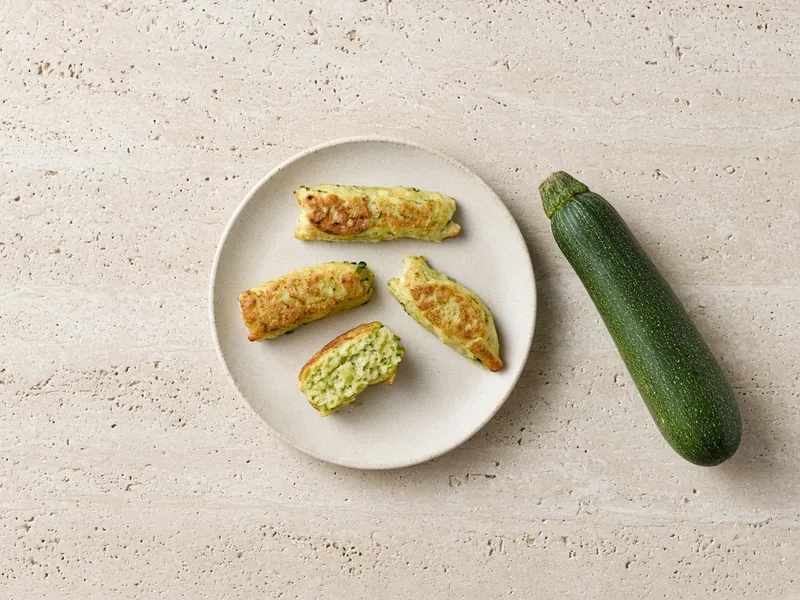
Zucchini fritters
Soft zucchini (courgette) fritters with a little cheese, pan-cooked until set. Contains egg, wheat and milk: offer them once your baby has had each on its own.
- From
- 6 months
- Time
- 30 min
- Makes
- About 10 small fritters
Contains eggContains wheatContains milk
Ingredients
- 1 mediumzucchini (courgette)about 200 g (7 oz)
- 1egg
- 4 tbspplain (all-purpose) wheat flour
- 2 tbspfinely grated hard cheesepasteurized and lower in salt, such as Swiss
- 1–2 tbspvegetable or olive oilfor cooking
Steps
- 1Wash your hands. Rinse the zucchini under running water, rubbing the skin gently, and trim off both ends.
- 2Grate the zucchini finely. Wrap it in a clean tea towel and squeeze out as much water as you can, so the fritters cook through instead of steaming.
- 3Beat the egg, then mix in the zucchini, flour and cheese to make a thick batter. Don't taste the raw batter: raw flour and raw egg can carry germs. Wash your hands after handling them.
- 4Heat a thin layer of oil in a nonstick pan over medium-low heat. Spoon in the batter and shape each fritter into a finger about 6–8 cm long and 2 cm wide (2½–3 × ¾ in), and about 1 cm thick.
- 5Cook for about 3 to 4 minutes on each side, until golden and set all the way through, with no wet batter in the middle. If you use a food thermometer, the center should reach 160°F (71°C). Lower the heat if they brown too fast.
- 6Drain on kitchen paper and let them cool. Break one open and squash it between your thumb and finger: the zucchini should be soft, with no firm strands. Trim off any crisp edges, and check they're only just warm before serving.
How to serve it by age
6 months+
Once your baby has had egg, wheat and dairy on their own without a reaction, offer one or two whole finger-shaped fritters to hold and gnaw.
9 months+
Cut fritters into pieces no bigger than about 1 cm (just under ½ inch), or keep offering whole soft fritters to bite.
12 months+
Serve whole fritters or bite-sized pieces about 1 cm (just under ½ inch) with soft-cooked vegetables or a spoonful of plain yogurt, as part of the family meal.
If your baby reacts
This recipe contains egg, wheat, milk. Introduce one new allergen at a time, mixed into a food your baby already eats, before serving it in a dish with other new foods. Contact your pediatrician, GP or health visitor if you notice mild signs after eating, such as a few hives or a little vomiting. See signs of a reaction.
Call 911999your local emergency number (such as 112 in Europe or 000 in Australia) now if your baby has trouble breathing, wheezing, can't cough or cry, has lips, mouth, tongue or throat that suddenly swell, or becomes pale, bluish, floppy or unresponsive. Also call if hives come with repeated vomiting.
Leftovers and the rest of the family
Storing it
Cool leftover fritters quickly and keep them in a covered container in the fridge for 3 to 4 days, or freeze them for 2 to 3 months (freeze them in a single layer, then pack them together once frozen). They turn a little softer after freezing. Reheat only once, until steaming hot, 165°F (74°C), then let them cool before serving. Throw away anything left in your baby's bowl. Don't leave fritters at room temperature for more than 2 hours, or 1 hour if it's hotter than 90°F (32°C).

For the grown-ups
Cook your baby's fritters first, then add salt, pepper and chopped herbs or spring onion to the rest of the batter for the adults. Serve with eggs or a salad for an easy lunch.
Foods in this recipe



Free printable: The First 100 Foods checklist
Tick off foods as your baby tries them. Print it or save it as a PDF, no sign-up needed.